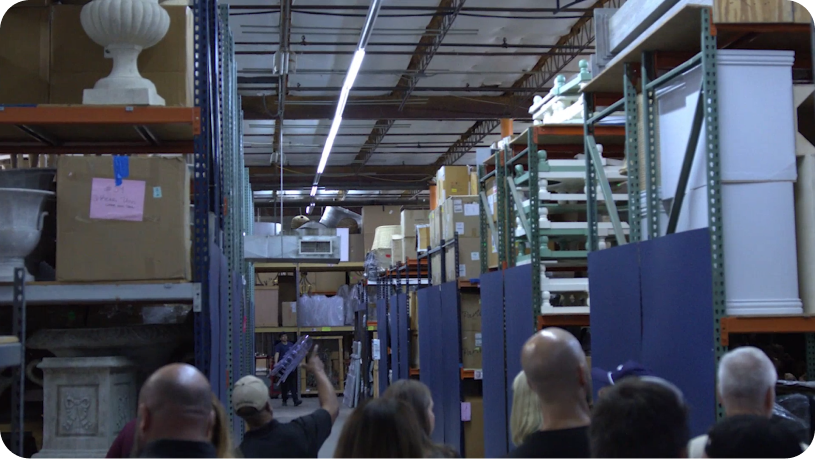
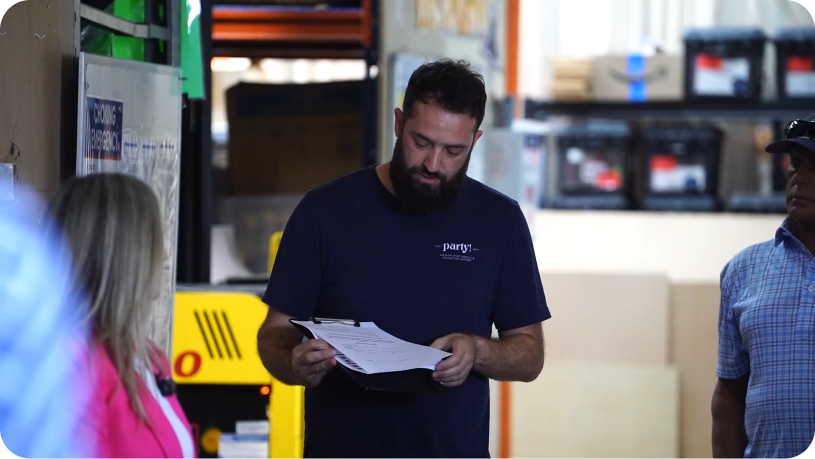
Party! Dallas Rentals opened its warehouse for a Goodshuffle tour, and Liz Curlin walked the group through it. What stood out was how many of the systems were built to answer a question someone had already gotten wrong once.
Watch below for the full tour, or keep reading for the recap:
Key Takeaways:
-
Color-coded tags connect an order to its truck.
Each drape order prints with a tag whose color matches the truck it loads onto, so crews grab the right pull without cross-referencing paperwork.
-
Jobs are tiered by difficulty, and the kit matches the tier.
A four-category system tells a lead whether an event is a straightforward in-and-out or a multi-day, multi-truck build before they open the order.
-
Damaged items go back on the shelf on purpose.
With no dedicated repair aisle yet, flagged items return to their normal spot with an orange sticker facing out so they get caught at the two-week pull.
-
Photography is a checkpoint, not an afterthought.
New inventory moves through a staging area with a sign-off sheet tracking receipt, photography, and upload before it reaches the shelf.
-
Two service lines, two accounts.
Drape runs on its own Goodshuffle Pro account because its timeline, sales process, and install team differ from furniture rentals.
Using the Space Above Your Head
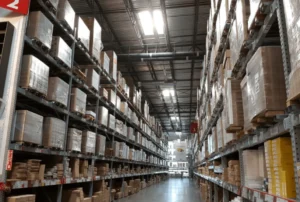
Every aisle and shelf is full, and a lot of the storage runs vertical. The clearest example is a set of palm trees that hang from the ceiling. Rather than giving them shelf space, the team built a system where the bases slide in and out, which moved a bulky seasonal item out of the footprint entirely.
A Staging Area for Anything New
New and modified inventory doesn’t go straight to a shelf. It goes to a staging space with a tag sheet attached. The inventory manager signs off that the piece was received. The photographer shoots it. She checks off when the images have been uploaded, puts the tag back on the item, and that is the signal to the team that it can be shelved.
The tag is doing the coordination. Three people touch the item at different times, and none of them has to ask whether the previous step happened.
The Room That Used to Be a Pile of Tubs
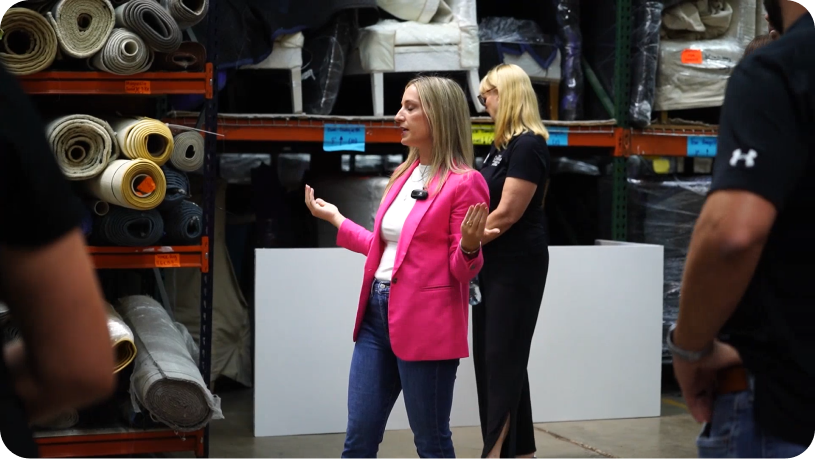
The soft goods room is Curlin’s favorite, and it used to be the worst room in the building. Deep shelves meant you couldn’t walk in without hitting something, and pillows lived in tubs stacked on top of each other. Finding one meant pulling three tubs off, digging, and restacking. It reliably ended in a mess.
The fix was a trip to IKEA and a shelving system where everything is visible and reachable. The rugs got the same treatment. They had been standing upright in a corner, packed so deep that anything past the first five was invisible. Now they lie flat on purpose-built shelves.
“And now we have this, and now we know exactly what we have and how much we have of it.”
— Liz Curlin, Party! Dallas Rentals
Prototyping Before the Week Of
The team builds and modifies inventory in house, and prototypes get made well ahead of the event. The stated reason is finding out months in advance that something won’t work rather than finding out days before.
The path a custom request takes is worth noting. Sales brings the inspiration and the requested material. Margarita, the soft goods specialist, weighs in on whether that fabric is actually right for the result the client wants. If the piece needs building from scratch, Ricardo, the head carpenter, decides what is feasible. Then the opinion goes back to sales, and back to the client, who has final say.
The design questions run alongside logistics ones: how the finished piece gets on a truck, and whether it fits through the narrow hallways between a loading dock and a ballroom.
Why Drape Runs on Its Own Account
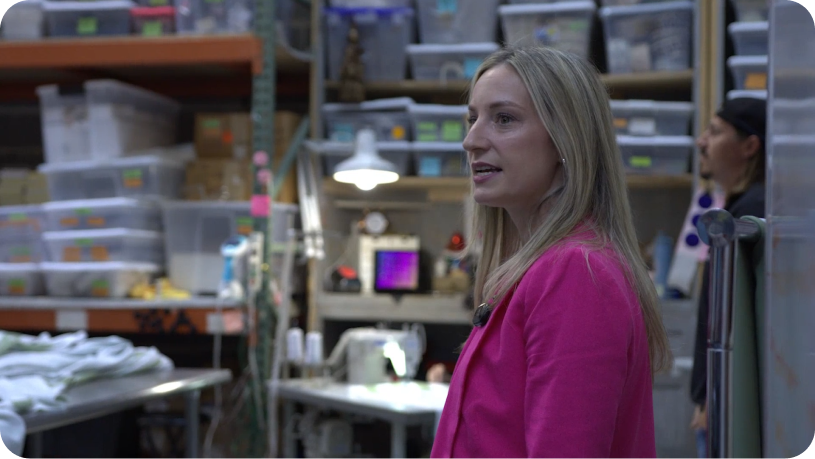
Drape occupies what Curlin called the tiniest corner of the warehouse and goes out every weekend. It now runs as Vertical 360 on a separate Goodshuffle Pro account, because its sales process, timeline, and install team all differ from furniture. (For more on how other operators think about warehouse space and service lines, this roundup of warehouse strategies from tent rental operators covers similar tradeoffs.)
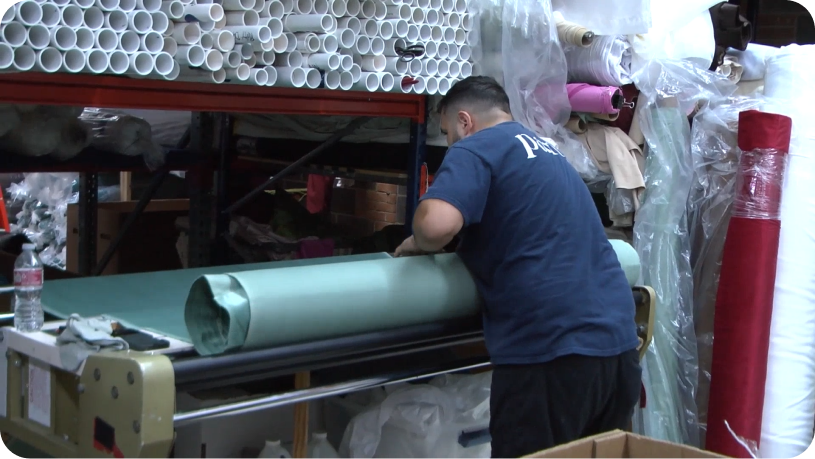
The physical systems match. Panels get rolled on a fabric roller machine, which cuts wrinkling and compresses storage. Five panels go on every roll, so counting is arithmetic instead of unrolling: five rolls means twenty-five panels. Rolled panels stack high, and pre-pulled rolls sit on a dedicated shelf so the week’s work can run ahead of schedule.
Orders print with a color tag. One wedding is yellow, the next is orange, and the color matches the truck being loaded. Larger quantities move in gondolas, which hold far more rolled drape than carrying it by hand.
Damage That Doesn’t Disappear
There is no dedicated repair aisle yet, though clearing one is the next project. Until then, anything with damage, a stain, or a question gets an orange sticker at strike and goes back to its normal shelf position with the sticker facing out. It gets caught either when someone walks past it or during the pull two weeks ahead of the next event, where it gets a second set of eyes.
It is a workaround, and Curlin presented it as one. The longer-term plan is to split the building into an install side and a strike side, with returning trucks unloading nearest carpentry and repair, and outbound events loading from the opposite dock.
Four Categories, Four Different Kits
The system the group reacted to most is a color-coded difficulty scale being rolled out across events. Jobs are rated one through four. A category one needs no intervention: read the order, go in, come out. A category four is the kind that requires a meeting, spanning multiple days, multiple trucks, out-of-state travel, crates, pallets, and everything in between.
The rating is attached to the order as a colored tie, so a lead can see the complexity before reading a single line item. The practical payoff is kit sizing. Rolling a full production toolbox out for a pizza order for five people is absurd, and the tier makes that obvious.
The Rest of the Floor
A few smaller systems were visible throughout. Warehouse pickups use a short form with the client name, the order, and a signature. Cleaning boxes carry a two-sided card that gets flipped to not-ready when it returns from an event and back to ready once restocked.
Larger jobs get a production desk holding the first aid kit and a cooler of ice, both there for heat exhaustion and injuries rather than comfort, plus chairs for the same reason. The proposal for the upcoming event gets posted at that desk the week of install so the crew can familiarize themselves while pulling.
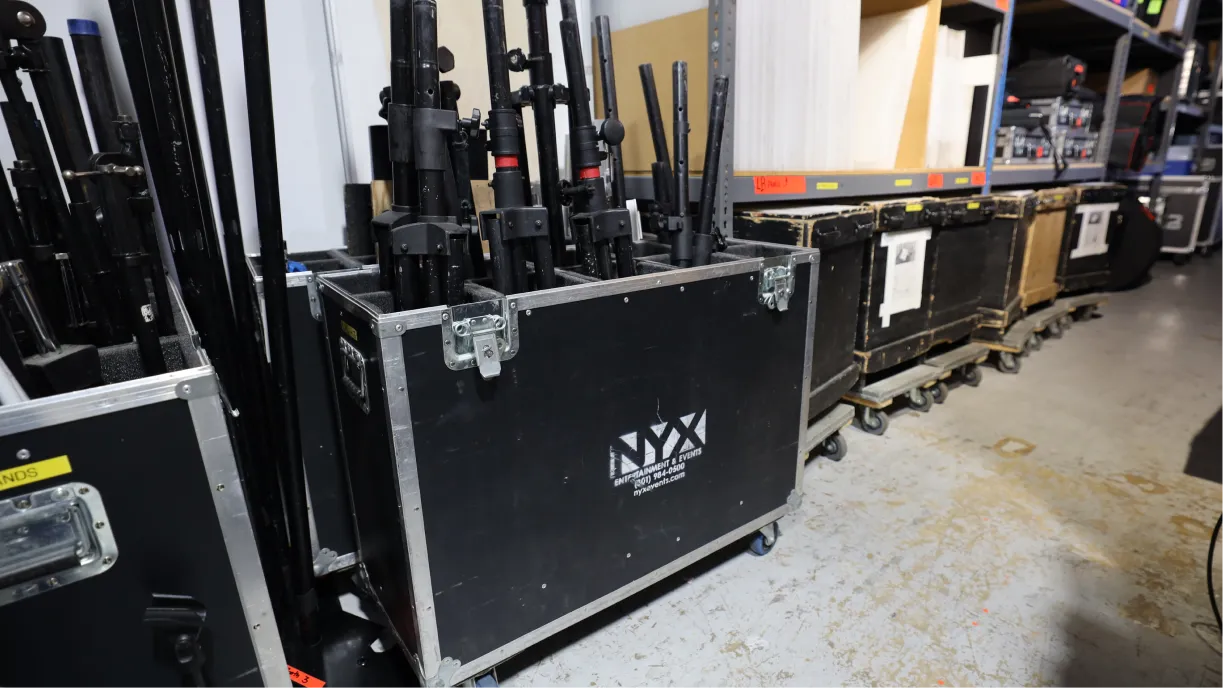
Every team member has an individual toolbox they are responsible for, which makes a missing tool someone’s specific problem. And a large production cage holds one of everything the team has ever driven to a hardware store for mid-build: tapes, cleaning supplies, extension cords, ponchos, knives, a leaf blower, a charging station, and a second first aid kit.
What Makes It Work
Almost nothing here is expensive. A sticker, a colored tie, a laminated card, a shelf that lets you see what you own. It reminds us that systems don’t have to be expensive to work. They just have to answer specific problems your team hits once and decides not to hit twice. For more in this vein, our warehouse tips for event pros and the warehouse systems anyone can run newsletter cover the same ground from other operations.
FAQs
Store items so you can see and reach all of them. Party! Dallas Rentals rebuilt deep shelving that hid rugs and pillows behind the first few units, moved tall items into ceiling space, and rolled drape panels in fixed quantities so counting is visual. The pattern is removing the step where someone has to dig.
Flag it at strike, before it disappears back into stock. A colored sticker placed so it faces out lets the item live in its normal location while still getting a second look during the next pull. A dedicated repair aisle is better if you have the room.
Tie it to how complex the job is. A difficulty rating assigned during planning tells the lead whether they need a full production kit or almost nothing, which stops crews from hauling a complete toolbox to a five-person order.
Only when the workflows genuinely diverge. Drape earned its own account here because it quotes differently, installs earlier, and uses a different team. Two services that share a timeline and a crew usually don’t need the separation.
Give it a staging area and a chain of sign-offs. Receipt, photography, and upload each get checked off on a tag that travels with the item, so nothing reaches the shelf undocumented.

Share On