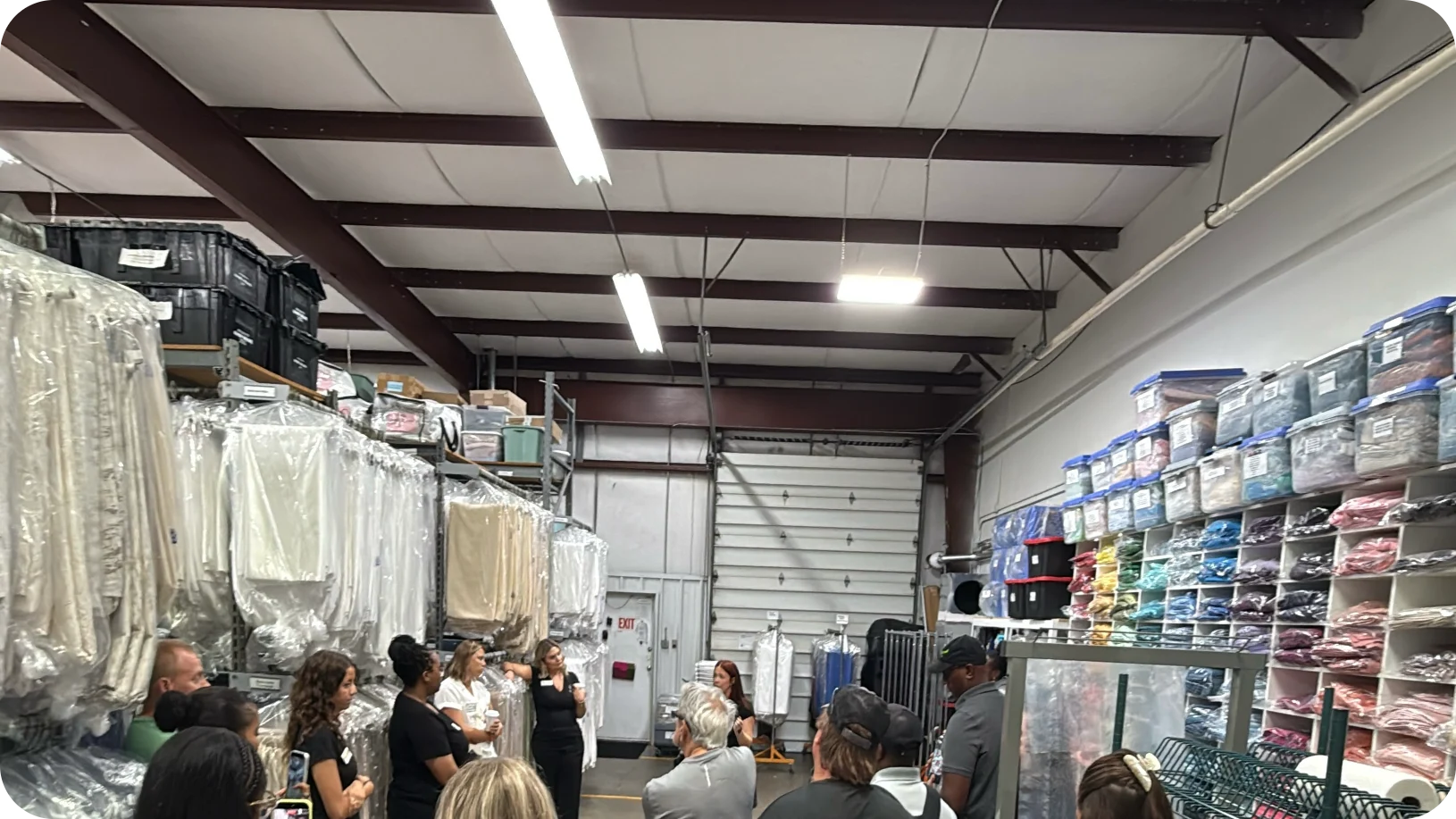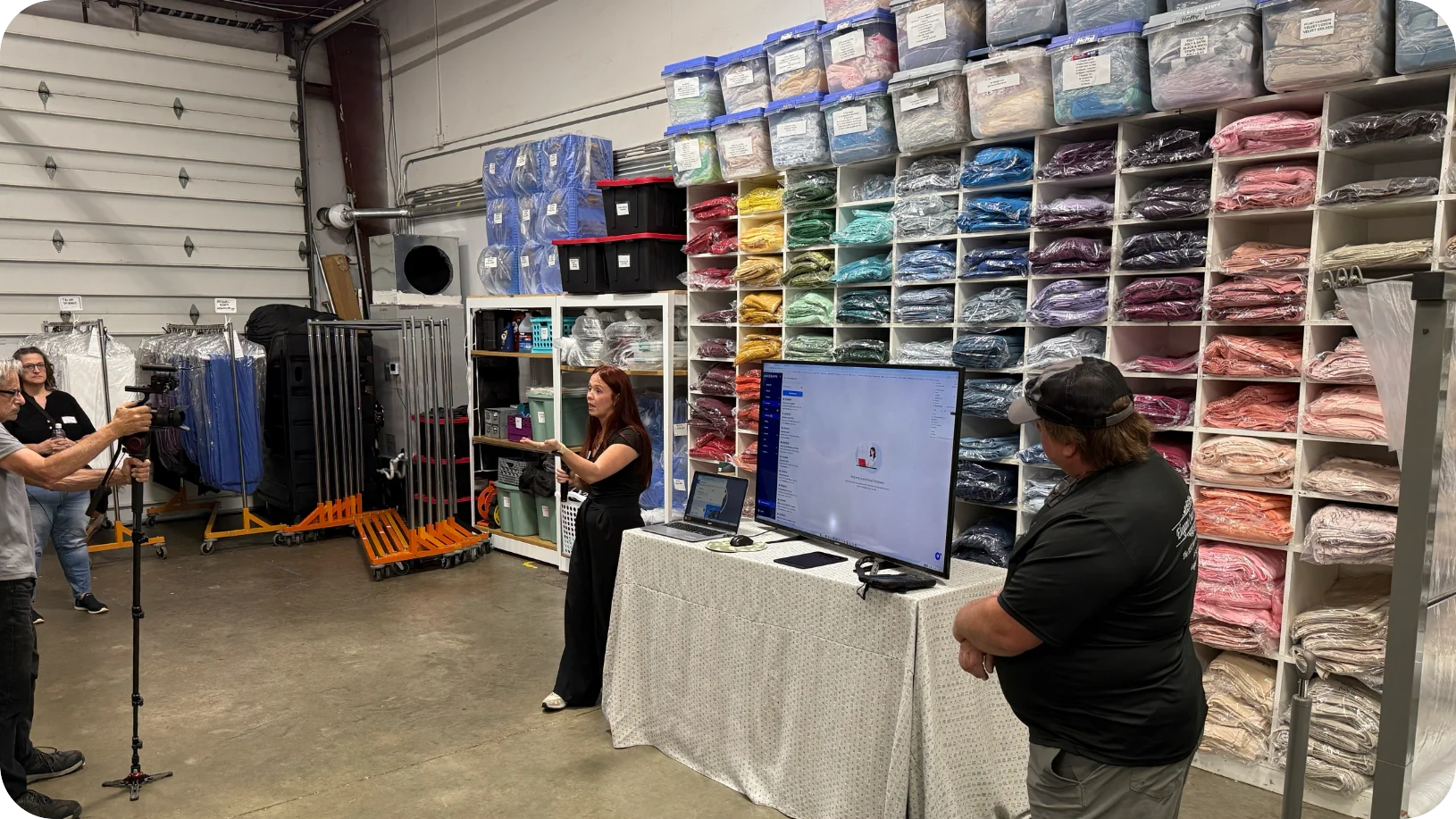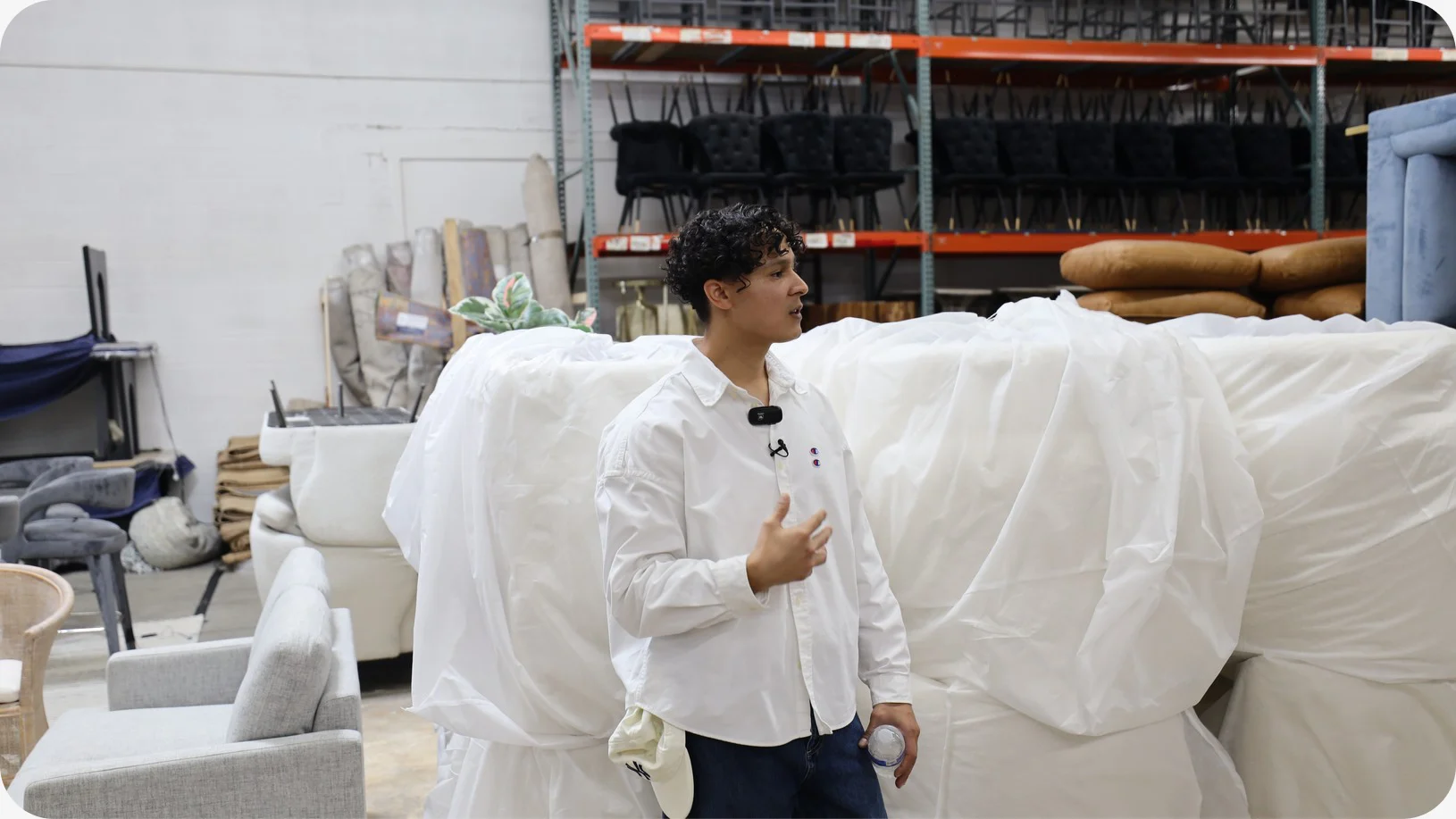

Running out of warehouse space is a rite of passage in event rentals. But how you respond to that pressure — whether you sign a bigger lease, get creative with vertical storage, or tighten your inventory — says a lot about how your business will hold up over time.
We recently sat down with four event rental and tenting operators — Mike Biondi of TGIF Tent & Party Rentals, Nick Mattera of Preferred Events Long Island, Will Bruner of National Event Connection, and Benjamin Chuchinsky of AAA Party Rental — to hear how they actually think about warehouse space. Not the theory. The real tradeoffs.
Key Takeaways:
-
Go vertical before you go bigger.
Operators with 20,000+ square feet will tell you the same thing: ceiling height is your most underused asset.
-
Outdoor space is just as valuable as indoor.
Containers, yard space, and parking lots aren’t a fallback — they’re a real part of your warehouse strategy.
-
Lean overhead protects you when the economy shifts.
The operators who sleep well at night aren’t necessarily the ones with the most square footage.
-
Audit your inventory every year.
Items that aren’t turning a profit aren’t just dead weight — they’re taking up space you could use for something that is.
Going Vertical First
The most consistent piece of advice across all four operators: before you look for more square footage, look up.
Mike Biondi, who runs TGIF Tent & Party Rentals out of a 20,000 square foot facility, has built his storage strategy almost entirely around vertical space. His team invested roughly $60,000 in storage bins that run to the ceiling — each one holding 20 pre-packed 10×10 tents.
“It’s not making you money to have empty space back there in a bigger space. It does not make you money. You lose it.”
— Mike Biondi, TGIF Tent & Party Rentals
Nick Mattera at Preferred Events took a similar approach when they felt squeezed — they built a mezzanine inside the warehouse, effectively adding a second floor without expanding the footprint.
Will Bruner of National Event Connection went through an expansion, but with careful planning. They waited for a sister unit to become available adjacent to their existing space, letting them open a wall rather than move the whole company. He had time, for once, to CAD out where machines would go, where they’d run electric, and how to use the space efficiently before anyone moved in.
If you’re weighing a similar decision, this breakdown of the rent vs. buy question for event rental warehouses is worth a read.
Outdoor Space is Part of the Strategy
Every operator on the panel uses outdoor yard space or containers as a meaningful part of their storage plan — not just overflow.
Nick Mattera keeps five steel storage containers in the yard for older tables, chairs, pipe, and blocks. Mike Biondi has nine outside, at $3,000–$4,000 each, holding inventory that doesn’t need to be inside.
What happens when a landlord won’t allow containers? One operator figured out a workaround: he bought non-running 26-foot box trucks for around $1,000 each (plus $2,000 to transport), giving him the same capacity as a container without violating lease terms.
The logic is simple: items that are low-margin or hard to steal don’t need to be inside. Tables, chairs, blocks, pipe — those can live outside. The gear that makes money, or can’t easily be replaced, lives inside.
Lean Overhead as a Deliberate Philosophy
Not every operator is chasing more space. Mike Biondi made his position clear: adding overhead to have the biggest warehouse isn’t how he wants to run his business.
“When you become partners with your landlord, a lot of people always think it’s always have the biggest warehouse, the best warehouse, the most overhead. We don’t operate like that.”
— Mike Biondi, TGIF Tent & Party Rentals
His team pays around $15,000 per month across two locations. He knows operators in the industry paying $45,000 a month. The gap doesn’t just affect cash flow in a good year — it affects your ability to survive when things slow down.
That philosophy shapes everything: where items are stored, what stays inside versus outside, and which jobs are worth taking. As he puts it: if someone robbed his yard of tables and chairs tonight, he’d regroup. It’s the high-margin gear that needs protection.
Auditing Inventory to Free Up Space
Several operators mentioned using their rental data to make hard decisions about inventory — keeping what earns its keep and getting rid of what doesn’t.
Nick Mattera described a regular audit process with his warehouse operations manager and sales team. They look at what’s actually renting, weigh the revenue against the space it’s occupying, and cut 10–15% of inventory each year to make room for new additions.
“If there’s one big item that can make a lot of money, I’ll keep it. But if it’s taking up space, we audit it — we audit our inventory every year.”
— Nick Mattera, Preferred Events Long Island
Benjamin Chuchinsky talked about using projected cash flow alongside inventory data to time these decisions — knowing what’s coming in the slow season made it easier to plan a renovation during the lull instead of fighting it.
Will Bruner took a similar approach before his expansion: looking at what items were taking up space but rarely going out, then figuring out which ones he could sub-rent from another company the three times a year he actually needed them, rather than storing and maintaining them full-time.
For more on how to make the most of what you already own, the Busy Season newsletter issue on maximizing existing inventory is a good place to start.
Keeping the People Who Run Your Operation
Every operator at the table named staffing as their biggest ongoing constraint. Finding reliable people is hard. Keeping them is a different challenge — and the operators who’ve figured out retention tend to share a few things in common.
Nick Mattera has kept his core staff for at least five years without losing anyone. His approach: clear career path conversations so crew members understand where they’re headed, consistent treatment, and showing up as a leader who holds himself to the same standard.
Company activities during the season — barbecues, rock climbing, group outings — help sustain morale when the hours are long.
“Culture at a company is super important. We sit down, we discuss what their career path is going to look like, so they understand what’s happening in front of them. By doing that and just having set expectations and following through with those things as a leader of the team and showing up for them and being on time — it’s a place that they don’t want to leave because we provide a good environment.”
— Nick Mattera, Preferred Events Long Island
Mike Biondi takes a similar position on flexibility. When a crew member needs time — a day, a week, even a month — he lets them take it without making it a negotiation. His reasoning: showing people they matter to the company is what makes them come back.
“If you show these guys they can take off whenever they want — as long as they come back to me, I’ll go work for them that week if I have to make them happy. They have lives. These guys have lives. And a lot of people say, ‘Oh, they’re just an employee. Who cares?’ We care about them.”
— Mike Biondi, TGIF Tent & Party Rentals
Will Bruner tied retention to a different lever: reducing the events that burn people out in the first place. As his company has moved further into the corporate market, their weekend volume has dropped. The crew still works hard — just more often during the week, on higher-margin jobs, with more predictable hours.
It’s not a perfect science. All four operators acknowledged that finding new hires who want to work hard remains genuinely difficult, and that the issue shows no signs of getting easier. But the consensus was clear: the operators who treat their crew like the backbone of the business — because they are — tend to hold onto them.
What Holds it All Together
The through-line across all four operators: the businesses that run well aren’t necessarily the biggest or the most resourced. They’re the ones that know their numbers, make deliberate decisions about space and overhead, and invest in the people who actually do the work.
That’s a harder thing to copy than a new piece of equipment — and it’s what tends to separate operators who are still standing after a rough year from those who aren’t.
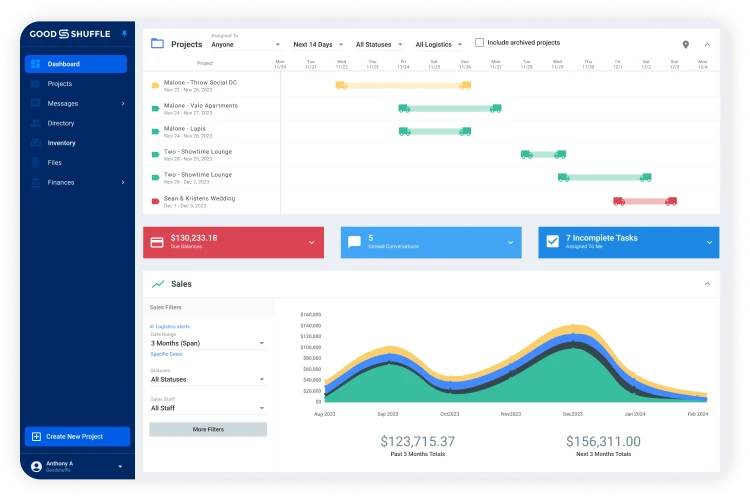
If you’re managing inventory across multiple warehouses or trying to get a clearer picture of what’s actually turning a profit, your pull sheets and job history are a good place to start.
FAQs
Most operators say the signal isn’t just running out of floor space — it’s when inefficiency starts costing real labor hours. If your crew is spending an hour fetching a piece from another location, or if staging multiple jobs is creating daily friction, that’s the pressure point. But expansion isn’t the only answer. Many experienced operators find they can get significantly more capacity by going vertical — adding racking, using bins, and utilizing yard or container space — before committing to a larger footprint.
A lot of operators do, especially for lower-value items that don’t need climate control — tables, chairs, blocks, pipe and drape. Conex boxes cost $3,000–$4,000 each and give you the equivalent of an additional storage unit without adding to your monthly rent. Some operators have gotten creative when landlords don’t allow containers on-site — one company repurposed non-running 26-foot box trucks as permanent outdoor storage.
Most operators in the event rental space do a formal inventory audit at least once a year, typically in the slow season. The goal is identifying items that are taking up space without generating enough revenue to justify it. If an item went out five times last year and netted a few hundred dollars, you might get more value renting that square footage to someone else, or using it for higher-margin inventory.

Share On