Table of Contents
Most event rental operators know roughly how their warehouse should work. The harder part is seeing how that actually plays out at a company that’s been doing it for years — what they label, how they stage, where things break down, and what they’ve rigged up to make it work anyway.
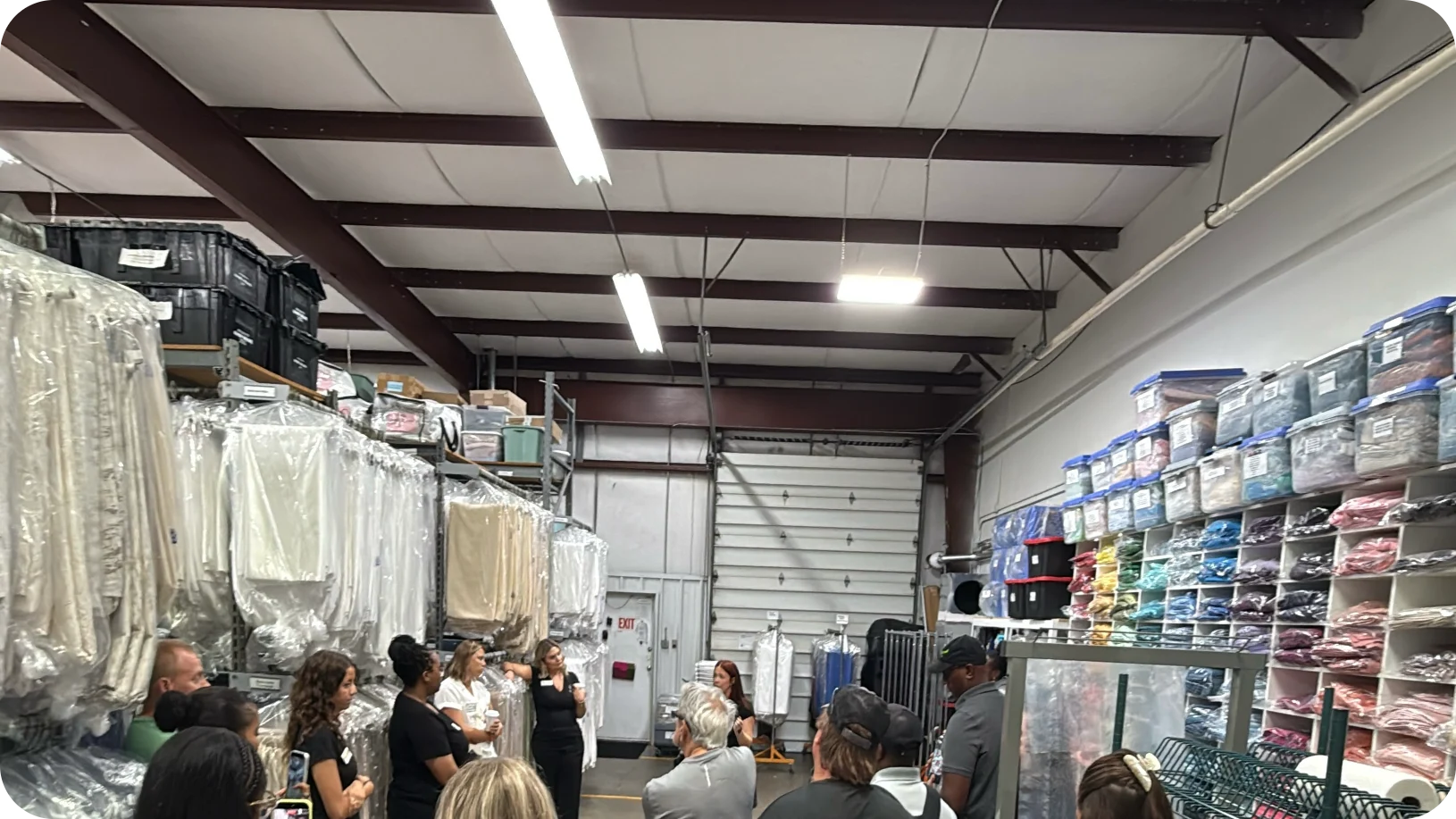
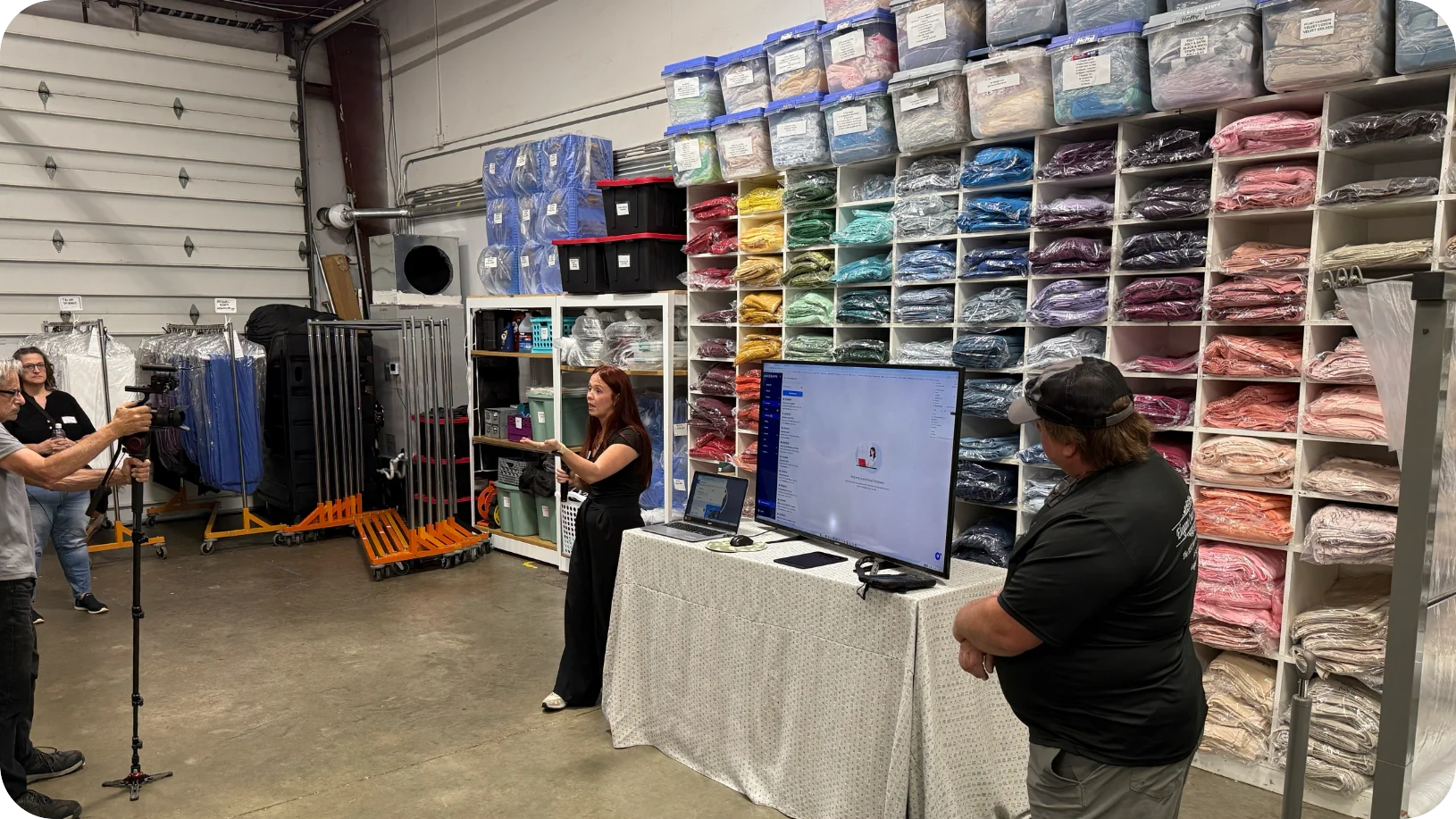
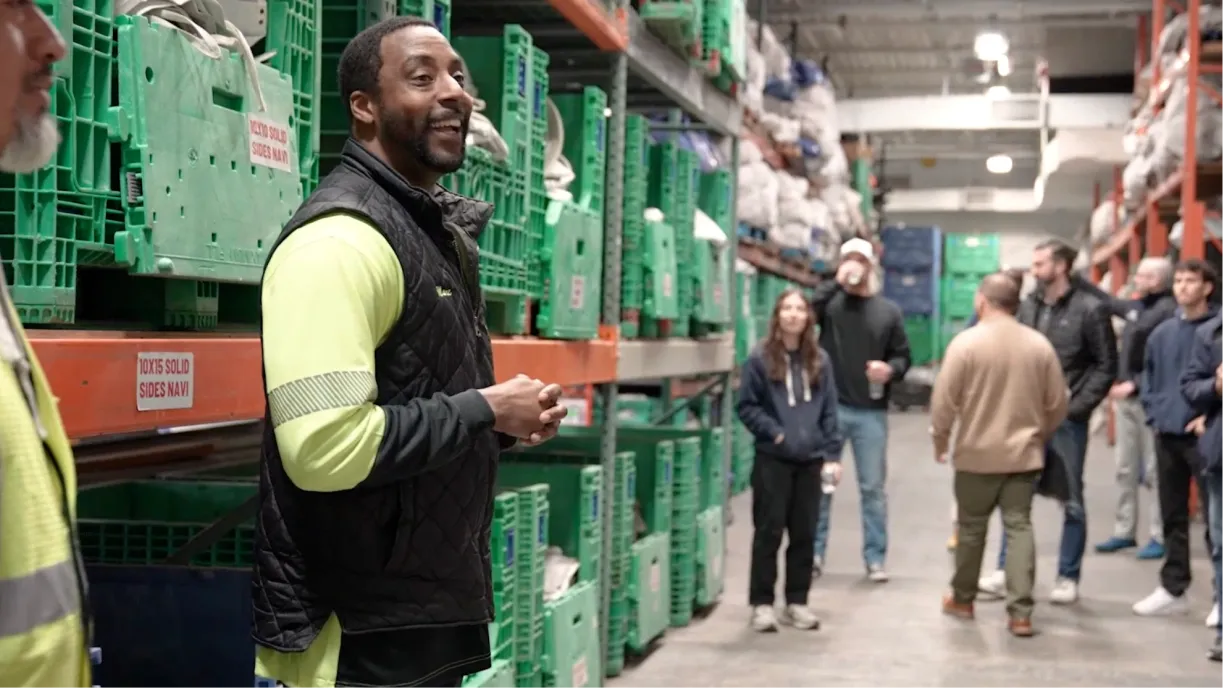
We gathered a group of event pros for a tour of TGIF Tent & Party Rentals‘ facility on Long Island, run by Mike Biondi and his team. TGIF operates out of about 30,000 square feet between their main warehouse and yard space, handles a significant tenting operation, and has been quietly building one of the more organized back-end operations in the region.
Here’s what stood out.
Key Takeaways:
-
How you organize storage affects how fast your crew can pull and stage.
Clear labeling, vertical racking, and organized bins aren’t just nice to have — they determine how long a pull actually takes.
-
Scanning at multiple stages catches mistakes before the truck leaves.
The best fulfillment workflows verify items at pull, at load, and at check-in — not just at one point.
-
Constraints like a single loading dock force creative solutions.
Smart operators build workarounds — staging in parking lots, using forklifts to load outdoors — rather than waiting for a perfect facility.
-
Training your crew on a new workflow takes intention, not just time.
One-on-one conversations before a group rollout, so people can give feedback, makes the change stick faster than a single all-hands meeting.
The Showroom That Became Storage
Like a lot of operators, TGIF Tent & Party Rentals had a dedicated showroom and office space before COVID.
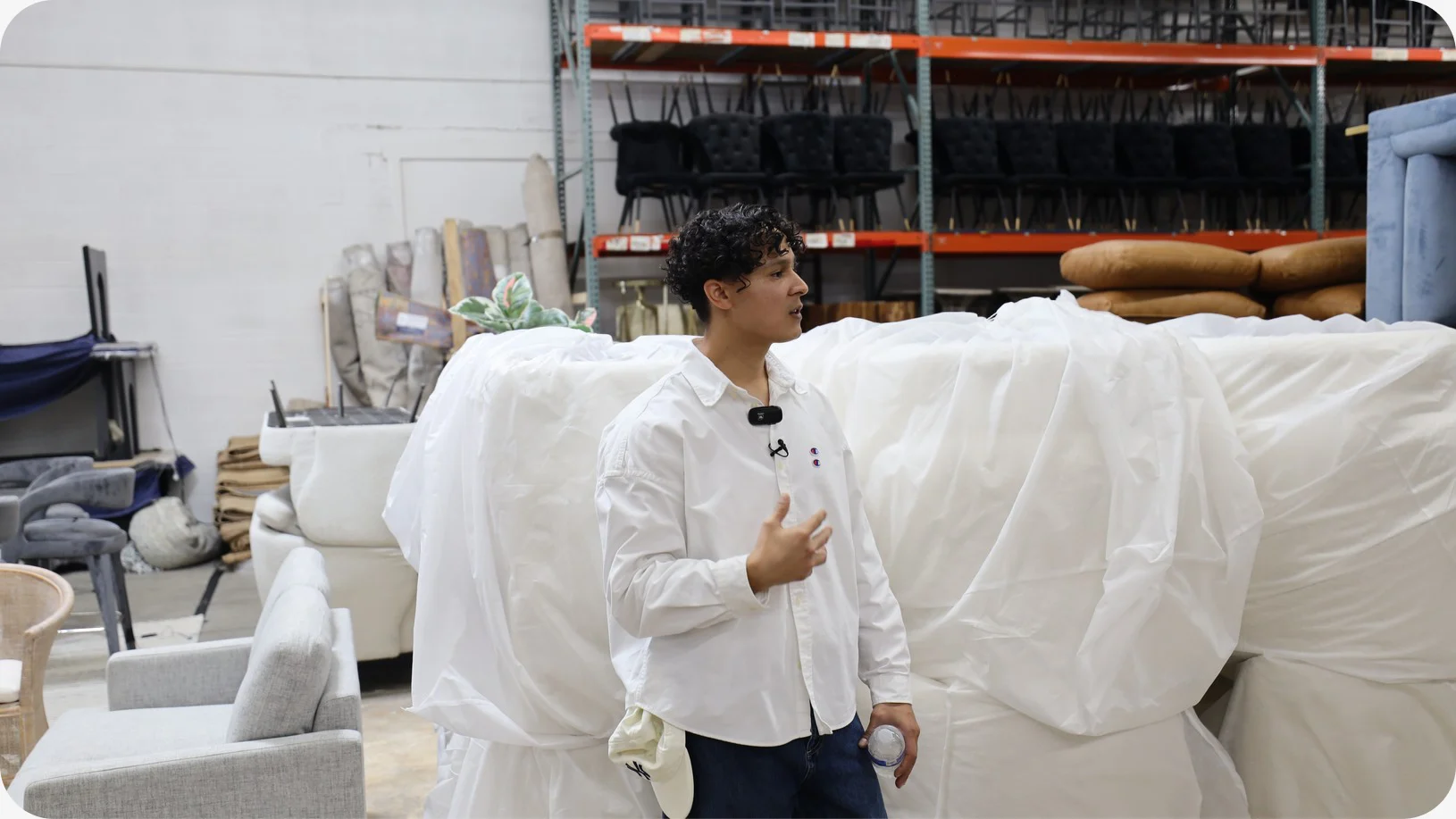
After the team shifted to remote work, that square footage got repurposed — chiavari chairs, seasonal items, linens, cushions — anything that didn’t need to live on the main warehouse floor found a home in the old offices.
It’s a tradeoff a lot of companies are making. Walk-in traffic still happens, particularly for weddings and intimate events where clients want to see the linen options in person. But the calculus has shifted: a smaller showroom footprint and more usable storage is usually the better trade.
Vertical Storage For Tent Tops and Sidewalls
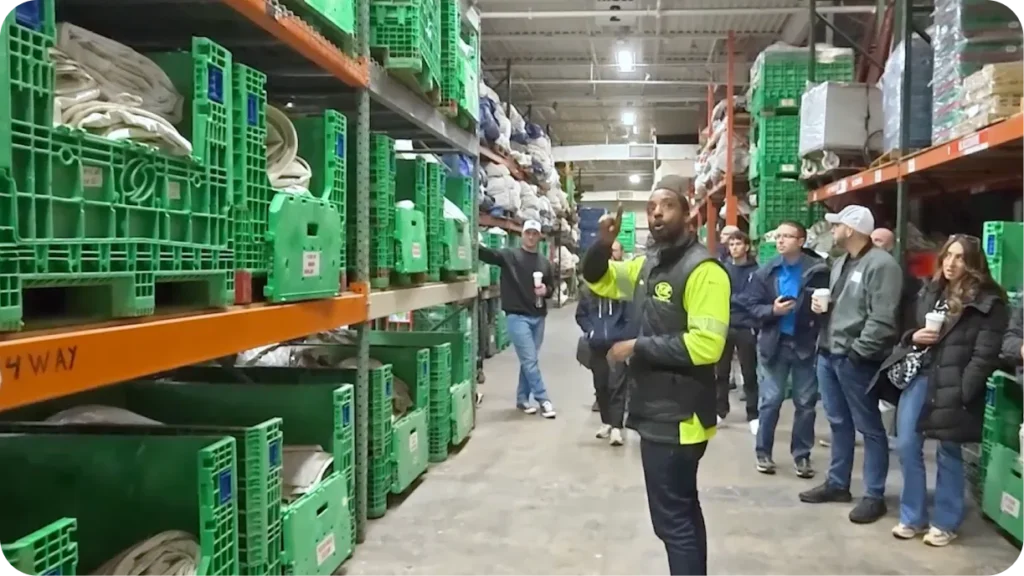
The main warehouse is organized around the inventory that moves most: sidewalls and tent tops run along the walls, labeled by type, with everything from Levo to roping pole tops sorted and accessible. The hardware lives nearby.
What TGIF Tent & Party Rentals is rolling out now is a QR code system layered on top of that structure. Each storage bin gets a printed label with a QR code. When a crew member pulls an item, they scan the code — confirming what was pulled, where it came from, and that it’s the right item. If they scan the wrong bin, it won’t clear. A new label printer was recently installed specifically for this rollout.
For a closer look at how Barcoding works in Goodshuffle Pro, this feature walkthrough covers it.
The pull sheet workflow runs through kiosks in the warehouse and break room — or increasingly, on crew members’ own phones and tablets. Nacho, the lead foreman who has been with the company 18 years, runs the pull process. His system: pull the item, stage it, load the truck, close the job.
If you want to see how another tenting operator uses pull sheets to prevent run-backs and keep crews accountable on install day, the guide to running a profitable tent rental business gets into this in detail.
“Once those items are returned, they’ll be inspected to make sure they’re not damaged, and then added back into inventory.”
— Marcus, TGIF Tent & Party Rentals
Three Scan Points, Not One
One thing that stood out during the tour: the fulfillment process isn’t built around a single scan. There are three points where items get verified:
- The first is when an item is pulled from the rack.
- The second is when it’s loaded onto the truck.
- The third is when it comes back — checked in, inspected, and returned to inventory.
That third step is where a lot of operations fall short, and it’s where missing or damaged items tend to slip through.
The Goodshuffle Pro QR code labels being implemented now are designed to work at all three stages. An item scanned out at pull will need to be scanned back in at return before it’s available again. That keeps the inventory count accurate in real time, rather than after the fact.
Working Around a Single Loading Dock
TGIF Tent & Party Rentals’ main warehouse has one loading dock. For a company running multiple jobs at once during peak season, that’s a real constraint.
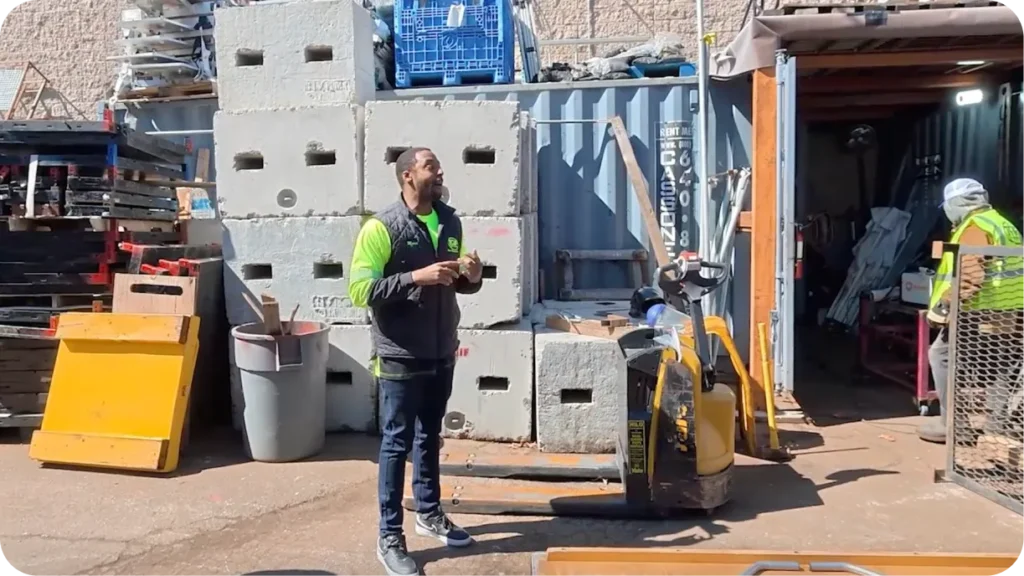
Their solution: use the yard. A forklift moves items that can’t wait for dock access out to the parking lot, where trucks can back in and load from outside. Conex boxes in the yard hold tables, chairs, cookware, and other items that don’t need climate control — so the dock itself handles the heavy tenting gear.
It’s not a permanent fix, but it works. And it’s a reminder that most warehouse constraints have a workaround. The operators who figure those out early don’t have to wait for a bigger building to run a tighter operation.
Rolling Out Digital Processes With the Crew
The QR scan system and digital pull sheets are still being phased in at TGIF Tent & Party Rentals. They’re currently running paper and digital in parallel, doing individual training with each crew member before a group rollout. The approach is deliberate — and it’s the training method, more than the timing, that’s driving adoption.
“If you’re gonna do a deliberate change, you wanna do it in the slow season. You sit everyone down, you can do a group or one-on-one — we’ve been doing one-on-ones with each guy, kind of training them. And then later this month we’re gonna do one big group one once everyone’s had a chance.”
— Benjamin Chuchinsky, AAA Party Rental
The one-on-one format is what makes it work. Crew members who feel like the new process was explained to them — not just handed to them — are more likely to use it consistently. Private conversations also surface real concerns before they become group complaints.
And the accountability that comes with digital scanning tends to become self-reinforcing once the crew sees it working: when something’s loaded and marked, there’s no more “I thought I got that.”
How Linens Get Labeled
One of the more practical conversations that came up during the tour: how do you actually label linens so crew members can grab the right one fast, every time?
TGIF uses a color-coding system for their outsourced linens — yellow stickers for 108-inch rounds, blue for 120s — so anyone on the floor can identify a stack without unbagging everything. For their in-house linens, which they launder and store on-site, the labeling is built into the item itself.
A growing approach among operators: iron-on labels printed with the company logo, the linen size, and increasingly, a barcode.
One company that attended the tour described having their barcodes printed directly onto iron-on patches, which then get ironed onto every tablecloth. The barcode carries the size, color, and item attributes, so the crew can scan it on the floor rather than reading a tag, and the system confirms what they’re pulling.
The practical benefit goes beyond speed. When you’re working an event with another company’s gear in the mix, a labeled linen with your logo on it doesn’t accidentally leave on their truck. It’s a small thing that prevents the kind of loss that adds up over a season.
On-Site Fabrication as a Competitive Advantage
In the back lot, TGIF Tent & Party Rentals has something most event rental companies don’t: a full fabrication operation. Their on-site fabricator handles custom storage builds, equipment repairs, and vehicle maintenance — all in-house.
The racks you see at trade shows, sold as specialized storage solutions? He builds them. Custom frames, modified loading equipment, repairs that would otherwise go to a third-party shop — it all happens on site. It’s one of those capabilities that’s hard to quantify but shows up everywhere: in faster turnaround on damaged gear, in storage solutions built specifically for TGIF’s inventory rather than off-the-shelf, in a vehicle fleet that doesn’t accumulate deferred maintenance.
The conversation even touched on 3D printing — one attendee flagged that smaller replacement parts (pins, clips, connectors) that currently come from outside vendors could eventually be produced in-house.
It’s not something TGIF is doing yet, but it’s the kind of thinking that fits the operation they’re building: bring more in-house, reduce dependence on outside timelines, keep the overhead lean.
Small Decisions, Compounding Over Time
What the tour made clear is that a well-run warehouse isn’t the result of having the perfect facility — it’s the result of years of small compounding decisions. How you label a bin. Whether your crew scans at check-in or skips it. Whether you built a mezzanine instead of signing a bigger lease.
The operators who’ve figured this out didn’t get there all at once, and they’re still iterating. The barcoding rollout at TGIF is a good example: it’s not a complete overhaul, it’s the next layer on top of a process that’s already working.
FAQs
The most common approach is a pull sheet — a job-specific list of every item that needs to go out. Warehouse crews pull items against that list, mark them as loaded, and a job isn’t considered complete until everything’s accounted for. More operators are now using digital pull sheets on tablets or phones, with items scanned at the point of pull and again when loaded onto the truck. Some add a third scan at check-in when items come back, which keeps inventory counts accurate and surfaces any missing or damaged pieces immediately.
Most operators label both the item itself and its storage location. For linens, iron-on labels with the size and company logo are a popular choice — they survive washes and make it easy to identify items on the floor without unbagging everything. For tent tops and sidewalls, clear bin labels with the item and quantity stored in each one let crews work fast without counting. Some operators are now adding barcodes or QR codes to those bin labels so items can be scanned directly from the rack.
Timing matters more than most operators expect. Rolling out a new system in the middle of busy season is a recipe for resistance. The operators who have the most success do it in the slow season, run paper and digital in parallel for a period, and train people one-on-one before a group rollout. Once crews see that the digital process is actually easier — fewer “I thought I loaded that” conversations, more accountability when something’s wrong — adoption tends to follow.

Share On