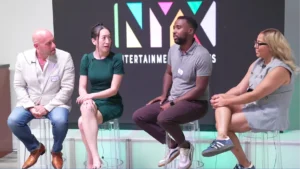
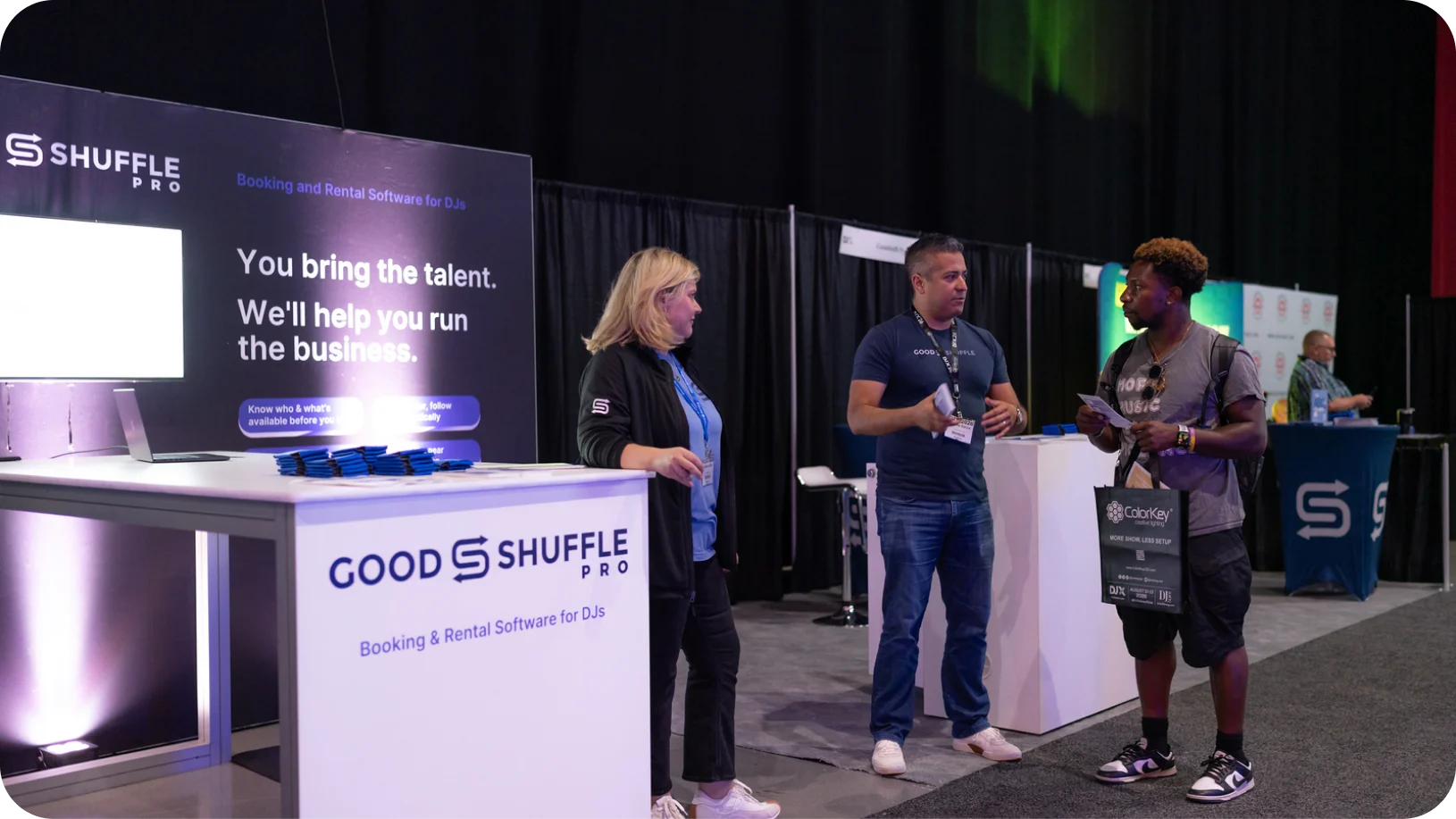
The gig itself isn’t the hard part of running a DJ company, and DJX 2026 knew it. The Day 1 business track ran about three hours on pricing, insurance, contract clauses, packing lists, and how to move a DJ business into AV work. Almost none of it was about what you play.
Here are the five takeaways that stuck, plus what we’d add to each from the other side of the booth. Goodshuffle Pro sponsored the opening session and worked the floor for four days, so this comes from three Day 1 sessions and a lot of hallway conversations.
Key Takeaways:
-
DJX 2026 built its business track around professionalism, not gear.
Punctuality, contracts, insurance, and client communication got more airtime than anything technical.
-
Insurance drew more audience questions than any other topic.
Coverage requirements are increasingly what separates the operators venues will book from the ones they will not.
-
Presenters framed growth as new service lines, not new customers.
Idle gear rented midweek and white-labeled production work both came up as ways to sell more to existing clients.
-
One reframe landed harder than any other: better gigs beat more gigs.
Four shows a week that chase invoices lose to one that pays more and generates referrals.
-
Liam Gargiulo of Event Pros outgrew software capped at 20 line items.
He now averages 75 to 150 on a single contract.
What DJX Gets Right
What stands out before any single session is how openly this community shares. Presenters gave away pricing methods and technique that other industries guard, and audience members finished each other’s answers instead of protecting an edge.
“Everybody wants to see each other succeed, and DJX is bringing everybody together”
— Jake Scotto, Technical Solutions Specialist, Goodshuffle Pro
1. Professionalism Sells Before You Do
The Day 1 business track spent most of its time on how you show up, not what you play. Two of the three sessions were built almost entirely around punctuality, appearance, contracts, and how you talk to a client. The specifics the room kept returning to:
- The punctuality standard: if the event starts at 5:00 and you are not there by 4:00, you are late. Not because of setup time, but because a client’s anxiety about whether the DJ is showing up does not wash off later.
- Volume discipline: dinner music played too loud was the single biggest gripe in the room. Annoy the venue staff and you do not get called back.
Where a contract does the work for you
Several of these got solved with a clause rather than a conversation. A clause putting your table within 25 feet of an outlet, after one panelist described nearly cooking a rig on a 200-foot extension run. A clause covering whether a meal is provided. If you are writing those once and retyping them into every contract, that is the part to automate, so the standard travels with the paperwork instead of living in your head.
2. Insurance Is the Top Question
Insurance drew more audience questions than any other topic across two of the three sessions. Equipment coverage, liability coverage, day-rate policies, and what to do when a venue demands a certificate on short notice.
The room’s read was that a venue requiring coverage works in your favor, because it screens out operators willing to undercut you. One attendee mentioned his premium climbing from roughly $1,200 a year to more than $1,000 a month, the other half of that story.
Making coverage part of the booking, not a scramble
The practical gap is timing. A certificate requested Thursday for a Saturday event is a different problem than coverage already attached to the job.
- Per-event coverage: Goodshuffle Pro’s Event Insurance integration lets you add coverage to a specific event rather than scrambling for a certificate.
- Know which policy you need: equipment damage and third-party liability are not the same product, and the difference between general liability and inland marine decides which one covers your speakers in a van.
3. Grow Services, Not Your Client List
The strongest growth argument at DJX 2026 was not about booking more weddings. It was about selling more to the clients already on your books.
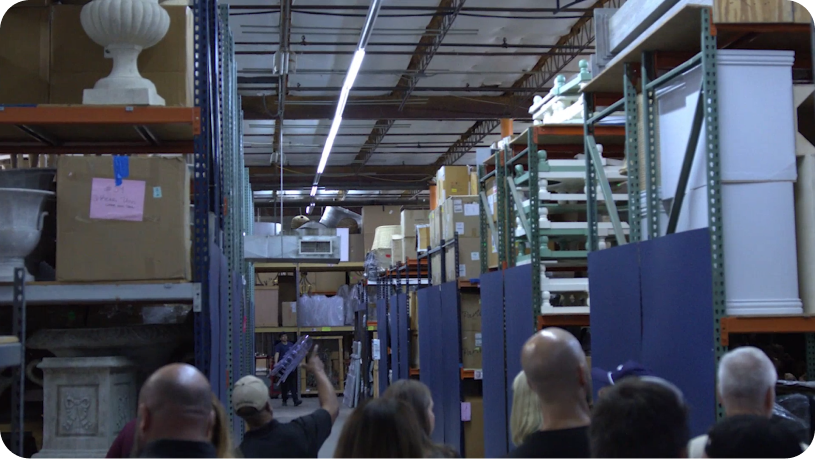
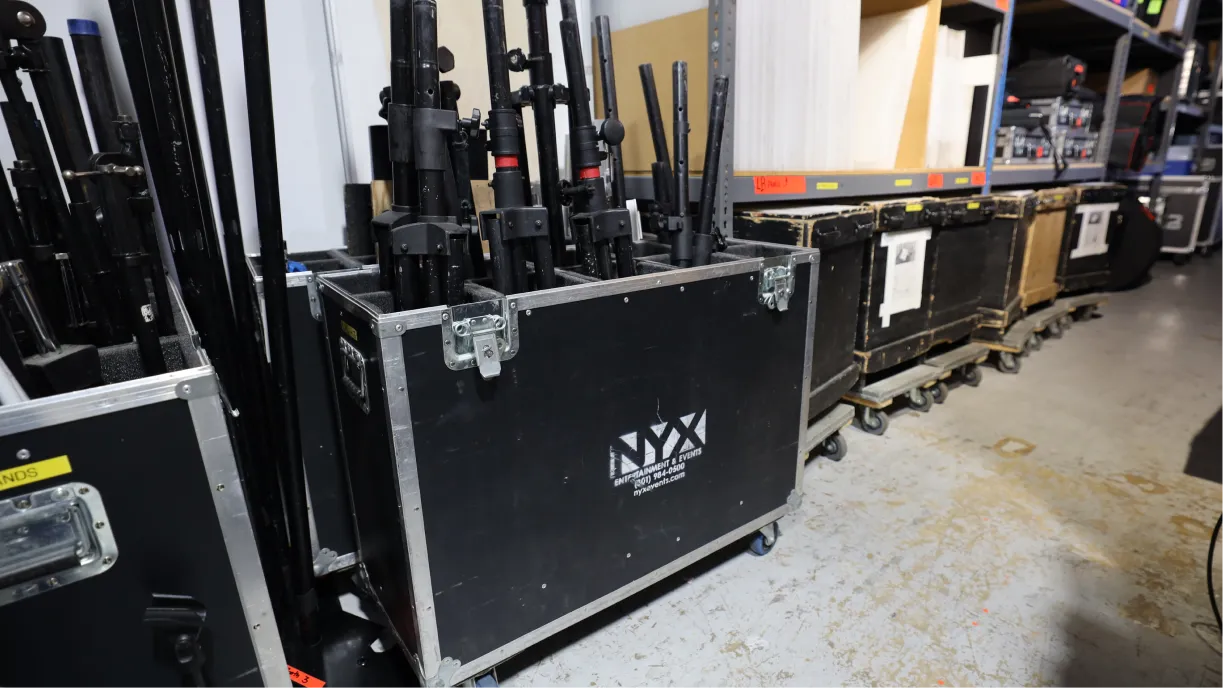
The AV session’s premise was idle gear. Two speakers, a mixer, and a microphone sitting in storage Monday through Friday are a product you could be renting midweek, and most of those jobs need no music at all. A mic switched on for a luncheon. Two TVs for a slideshow. The presenter’s five steps:
- Inventory what you own and what sits unused during the week.
- Quote to the need rather than selling fixed packages.
- Add a page to your site, because existing clients default to the big production houses when they do not know you offer it.
- Network through associations and volunteer AV at their events. His main referral engine.
- Track revenue per service line and cut what is not earning.
His approach to going bigger was to own less. Rather than buying line arrays or staging, he partners with production companies that already carry the gear, the insurance, and the crew, then runs the job under his own name.
Step five is where most operators stall, because per-service-line revenue is only knowable if quoting and inventory live in the same place. White-labeling someone else’s line array works right up until nobody can say what is committed where. That is the collision that catches growing operations across the event industry.
4. Better Gigs Beat More Gigs
The third session’s reframe was aimed at the request its presenter hears most from coaching clients. Almost all ask for more gigs. He asks whether they would rather play four shows a week, or one that pays more than all four and brings referrals instead of chased invoices.
His mechanism was a quadrant. Work you are good at and dislike gets trained into someone else. Work you are bad at and dislike gets handed off entirely, because that is where your time drains out.
Running on memory has a running cost
One panelist, asked about client management software, said he keeps everything in his head and on his phone and calls to confirm every gig the Monday before. His reason for staying off software was a fear of forgetting a booking.
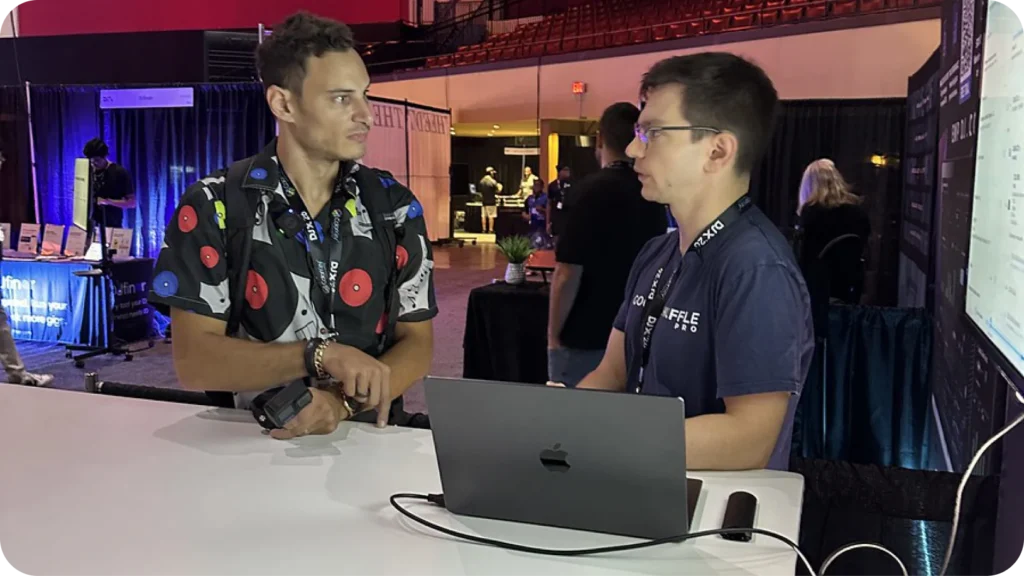
Memory feels like it works right up until it does not, and the failure is never convenient. It shows up on a Saturday, in front of a client, with a crew already loaded.
The part that gets missed is what it costs while it is still working. Every confirmation call, every mental re-check of the weekend, every time you are the only person who can say whether a booth is free. That is unpaid admin time you spend every week to run a system a shared record would run on its own. And none of it can be handed off, so nobody else quotes without checking with you first.
“Events are constantly changing, and if you have fractured information from so many different sources, your team is not gonna know the final outcome”
— Jake Scotto, Technical Solutions Specialist, Goodshuffle Pro
The honest version is that almost everyone switches eventually, and almost nobody says they wish they had waited longer. If you are weighing it, start with what to actually ask before you buy.
5. Every Stage Was in the Room
The floor at DJX 2026 ran from one-person operations up to companies with 50 DJs on the books. One operator described running five to twelve events in a single day. Another books more than 700 a year. Neither looked like it from across the aisle.
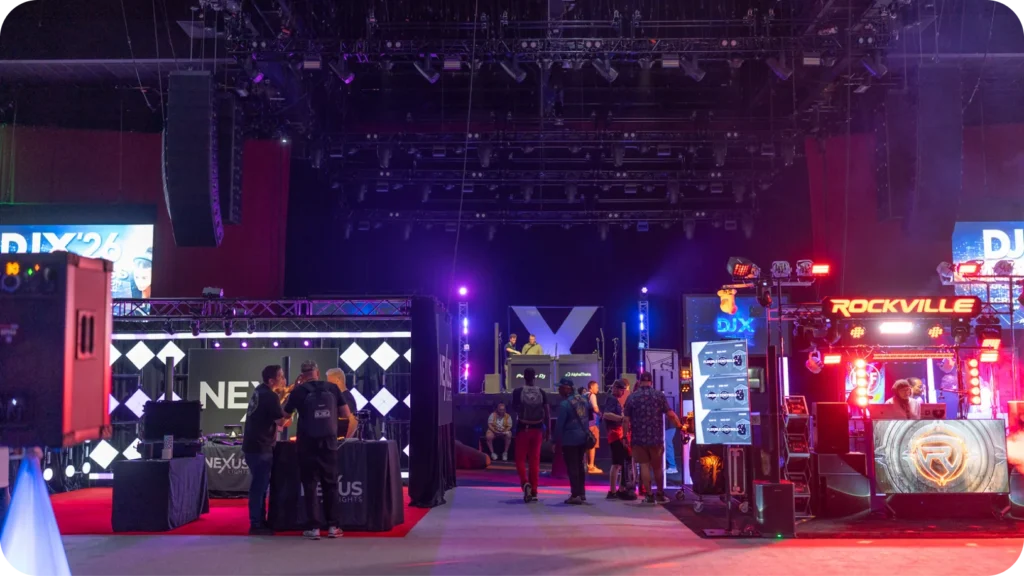
That range is most of the argument for going. A solo operator can ask someone three stages ahead what broke and when. A crew owner can see what the next tier of production costs before committing to it. You do not get that from a forum thread or a sales call.
What shifted by stage was the problem people described:
- Solo operators talked about looking professional enough to charge more.
- Crews talked about permissions, and who should see client rates.
- Production-side companies talked about trucks, and reading revenue by service line.
How Event Pros Made the Jump
Liam Gargiulo runs Event Pros, a DJ and photo booth company that expanded into gear. He stopped by the booth and walked through what pushed him off his old software. The breaking point was a line-item cap that allowed 15 to 20 items on a contract.
“When we started expanding our rental inventory versus just DJ and photobooth services, our old system only allowed us to put, 15 or 20 line items on a contract.”
— Liam Gargiulo, Event Pros
He now averages 75 to 150 line items, and does not show the client all of them. He builds packages and pools items so the client sees something manageable while the crew loading the truck sees everything. What changed:
- Add-on conflicts surface early. A photo booth could get promised to a job while it was already committed elsewhere, and nothing flagged it until it mattered.
- Quotes carry photos and descriptions, which he called a cleaner and more modern look than what he could send before.
The overbooking piece changed how he sells. He sees a conflict early enough to act, whether that means calling the client who has not signed or reaching out to his vendor network to sub-rent.
“Now I can see if we’re gonna potentially have an overbooking.”
— Liam Gargiulo, Event Pros
What to Do Before Next Season
The education at DJX 2026 holds up, and all of it is actionable without buying anything. The common thread is that each takeaway gets easier when the details stop living in one person’s head. Contract terms that attach themselves. Coverage tied to the event. Revenue you can read by service line. A conflict that surfaces Tuesday, not Saturday.
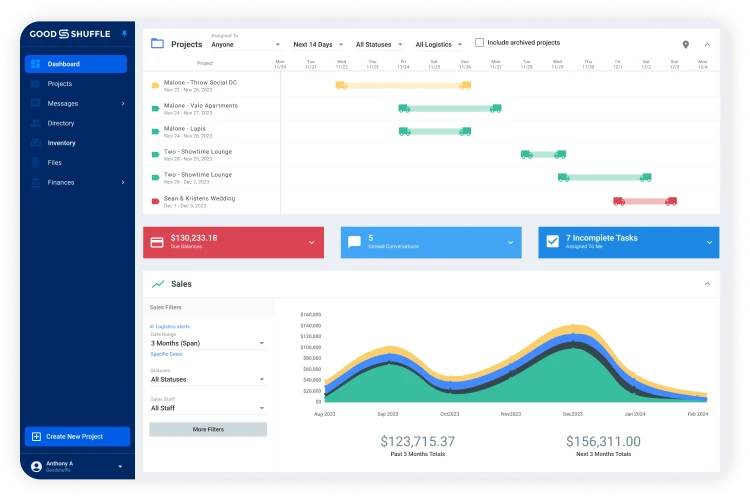
If the number of hats has stopped being funny, that is the signal. Here is Goodshuffle Pro built for DJ companies.
FAQs
DJX, formerly DJ Expo, is the annual national trade show for mobile and event DJs, held in Atlantic City. It pairs a show floor of gear manufacturers with a multi-day business education track. The 2026 edition ran August 10 through 13.
The education track is aimed at the business rather than the craft, covering pricing, contracts, insurance, and expansion into AV and production. Attendees ranged from solo operators to companies running 50 DJs. Several presenters said trade show attendance is how they decide who to subcontract.
There is no single answer. Operators at DJX named DJ Event Planner, HoneyBook, QuickBooks Online, Google Calendar and Sheets, custom builds, and paper. Plenty run the whole business out of a phone and a memory, which works until a second crew and a second calendar enter the picture.
Conflict detection is the practical answer: software that flags when two events want the same item on the same date, including add-ons like photo booths and uplighting. Without it, most operators rely on recall and a confirmation call a few days out.
Yes, and the data question is the first thing to raise with any vendor. Ask who handles the migration, what gets moved, and how long you run in parallel. Goodshuffle Pro assigns a dedicated onboarding specialist who builds the plan around your data rather than handing you an import file.

Share On