Table of Contents
-
1. Know Your Real Constraint
-
2. Spend Money to Save Time
-
3. Don’t Be the Only One Who Knows
-
4. Protect Yourself From Burnout
-
5. Match the Channel to the Client
-
6. Speed Wins the Lead
-
7. Always Plant the Next Sale
-
8. It’s How You Make Them Feel
-
9. Never Make the Same Mistake Twice
-
10. Take the Leap Before You’re Ready
-
The Common Thread
Ask anyone who runs a DJ, AV, or event rental business why they do it, and you’ll hear a version of the same answer: passion, with a healthy dose of insanity.
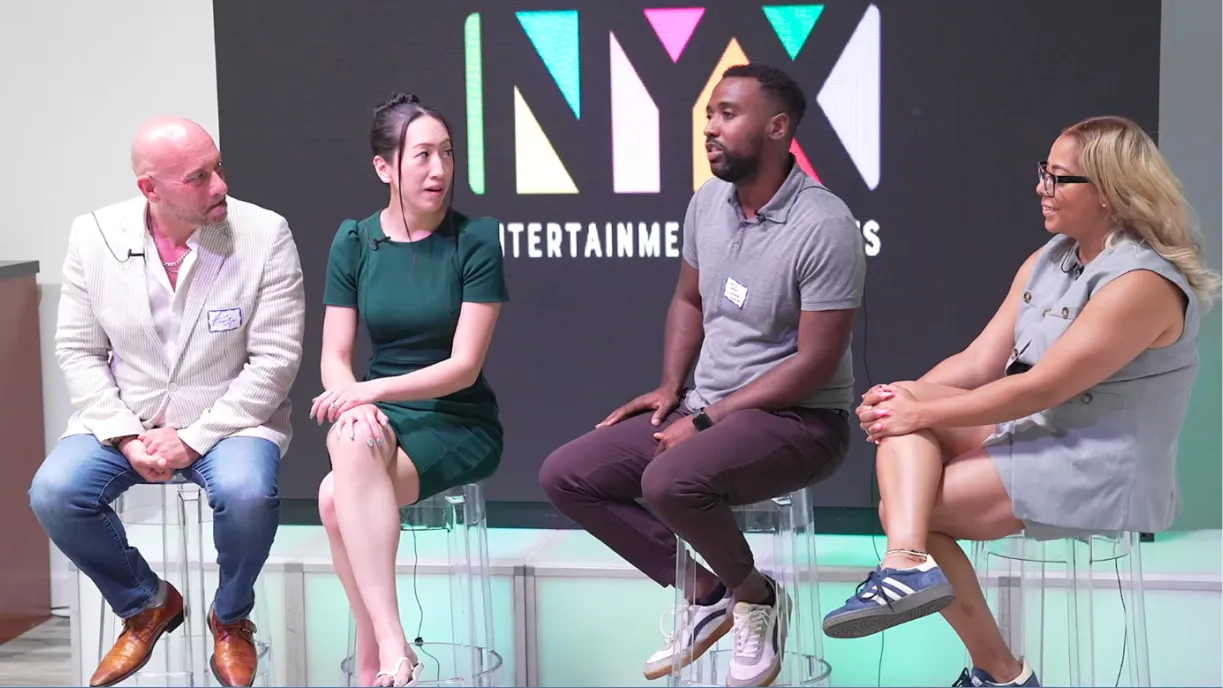
During a roundtable hosted by Goodshuffle Pro, three owners — Howie Teger of NYX Entertainment & Events, Chris Yates of Ultimate Occasions, and Kia Taylor of Elegant Experiences — talked through what it really takes to grow in this work. These are the lessons they wish they’d learned sooner.
It’s passion, but with a little bit of insanity.
— Kia Taylor, Elegant Experiences
Key Takeaways:
-
Your biggest constraint usually isn’t money or space — it’s your time.
The owners who grow fastest spend money to buy back hours and put their energy where it earns the most.
-
You can’t grow what only you know how to do.
Every task and service needs two or three other people trained on it before the business can scale past you.
-
Speed wins the lead.
Operators who turn an inquiry into a quote within hours, not days, close more of the work coming through their site and social.
-
People remember how you made them feel.
A follow-up call or a handwritten note does more for repeat business than any “white glove” tagline.
-
The best operators stay coachable.
“We’ve always done it this way” is the fastest way to fall behind, and fresh eyes keep a business moving forward.
1. Know Your Real Constraint
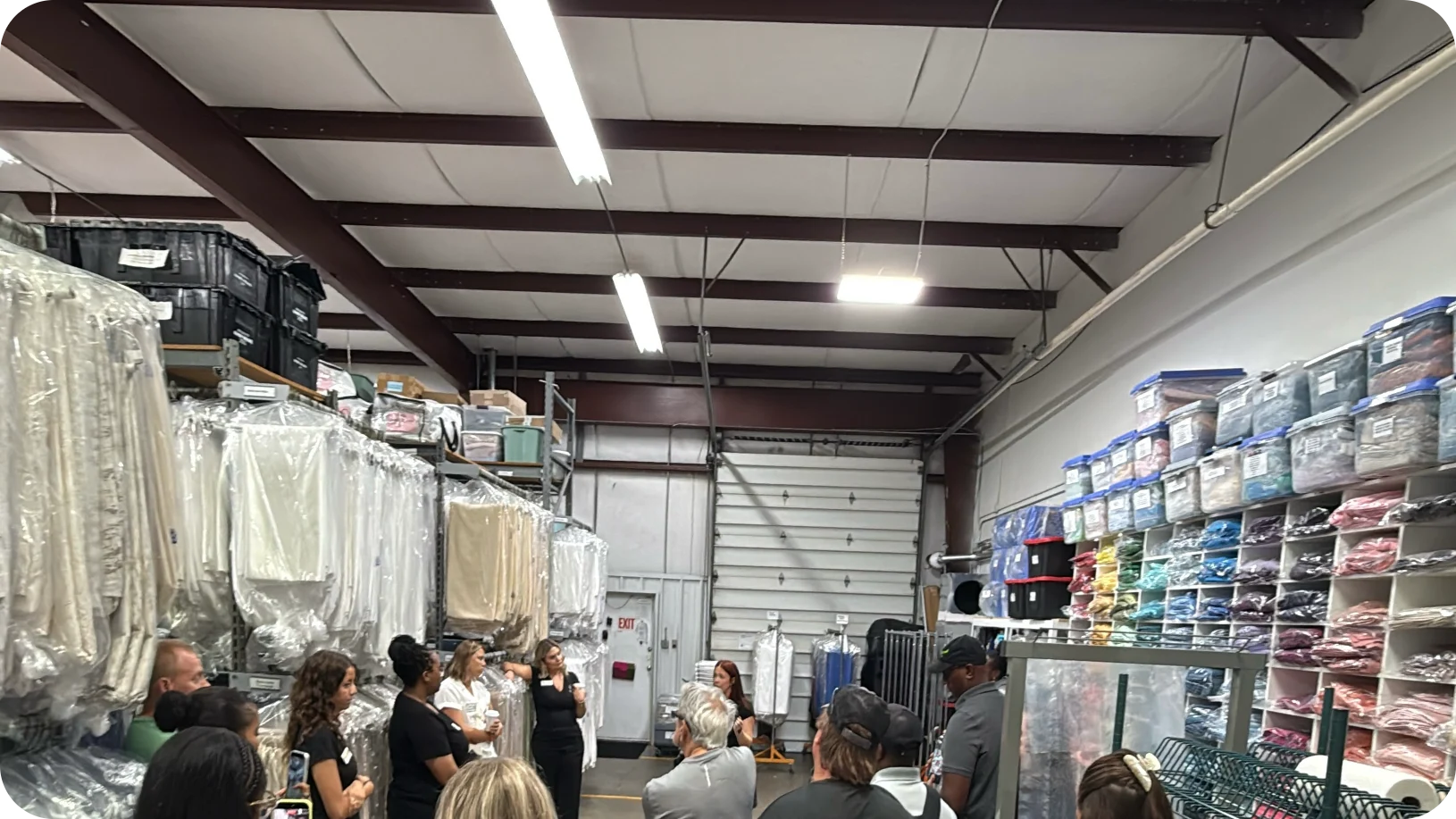
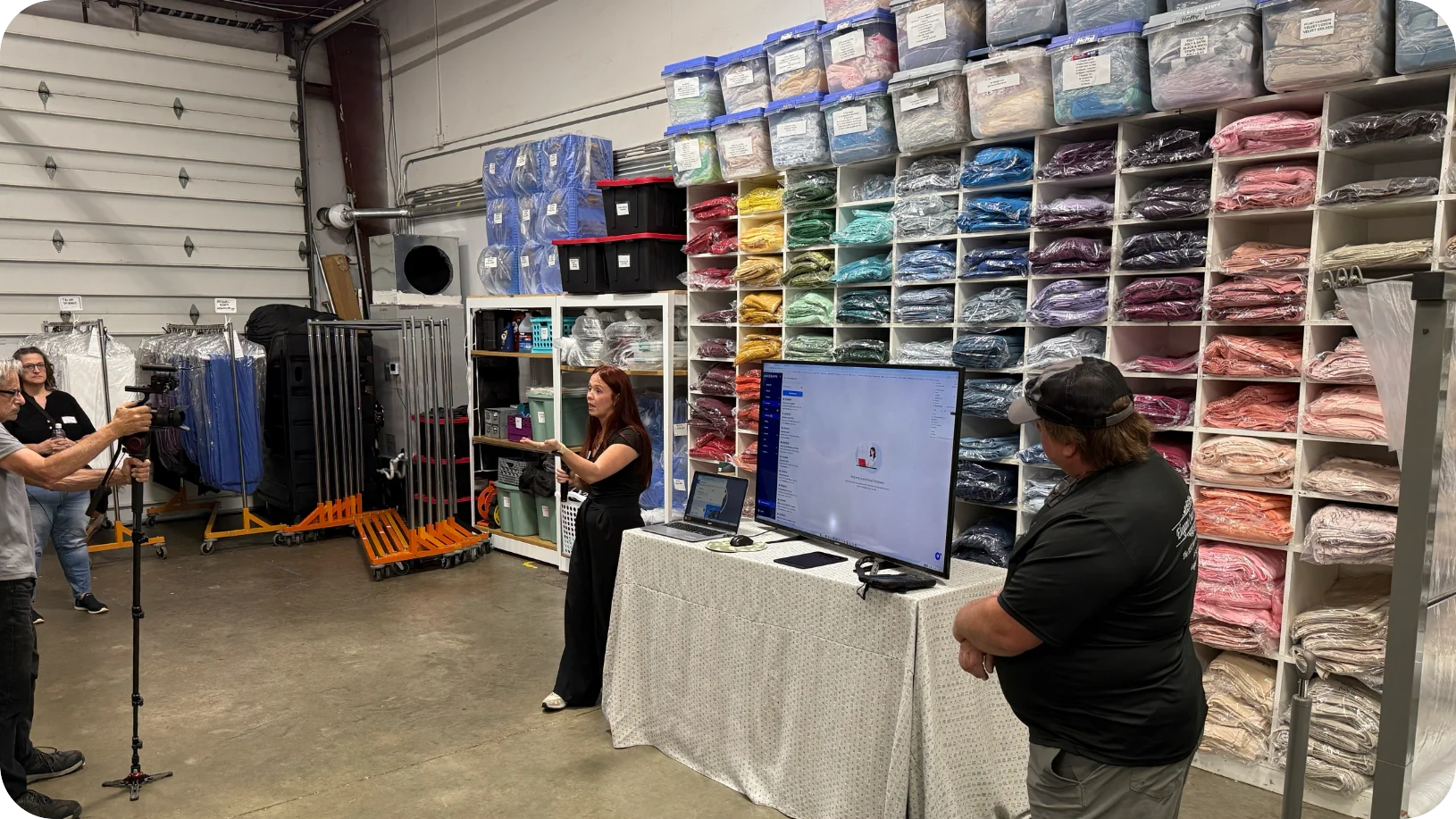
The panel kept circling one idea: the thing holding most operators back isn’t money or warehouse space — it’s time. Colin Connor of Goodshuffle Pro raised the High Output Management idea of identifying your single biggest constraint, and for these owners the honest answer was usually themselves and the hours in their day. Kia Taylor described nearly buying a commercial washer and dryer to cut a $21,000-a-year linen-laundry bill — until she realized the real cost wasn’t the bill. It was who would run the machines, and where that time would come from.
What can I do that can get the highest ROI on my time?
— Kia Taylor, Elegant Experiences
2. Spend Money to Save Time
That reframing points to a principle Colin Connor shared from his early days at Goodshuffle: spend money to save time, rather than time to save money. He gave the example of skipping a cheap metro ride to walk across a city and save a few dollars — and losing half a day in the process. For owners weighing whether to outsource laundry, hire an assistant, or invest in better tools, the math is rarely about the line item. It’s about what those reclaimed hours are worth once you point them at sales, marketing, or landing bigger clients.
3. Don’t Be the Only One Who Knows
Every owner had hit the same wall: a business can’t grow past what only the founder knows how to do. Chris Yates talked about learning to trust his team to deliver at a high level instead of carrying it all himself. Kia Taylor put a rule around it — any time she adds a service, she makes sure a few other people know how to run it before it becomes hers by default. Writing those processes down as standard operating procedures is what makes the handoff stick.
Anytime I try something now I’m like, “Let me do it, but also make sure there’s a few other people in the company who know how to do it so it’s not always coming back to me.”
— Kia Taylor, Elegant Experiences
4. Protect Yourself From Burnout
This is a high-pressure, fast-turnover business, and the owners were candid that burnout is the thing most likely to take a company down. Their answers weren’t about doing less work — they were about building the structure to sustain it. Kia keeps a designated recovery day after event weekends. NYX runs defined business hours and pushes the team to look after their health. And several owners pointed to leaning on technology like Goodshuffle Pro to take the manual grind — contracts, inventory, client reminders — off their plates, so their energy goes to the parts of the business only they can do.
The biggest cause of loss in this business, whether it be loss of employees or loss of a business, is burnout.
— Howie Teger, NYX Entertainment & Events
5. Match the Channel to the Client
Howie compared marketing to a witch’s cauldron — a brew you’re constantly adjusting for current conditions. What works has shifted over the years from the Yellow Pages to print to social, and the real skill is knowing which channel reaches which customer. NYX maps a detailed persona for each of its client types and markets to each where they actually spend time: the bar mitzvah moms on Facebook, the brides on Instagram, their kids on TikTok. The point isn’t to be everywhere. It’s to be deliberate about where you promote your event company.
You’re constantly adjusting the stew for current market conditions and trends and the way your prospective customers receive, or want to receive, the information that you have.
— Howie Teger, NYX Entertainment & Events

6. Speed Wins the Lead
Chris Yates pointed to a stat he heard at a conference that stuck with him: respond to a lead in the first couple of hours and your odds of winning it go way up. So he built his website to capture what he needs — name, venue, address — and quote fast, getting ahead of competitors still waiting to call back.
He credits Goodshuffle Pro’s Website Integration that feeds those requests straight in, and says social now drives most of his leads. The lesson is simple: the faster you can turn an inquiry into a quote, the more work you win. It’s worth studying what the best event rental websites do here.
When you respond to leads within the first two hours, you have a 90% chance of winning it.
— Chris Yates, Ultimate Occasions
7. Always Plant the Next Sale
Customers usually don’t know everything they need — and the owners agreed that’s an opening, not an annoyance. Howie’s example: a client books “just a microphone,” then can’t understand why no one can hear anything, because there’s no mixer, no cables, no speakers. Missing those moments, he said, can cost a company a thousand or two per event. The fix is to plant the seed early without pushing, and to be the one-stop shop clients increasingly want. Kia does it through customized quote templates and reminders that prep clients on labor, fees, and add-ons before the questions even come up.
We’re in a society that believes in ease. Make it easier for me. Make it easier for them and more profitable for you.
— Howie Teger, NYX Entertainment & Events
8. It’s How You Make Them Feel
Everyone claims “white glove service,” Howie noted — which is exactly why the phrase has become noise. What actually sets a company apart is how it makes clients feel. Chris described calling a client after an event just to ask how it went, and her reaction said it all: most companies never follow up once they’ve been paid. Small gestures — a follow-up call, a handwritten note — do more for referrals and repeat business than any tagline.
People don’t remember what you say or do. They don’t. They do remember how you make them feel.
— Howie Teger, NYX Entertainment & Events
9. Never Make the Same Mistake Twice
Howie shared the best advice his father gave him after a costly early mistake nearly sank his young company. The owners all warned against the opposite trap, too: getting stuck in “this is how we’ve always done it.” Howie said he’s hated the times he stayed boxed into one way of working, and Kia admitted stubbornness held back her growth until she learned to bring in people whose strengths complemented hers. Fresh eyes — often from new hires — are how the best operators keep finding a better way.
You made a mistake. You will continue to make mistakes. Just don’t make the same mistake twice.
— Howie Teger, NYX Entertainment & Events
10. Take the Leap Before You’re Ready
Growth always involves a leap that doesn’t feel safe. Kia’s advice: do it scared. The owners also pushed back on the idea that other operators are the enemy. Chris told the story of buying his first moon bounce while working for another company — and instead of getting territorial, the owner he worked for offered to let him rent his inventory too. That collaborative streak, several said, is why the market works. There’s enough to go around, and the relationships you build often matter more than the competition you fear.
If you’re gonna do it, just do it scared.
— Kia Taylor, Elegant Experiences
The Common Thread
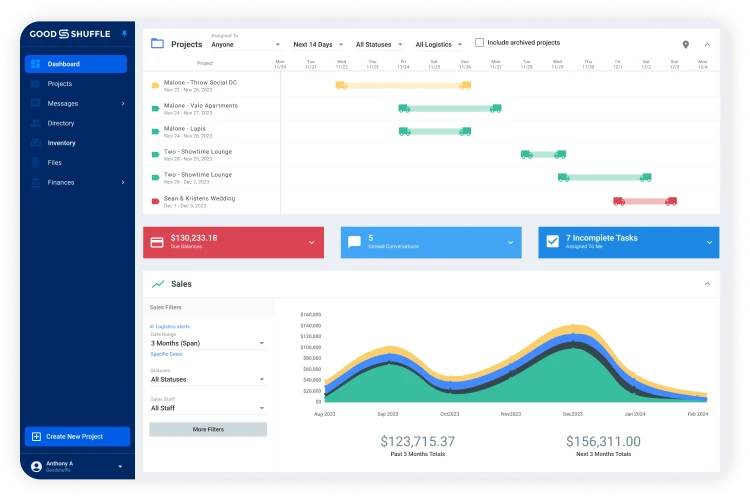
For all their different businesses — entertainment, AV, decor, venues — the owners kept landing in the same place. Growing an event rental company comes down to protecting your time, trusting your team, and staying open to a better way of doing things. The tactics change; the willingness to learn doesn’t. Several of the owners credited Goodshuffle Pro with taking the busywork — contracts, inventory, client reminders — off their plates so they could focus on the rest.
FAQs
The owners pointed to two signals. There’s a financial one — when your efficiency is capping sales and an investment would make the work easier to win — and a gut one. As one put it, when it’s truly time, you won’t have to ask; you’ll just know.
Almost every owner said the same thing: people. The real bottleneck is how fast you can hire and train someone you trust to deliver at your standard, which means your own time is usually the limiting factor.
By being a one-stop shop and responding fast. Clients increasingly want one point of contact for an entire event, and quoting within a couple of hours often wins the job over competitors who take a day to call back.
Mostly by matching the channel to the customer. One operator described marketing to different platforms for different clients and getting the majority of leads from social, with a fast-quoting website doing the rest.

Share On