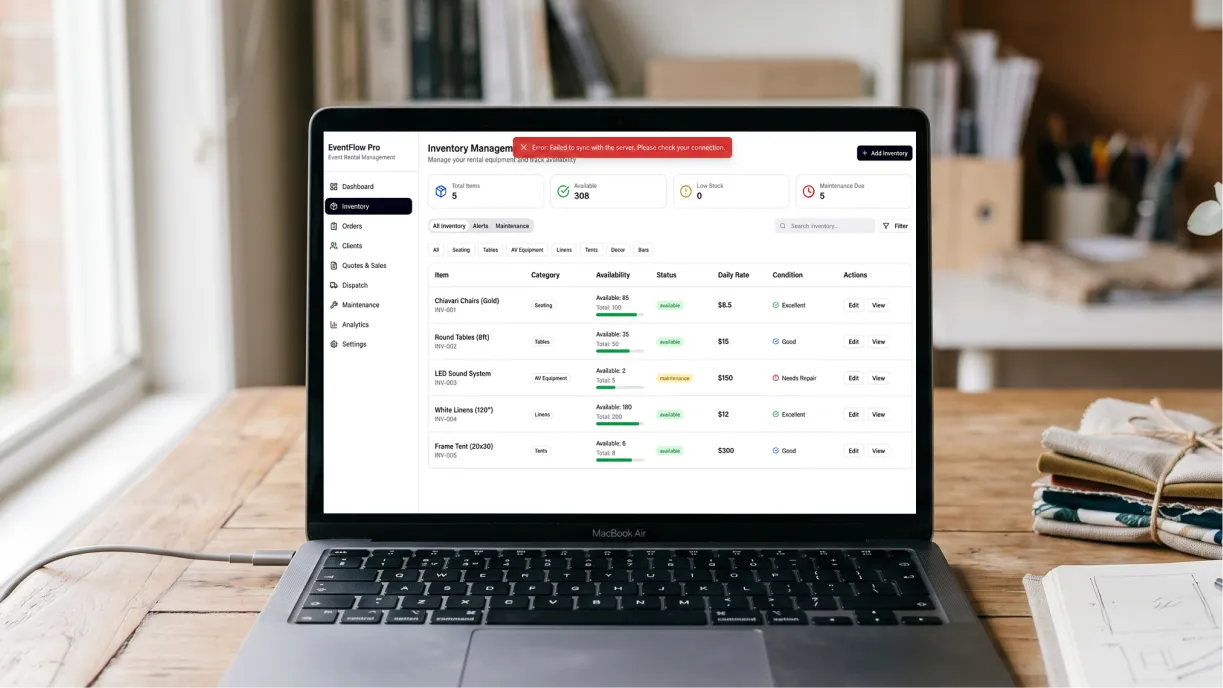
There’s an idea going around right now: why pay for event rental software when you could just build your own with AI?
Fair question. And the honest answer isn’t the one you’d expect a software company to give: You probably can build it. The real question is whether you want to own everything that happens after the first version works.
Key Takeaways:
-
Building the first version is easier than it's ever been.
Describe a rental app in plain English and an AI can hand you something that runs the same afternoon.
-
The first version is the cheap 20%. The expensive 80% never ends.
Security, edge cases, integrations, and upkeep are where a weekend project turns into a second job.
-
Roughly 45% of AI-generated code ships with a known security flaw.
For software touching logins, permissions, and payments, that’s not the place to guess.
-
You got into rentals to run events, not to maintain software.
Every hour spent keeping your own tool alive is an hour off the floor and away from the business you chose.
-
What you're really buying is everything after the build.
Software like Goodshuffle Pro takes on the security, upkeep, and constant change a homemade tool leaves on your plate.
The First Version Is the Easy Part
The idea deserves credit, because the barrier to a first working version has never been lower. Describe the rental tool you want, answer a few questions, and an AI hands you something that runs. This is the workflow the industry started calling vibe coding, a term AI researcher Andrej Karpathy coined for throwaway, weekend-project builds. For that kind of work, it’s a genuine shortcut.
Think of the hardware store. Anyone can buy a length of PVC and a wrench, and the store is glad to sell it. Plenty of people patch their own drywall or re-tile a bathroom, and some are good at it. Building the first version of your own software now sits in that same bucket. It’s possible, and it’s worth doing when the stakes are low.
Where the Weekend Project Goes Sideways
You know how the bathroom story ends. The weekend re-tile turns up a leak, the leak turns up a rotten subfloor, and three months later you’re still not done. Software balloons the same way, except the stakes climb faster, because this thing is holding your bookings and your money.
AI is great at the happy path, where every input is clean and nothing weird happens. It’s much weaker at the edge cases, the error states, and the strange real-world inputs that fill an actual business day.
Picture an ordinary rental week: a client shifts their event date and half the order now overlaps another booking, a delivery comes back two chairs short, and a partial refund has to run through the right tax rate. Every one of those is a rule your homemade tool has to know, and every rule it misses is gear double-promised or a number that doesn’t add up. Software that runs in a clean test is a very different thing from software that holds up on your worst Saturday of the season.
Security is the part that should stop you cold. Veracode tested more than 100 models and found that 45% of the time, AI writes code with a known security flaw in it, and follow-up prompting tends to add flaws rather than remove them. One founder made headlines shipping an app he said he hadn’t written a line of, right up until researchers found it had leaked more than a million access tokens within days. Nobody had checked the login layer.
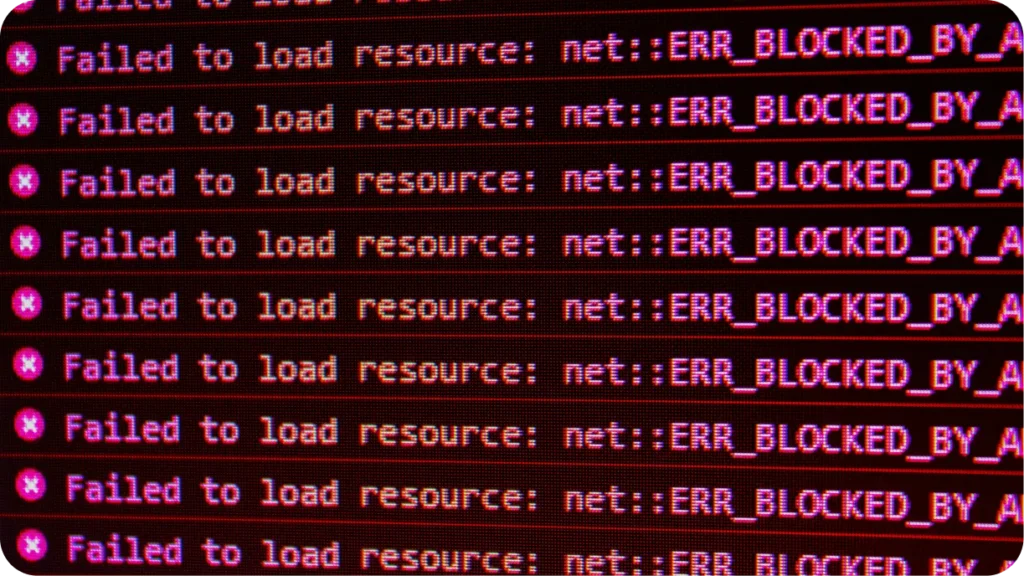
Engineers already have a name for the mess this leaves behind: vibe slop, the buggy software, outages, and piling technical debt that show up when speed wins over review. And nobody budgets for the biggest cost, which is that the software is never finished. It needs patching and revisiting for as long as your business runs on it. Build it today and you own it forever.
You Didn't Get Into Rentals to Code
Craftspeople exist for a reason. Plenty of people are handy, and even the handiest eventually hit a job bigger than the weekend they set aside for it. Software is the same, with one twist: the appetite for it only grows. The moment your homemade tool works, you’ll want it to do more. Sync with QuickBooks. Cover a second location. Send a client-facing quote. Route the trucks. Each one is another rung on a ladder that keeps getting taller, and you’re the only one climbing.
You didn’t get into tenting, florals, AV, or rentals to run a software company. Time is money, and every hour you spend keeping your own tool alive is an hour off the floor, away from clients, out of the business you picked. Building your own doesn’t just cost you the build. It quietly hands you a second job you never applied for.
What You're Not Signing Up to Maintain
Flip it around. Buying software built for this work is really a decision about where your time goes. You could build the first version. Keeping it secure and working through every busy season is the expensive part, and that’s the part you hand off.
That’s what Goodshuffle Pro is: software built specifically for event rental businesses, so the hard parts come already handled and already maintained. Instead of writing and rewriting the code yourself, you inherit the work thousands of other event pros have already shaped.
The same tent, table, or lighting rig can’t get promised to two events on the same weekend, because conflict detection catches it. Your crew scans gear in and out with mobile barcoding instead of guessing. Your books stay current through a QuickBooks-certified sync with no manual exports, and payments run through Stripe with Buy Now, Pay Later built in. Your quotes and proposals look designed without you opening a design tool.
When something comes up, a real person answers on chat the same day, and when you sign up for an account, you’re fully up and running in a matter of days. As you grow into more trucks and locations, add-ons like dispatch routing handle the logistics.

None of that is yours to build or babysit. And it keeps getting better as we ship, whether or not you touch it. That’s the quiet advantage of buying: the software gets a little sharper every week while you run your events, where a homemade tool only improves when you stop working and go fix it yourself.
By All Means, Climb the Mountain
If you want to build your own, go for it, and enjoy the climb. Some event pros love to tinker, and a small internal tool is a fine place to do it. You’re plenty capable of building it. The point is knowing what you’re taking on before you start.
But if what you want is your evenings back and a business that runs without you babysitting the software, that’s the trade Goodshuffle Pro already made for you, thousands of times over. You can climb the mountain. Just know it keeps getting taller, and you don’t have to climb it yourself to stand at the top.
FAQs
Yes. AI tools can generate a working prototype fast, and for a simple internal experiment that’s useful. The gap shows up later, when that prototype has to handle real clients, real payments, and years of maintenance without falling over.
Only if it’s carefully reviewed. Independent testing has repeatedly found that a large share of AI-generated code contains security flaws the author never notices, and the riskiest areas are the ones rental businesses live in: logins, permissions, and payments. Anything touching that data needs a real security review, not just “it works on my screen.”
Building means you own every future problem: the bug at 11pm before a big weekend, the integration that breaks, the feature you didn’t know you’d need until a client asked. Buying means someone else owns that maintenance, and you inherit years of work other event pros have already shaped instead of starting from zero.
When the tool is genuinely simple, low-stakes, and disposable, like an internal calculator or a one-off script to test an idea. The math changes quickly the moment it has to be reliable, secure, and maintained for real money.

Share On