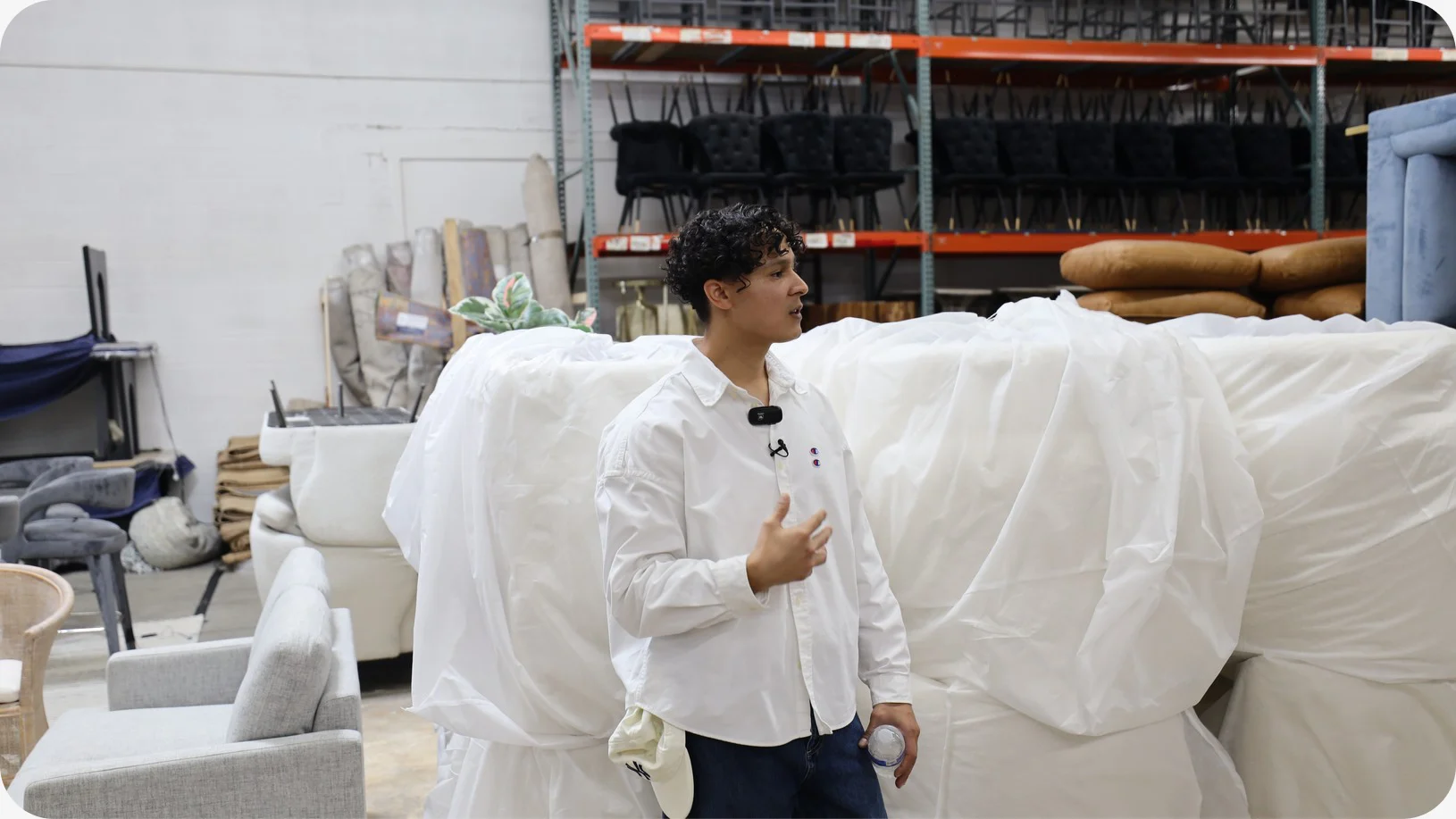
“I was there.” That’s how Gustavo Ortega explains why he doesn’t blame his crew when someone loads the wrong size at the end of a long day. He started on the crew at Staging Design DC. Now he runs operations across its 24,000-square-foot warehouse in Beltsville, Maryland, and when the same mistake keeps happening, he changes the warehouse.
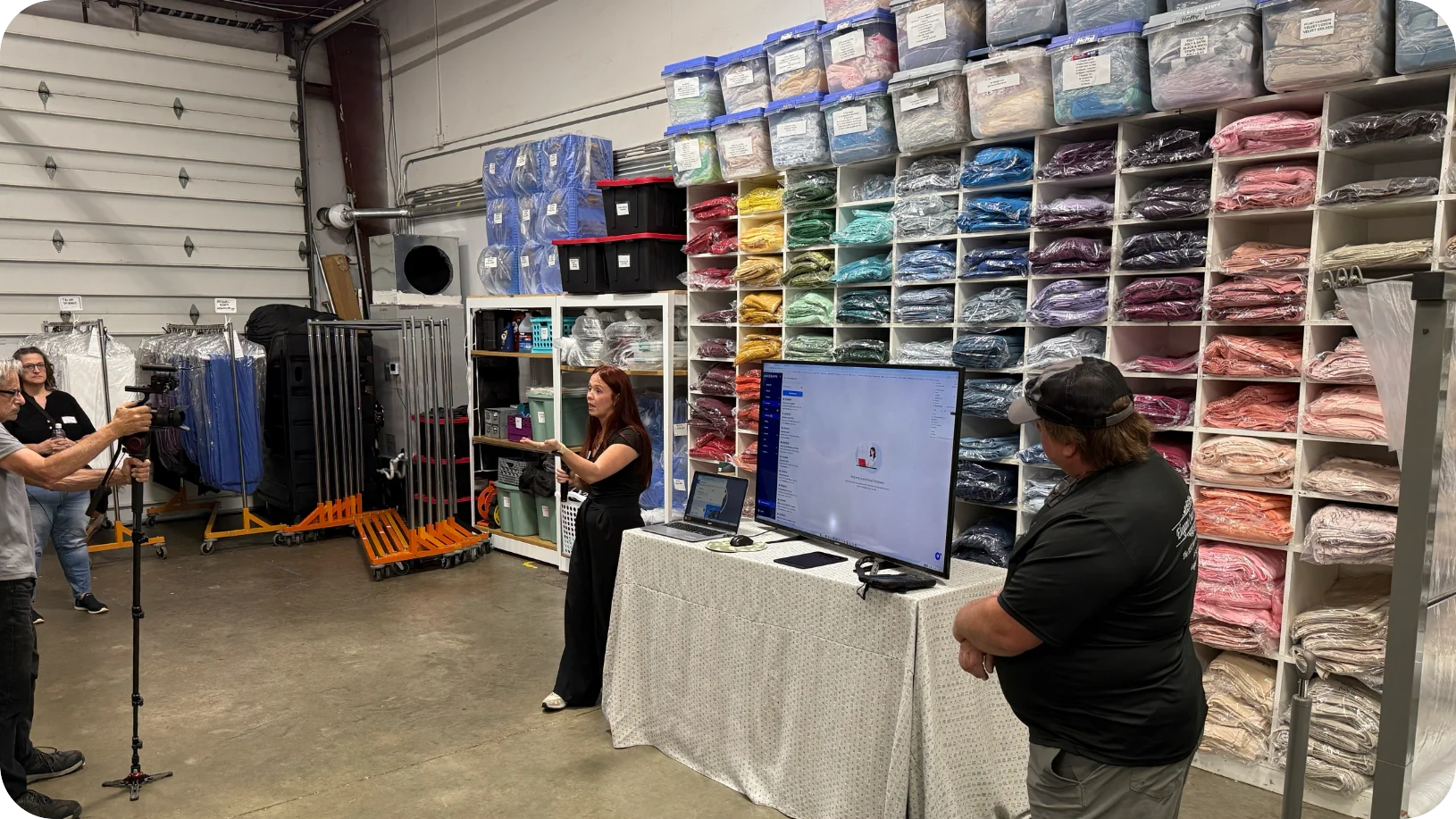
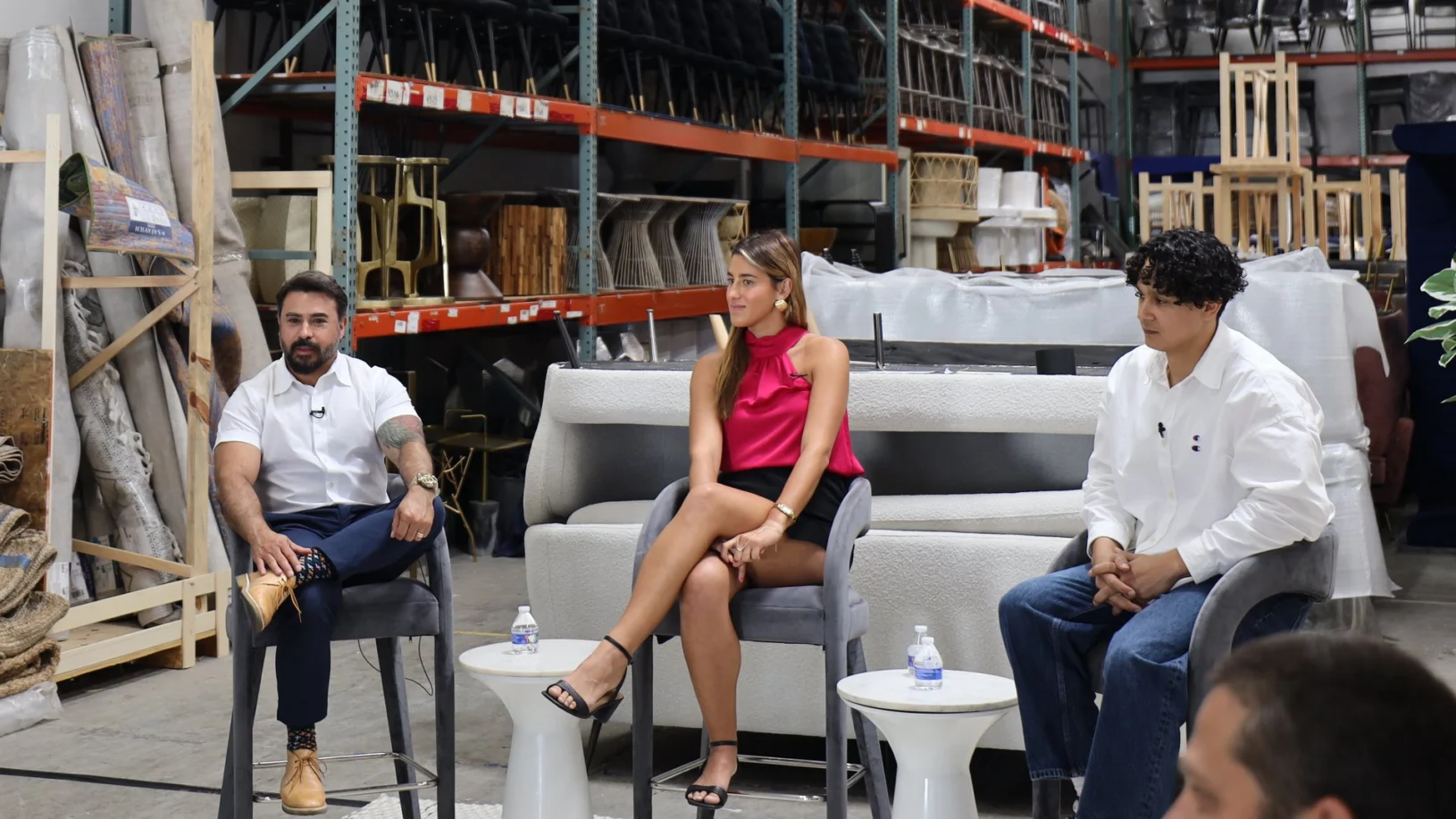
We walked that floor with a group of event rental owners, and the walkthrough is below if you’d rather watch. This recap follows the tour stop by stop, with what each spot fixed and what you could copy.
Key Takeaways:
-
Staging Design DC fixes repeat loading mistakes by changing its event rental warehouse floor.
When the crew kept forgetting the glass tops or loading the wrong headboard, the operations lead moved the glass to the dock and split queen from full.
-
Usage data decides what earns a reachable shelf.
Pieces that rarely go out move up high in the Staging Design DC warehouse, and the top shelf becomes the list for donation.
-
A repair area works when nobody gets blamed.
Once the Staging Design DC crew believed reporting damage wouldn’t cost them, broken pieces stopped hiding on the loading dock.
-
Event rental crews use what's easy.
Staging Design DC gave its crews covers for sofas and accent chairs, and now the crew asks for them.
From a Basement to 24,000 Square Feet
Staging Design DC runs home staging and event furniture rentals out of one 24,000-square-foot warehouse in Beltsville, Maryland. What stood out on our tour is how it stays organized. When the crew repeats a mistake, operations rearranges the floor.
Founder Christian Salinas started the company in 2007, with home staging first. He was working in real estate when his listings needed accessorizing. He bought pillows, flowers and towels and drove them to the houses himself. “My basement was pretty much my storage,” he told the group. The inventory outgrew the basement, then storage units, then a small warehouse, and eventually this building.
Sofas Go Closest to the Dock
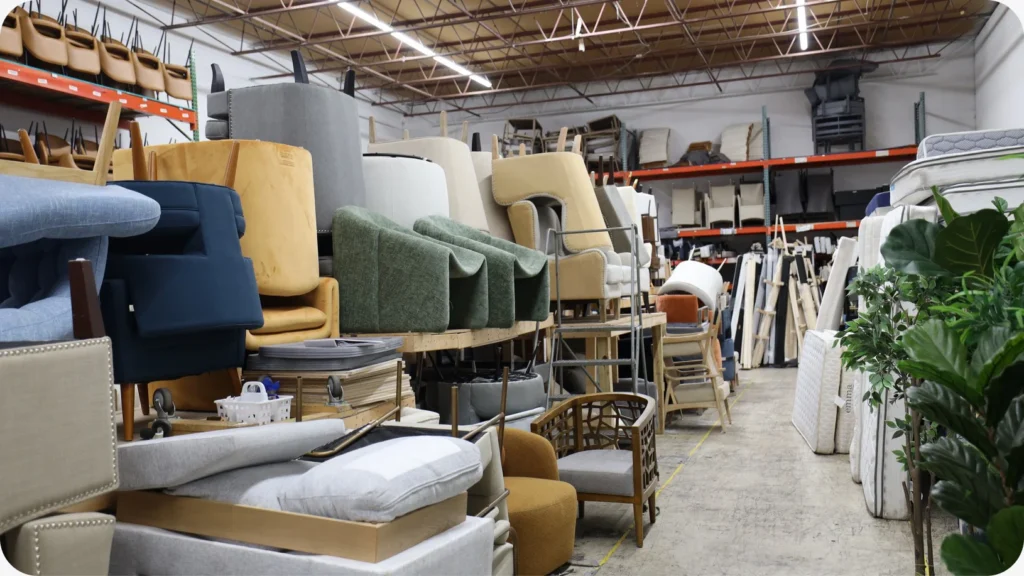
Sofas sit at the center of the floor, closest to the loading dock, because they’re the biggest pieces and go on the trucks first. The rest of a room gets built around the sofa, so end tables and accent chairs sit in the next bays.
Gustavo asks the crew to keep everything grouped by style and shape, which makes a missing piece easy to spot. If a piece isn’t in its spot, it’s almost always out on a job and someone didn’t scan it.
In the events area, Hannah Howe, the company’s sales and account manager for event rentals, showed us the week’s events queued up and ready to load. When the event emergency comes, and she says there’s always one, the crew can get a piece on the truck fast.
Fixes for Mistakes That Kept Happening
Most of what Gustavo showed us started as a mistake the crew made more than once.
- Glass tops sit by the dock: The glass used to live away from the furniture it belongs to, and the crew kept leaving it behind. Now it sits next to the loading dock. It’s labeled by size too, because the crew kept asking which one was the 42 and which was the 63.
- Queen and full live apart: The crew kept bringing a full headboard or frame to a job that needed a queen. Everything was marked, but he split the two sizes into separate areas anyway.
- Lamps go back with their shades: Every lamp that comes back from a job gets double-checked and paired with the right shade before it’s shelved.
The same fix works for any look-alike pair. If your crew mixes up 60-inch and 72-inch round tables, give each size its own area.
Usage Data Decides the Top Shelf
Gustavo checks how often each item gets used in Goodshuffle Pro, and anything that rarely goes out moves up high. He flags those pieces and tells the team to pull from below. The top shelf becomes the list of what they’ll likely donate or get rid of next.
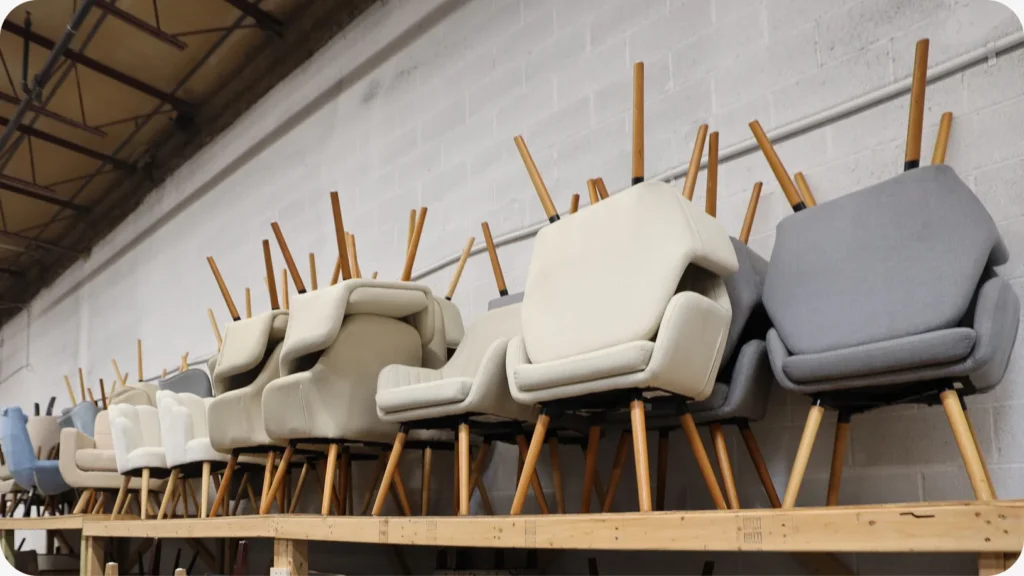
The team also numbers its chairs and tracks how many times each one goes out. Once a single chair has been out five, six or seven times, it has paid for itself. It’s worn by then, and it gets replaced. If you haven’t checked how your inventory performs in a while, these reports show what earns its keep.
The Crew Takes Turns Organizing
Two crew members reorganize the warehouse one week, and two others take the next. Once someone has set up a section, it stings to watch a coworker undo it, and they’ll say so. If a section turns out to be hard to work with, Gustavo reminds the crew they set it up themselves, and they make it better on their next turn.
A Repair Area With No Blame
Crew members who found something broken used to leave it on the loading dock and say nothing. The next morning, designers printing the load list would find the piece sitting damaged by the dock.
The team built a repair area, and Gustavo had to convince the crew that reporting damage wouldn’t get them in trouble.
“I’m not trying to blame you, I’m not trying to charge you … I’m just trying to solve this issue.”
Now the crew brings damaged pieces straight to the repair area and posts a photo in the warehouse group chat.
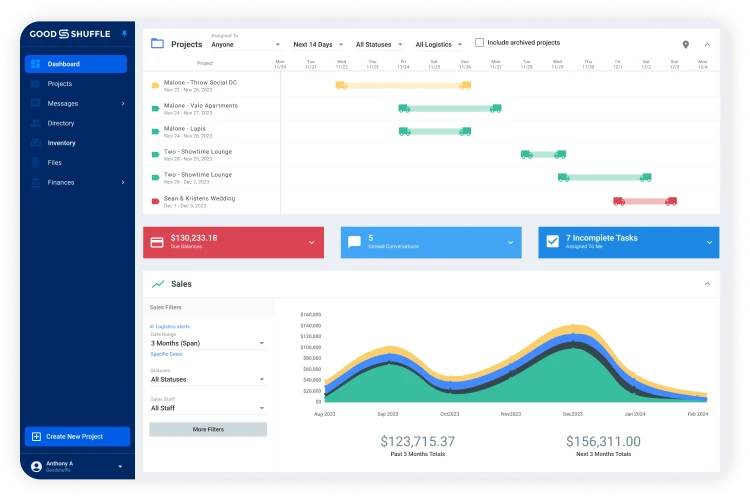
After Gustavo checks event returns, he sets aside anything damaged right from that event’s check-in in Goodshuffle Pro. That takes it out of what can be booked. Working from the event also tells him which client had the piece, without asking a crew that doesn’t remember. For a big client and an easy fix, he may not charge for something he can repair or clean.
The sales side of the same warehouse is in our sales and warehouse post. For the policy side, see handling rental damages.
Covers for the Truck Ride
For events, the team doesn’t ask the crew to wrap furniture at the venue. The loading dock is crowded with other companies, and everyone wants to get out.
They bought covers for sofas and accent chairs. A sofa can leave the warehouse clean and still get damaged by dirty hands or a dirty truck, and the covers catch that. The team’s reasoning is that anything complicated at the venue won’t get done, so they made protecting the furniture the easy part.
Now the crew is the one asking where the covers are.
What Event Rental Owners Can Copy
You don’t need 24,000 square feet for any of this. Start with the mistake your crew makes most often, and look at what on the floor sets it up.
- Move the piece or split the look-alikes so the right one is closest to hand.
- Give damaged inventory items one place to go, and take the blame out of reporting them.
- Let your usage data decide what earns a reachable shelf.
At the end of a long day, a tired crew won’t always read a label, but it will grab whatever sits closest to the truck. Set up the floor so that’s the right piece.
FAQs
Put the pieces that load first closest to the loading dock and keep items grouped by style so a gap is obvious. Physically separate look-alikes, such as queen and full headboards. Labels help, but a tired crew doesn’t always read them, so Staging Design DC fixes a repeat loading mistake by moving the stock.
Check how often each item goes out over a set period. In Goodshuffle Pro, the Usage tab on any inventory item shows that for whatever date range you pick. Then move the slow ones somewhere harder to reach, so the crew pulls from what’s working. At Staging Design DC, the high shelf doubles as the list of pieces to donate or get rid of.
Give damaged inventory items one place to go and make it clear nobody will be blamed or charged for reporting them. Staging Design DC’s crew drops broken pieces in a repair area and posts a photo in the warehouse group chat. The piece is then marked unavailable so it can’t be booked by mistake.
Not always. Staging Design DC doesn’t ask its crews to wrap at the venue, where loading docks are crowded and everyone is in a hurry. They use covers on sofas and accent chairs, which protect against dirty hands and dirty trucks and save time at a crowded dock.

Share On