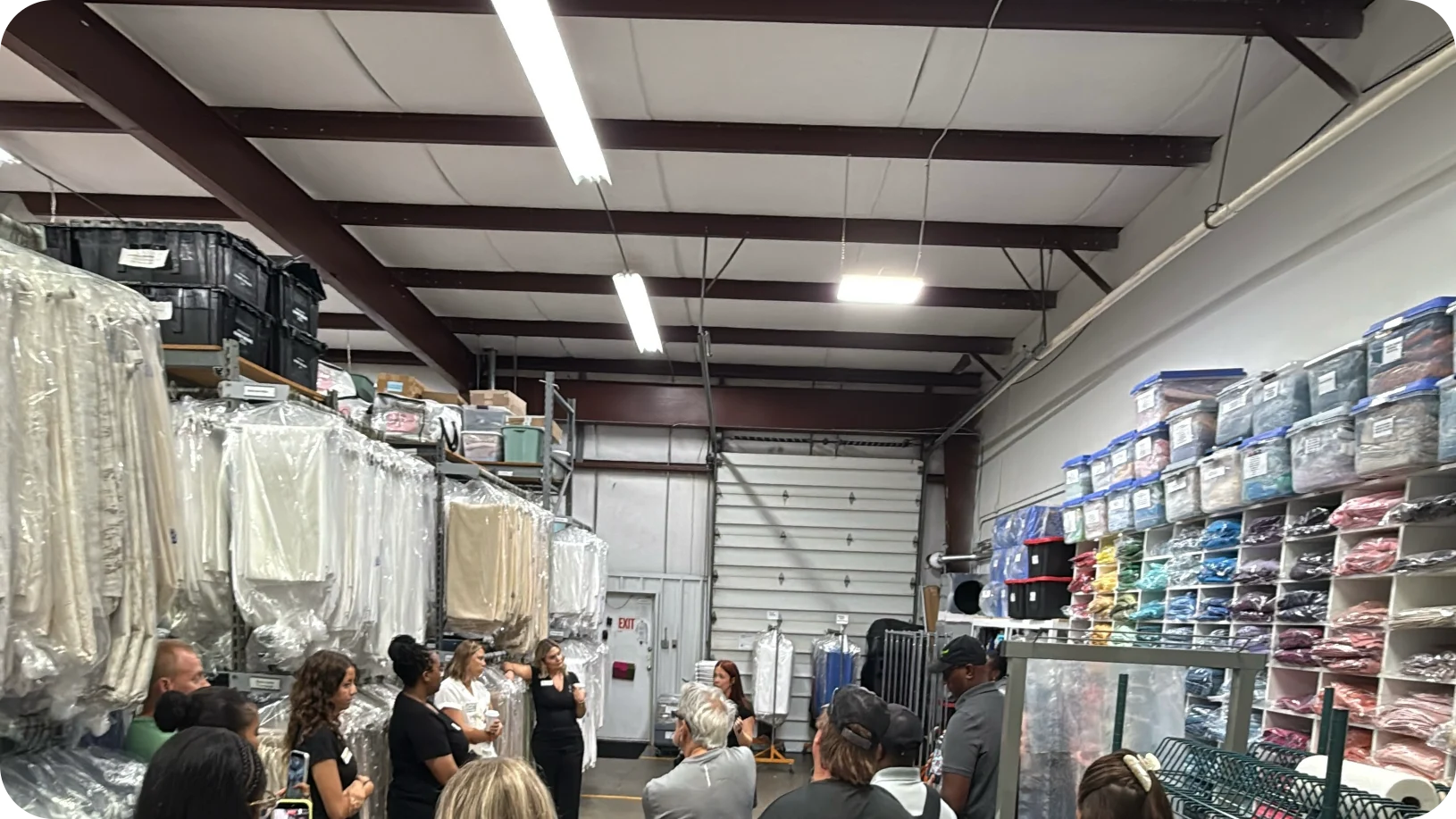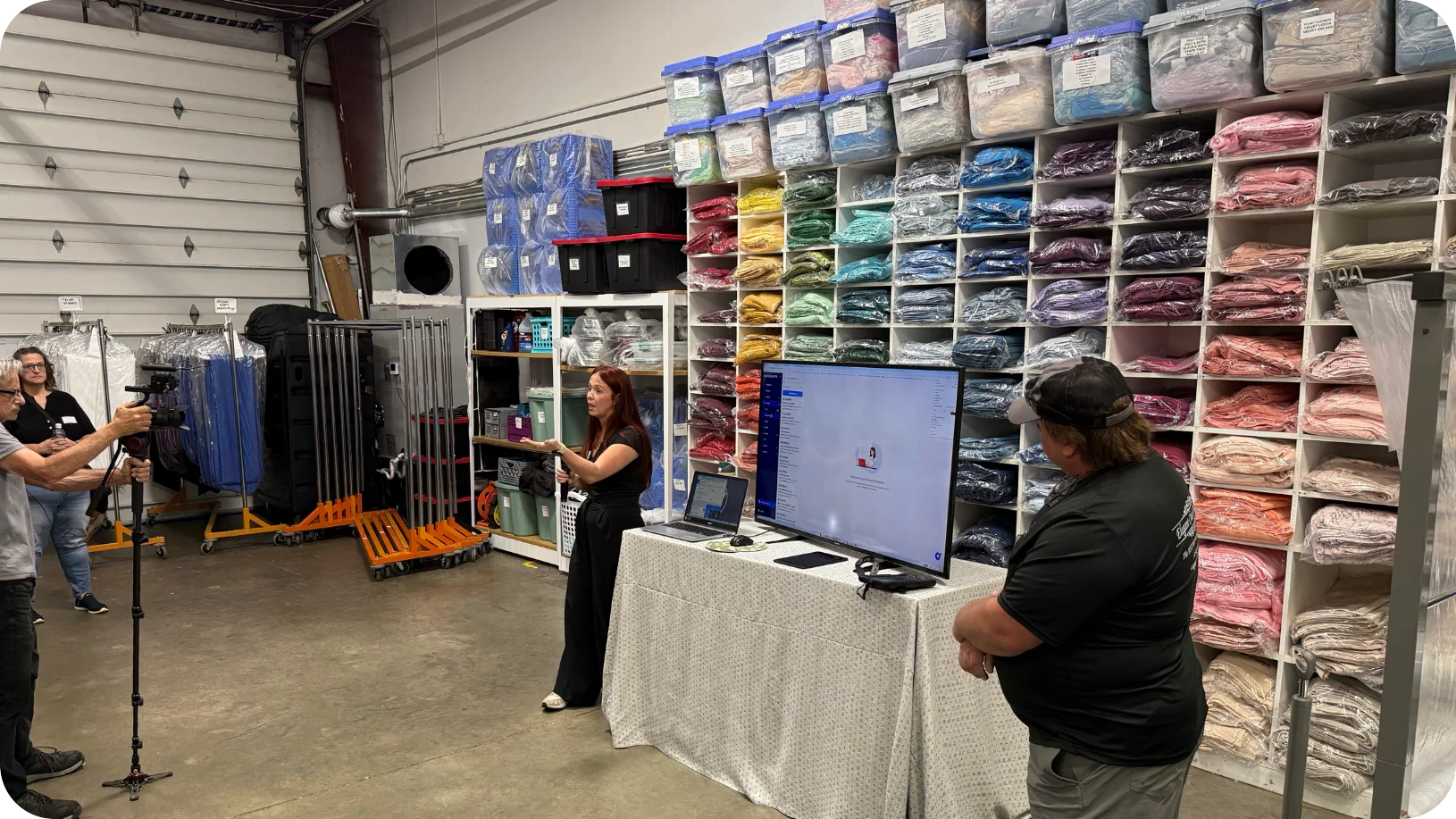
On one Thursday in the middle of busy season, Render Event Decor signed paychecks for about 64 people, and owner Cameron Petty summed it up in four words: “It’s a busy month.”
With a team that big, the hard calls in busy season are about people: whether the crew can take one more Saturday, and whether a new hire can learn without slowing everyone down. There’s also what to buy next, a call Cameron makes by testing demand first.
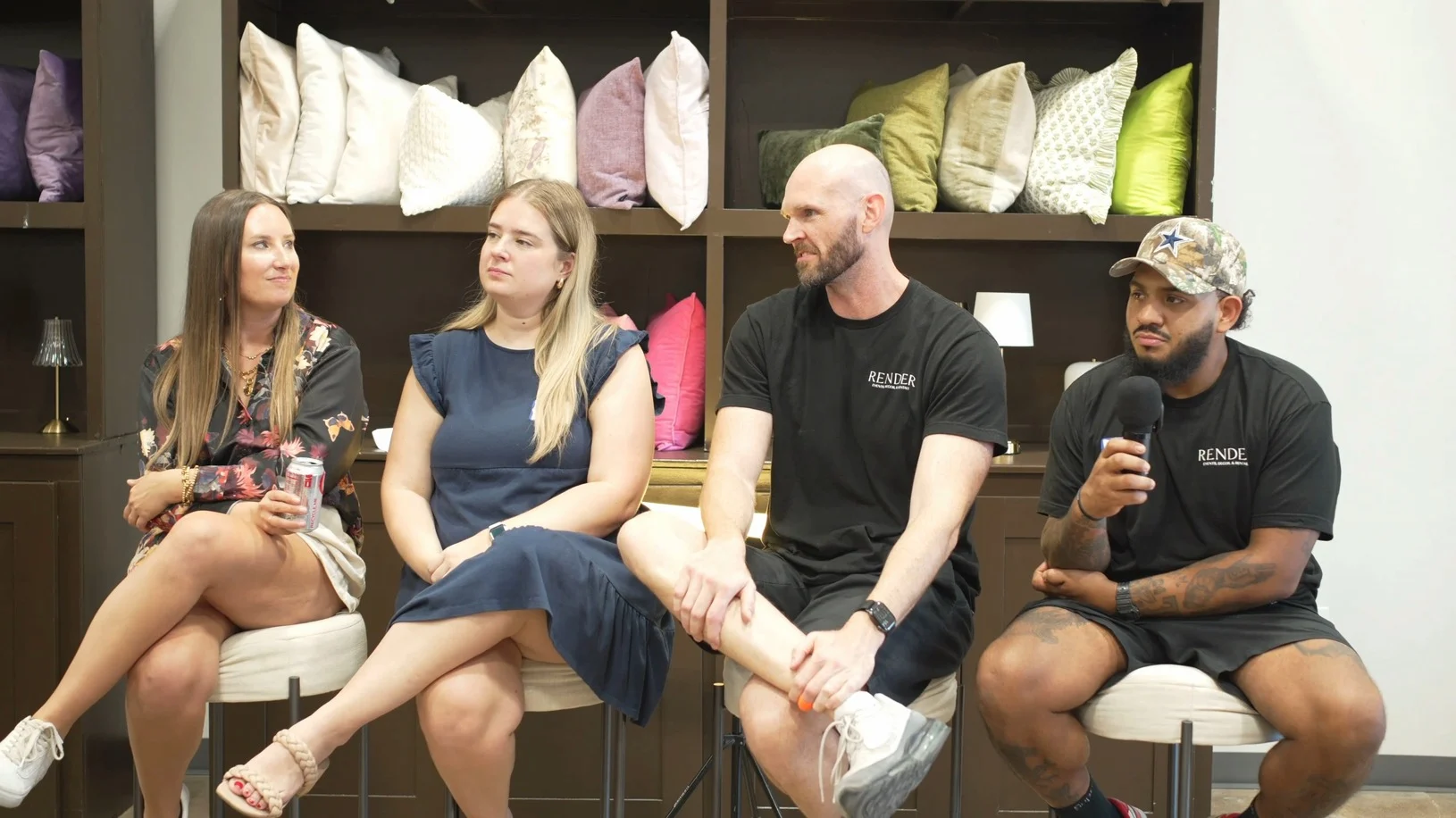
Cameron and three of her team members answered questions about how they make those calls at a round table in Render’s new Dallas warehouse.
Key Takeaways:
-
A booking cut-off protects your event rental crew in busy season.
At Render, custom work inside 30 days and rentals inside seven days go to the people who’d deliver them before sales says yes.
-
An event rental crew can only cover for each other when the know-how is written down.
Render is moving venue directions out of individual heads so any crew can run a job.
-
New event rental hires at Render learn in phases while the events keep going.
Company basics come first, then the procedures for the job, then the job with backup, then a 90-day check-in.
-
Event rental owners can test demand before they spend on inventory.
Cameron Petty listed $23,000 of chairs online for three to six months before buying, and nobody asked to rent them.
1. Late-Booking Rules for Rental Crews
The simplest way to protect an event rental crew in busy season is to decide who approves a late booking before one arrives. At Render, custom work inside 30 days and any rental inside seven days get checked with the people who’d deliver it before sales says yes. The two cut-offs work like this:
- 30 days, custom work: sales asks the Projects Manager, who asks the team that would build it.
- Seven days, any rental: the Projects Manager and Justin Weyer, Render’s Director of Logistics and Fulfillment, check trucks, people, and workload.
Jessica Petty, Render’s Projects Manager, helped create the 30-day rule after burning out herself. She started on Render’s custom vinyl work, back when every last-minute job got a yes. That meant artwork files for the vinyl machine that wouldn’t work, clients who stopped answering, and installs on site in the heat.
Now a salesperson with a custom job two weeks out brings it to Jessica before telling the client yes. She answers:
“Sounds great. Hold off. Let me go check with my team.”
Then she asks the people who’d build it whether they can get it done well in the time there is, and sales gets their answer.
Jessica was straight about the trade-off. The team “would love the check and the money,” she said, but it also has to be “really safe with our employees.”
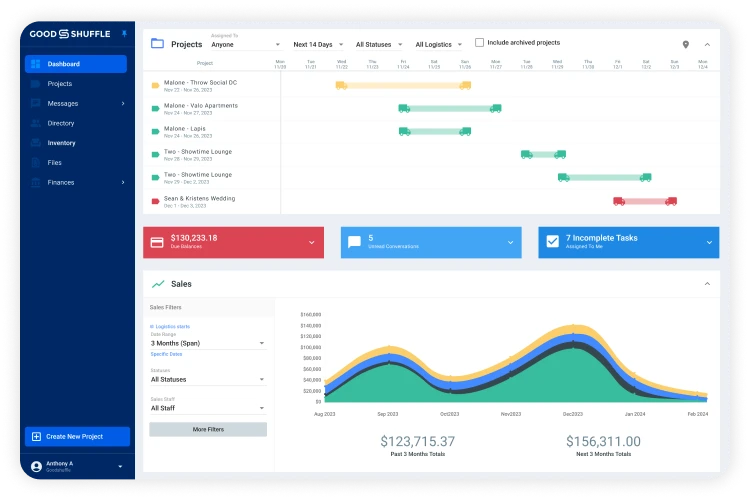
To see a crunch coming, her team opens every event for the next four months in Goodshuffle Pro. Jessica keeps an eye on Conflict Detection, the red warning that shows when an item is booked for more than they have available. She brings them up at every meeting.
For the yes-or-no itself, our newsletter on when to say yes to last-minute bookings starts with two questions to ask.
2. How Rental Crews Cover for Each Other
A seven-day rule only helps if the answer to “do we have people?” can be yes. That depends on how many people can run each job.
Tyrell Cochran, Render’s Warehouse Manager, has had three or four events on the same day lately. He’s matching trucks to jobs and building a crew for each truck.
Justin joined Render 10 weeks before the round table, after 19 years in the industry. Since then he’s been pushing to remove tribal knowledge, where only one person knows how to get into a venue and what to do there. His fix is to write every venue’s directions down so crews can swap in for each other, and Render isn’t “relying on someone like a Tyrell for just everything.”
Justin’s first answer to burnout is getting enough sleep. If that’s not possible, then you need to have enough people who can cover for each other.
3. Train Event Rental Hires in Phases
Render trains new hires in four phases, and they learn while events keep running. When Cameron was hiring Justin, Render didn’t have much of a training program. The old approach was “All right. Ready? Go,” and new people went straight to loading trucks.
She created Render Collective University, or RCU, and set it up like a college. Every new hire finishes each phase before starting the next:
1. RCU 101 to 105, covering the brands, culture, communication, and software.
2. The procedures for their own job, down to where things are stored.
3. The job itself, with the team and Cameron alongside.
4. The job on their own with a safety net, ending in a 90-day check-in.
After the core classes, people pick a specialty such as rentals, floral, operations, or sales. Cameron picked her golden retriever, Rush, as the RCU mascot because that’s how she wants the team to treat clients: loyal, kind, and excited.
A new hire read RCU 101 the morning of the round table and then joined the event. The next day she’d sit in on the sales and operations meetings.
“Events don’t stop around here when someone gets hired.”
Cameron Petty, Owner, Render Event Decor
Our guide to onboarding a new teammate covers more ways to ease people into the role.
4. How Rental Owners Stop Micromanaging
An attendee asked Cameron how she avoids micromanaging a company this size, and she answered with her org chart.
Cameron manages six to eight people directly. Jessica runs her own team, and Justin manages Tyrell plus the delivery and return crews. Day-to-day checking sits with each manager.
“That’s part of removing myself as the bottleneck,” Cameron said.
When Cameron answered this same question at Party! Dallas, she named herself as her company’s biggest bottleneck. This time she named communication across two warehouses, which she expects to ease now that everyone is under one roof.
5. Test Rental Inventory Before You Buy
What to buy is still Cameron’s call, and she doesn’t let her own taste make it. “Just because I like it does not mean that everybody else is gonna like it,” she said.
She once wanted 150 to 200 black dining chairs, a $23,000 purchase. Before buying any, she put them on the website, listed them in Goodshuffle Pro, and ran Instagram story polls. For three to six months, nobody wanted to rent them. (Other owners have tested inventory first, too.)
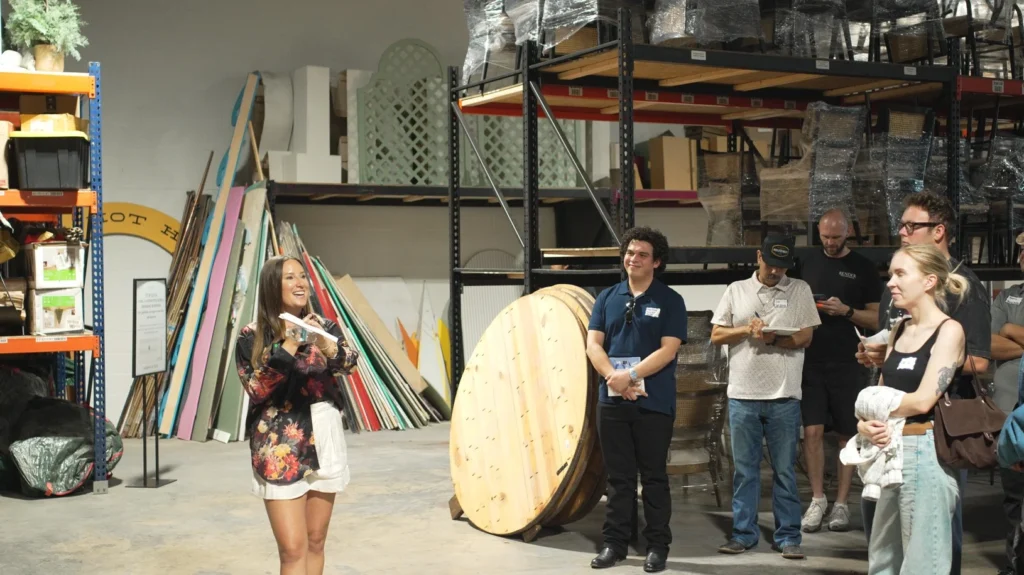
“And so I saved the company $23,000 and inventory space,” she said, and the room gasped.
She watches what she already owns the same way. She runs reports on when an item last rented, how often it goes out, and when she bought it. She also trusts “how many layers of dust is on it.” Our newsletter on whether your inventory earns its keep has a short inventory audit to run before your next purchase order.
6. Which Free Rental Jobs to Turn Down
The week before the round table, someone DM’d Render asking for a free event in exchange for marketing. Cameron said no right away. Render had already done influencer weddings, and they did nothing for the business. Render’s clients don’t buy decor or clothes because an influencer did.
“Now you’re just getting a free wedding at my expense,” she said. Her advice is to learn who your client is, where they shop, and what they look at on Instagram before the requests arrive.
What Render Decides Before Busy Season
Each of these is a call Render makes before the pressure hits, the same idea behind setting decision rules so you can take time off. Pick the one that would have saved your worst weekend this year and start there.
FAQs
At Render in Dallas, late bookings go through the Projects Manager before anyone says yes. Custom work inside 30 days gets checked with the team who’d build it, and rentals inside seven days get checked against trucks, people, and workload. The team is also writing down job knowledge, like venue directions, so more than one crew can run each job.
Render uses four phases. New hires learn the brands, culture, communication, and software first, then the procedures for their role. Next they do the job with help, then work on their own until a 90-day check-in. They sit in on real meetings and events from the first week.
Cameron Petty of Render has tested items before buying them: she listed them on her website and in Goodshuffle Pro and ran Instagram story polls. One set of black dining chairs got no takers in three to six months, which saved the company $23,000 and the shelf space.
Manage the managers. Cameron Petty of Render manages six to eight people directly, and each of them runs their own team. Her Projects Manager leads the project team, and her Director of Logistics and Fulfillment manages the Warehouse Manager plus the delivery and return crews. Day-to-day checking sits with each manager, which Cameron calls part of removing herself as the bottleneck.

Share On