
A delivery goes out wrong, or a client gets promised something the shelf can’t cover, and each half of your company quietly decides the other one dropped it. Sales books the job, the warehouse loads it, and the border between them hardens a little more every season.
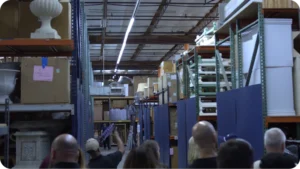
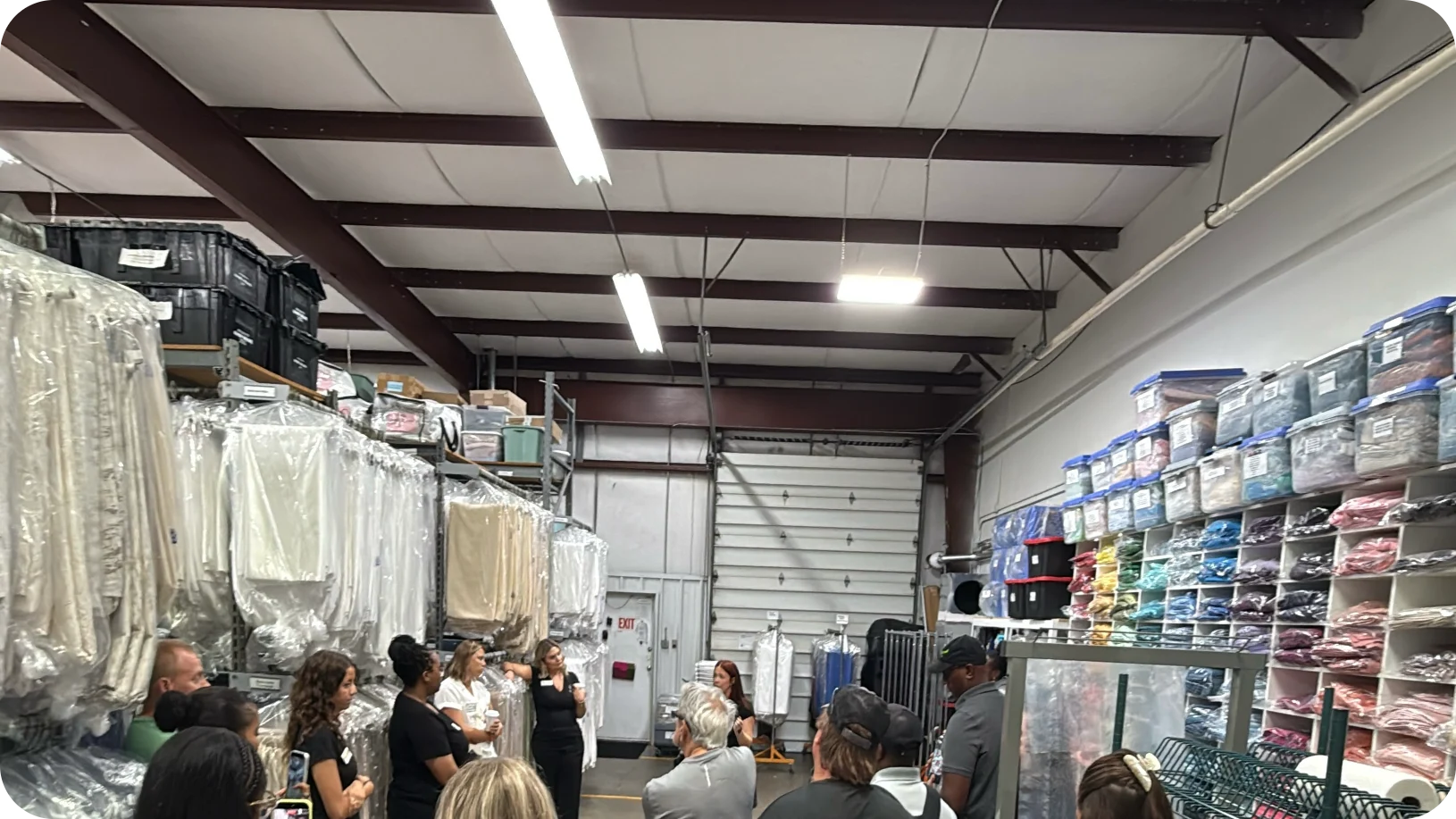
At a Goodshuffle warehouse tour in Beltsville, Maryland, three people from Staging Design DC explained why that border doesn’t really exist in their building. Their answer wasn’t software or a policy. Their operations coordinator designed the floor around his own crew. The effects showed up on the sales side, in what an account manager could promise without checking first.
Key Takeaways:
-
Staging Design DC laid out its warehouse around how the crew moves through a day.
The floor plan came from watching the work, not from the inventory list.
-
Returns get their own zone and get inspected there.
At Staging Design DC nothing goes back on the rack until someone has looked at it.
-
Two photos in a group chat keep deliveries honest.
Staging Design DC’s crew posts an ETA on the way out and a setup photo when the job is done.
-
An event rental business can only promise what the shelf can prove.
When the count on the rack matches the count on the screen, sales stops hedging with its own clients.
The Warehouse Is Built for the Crew
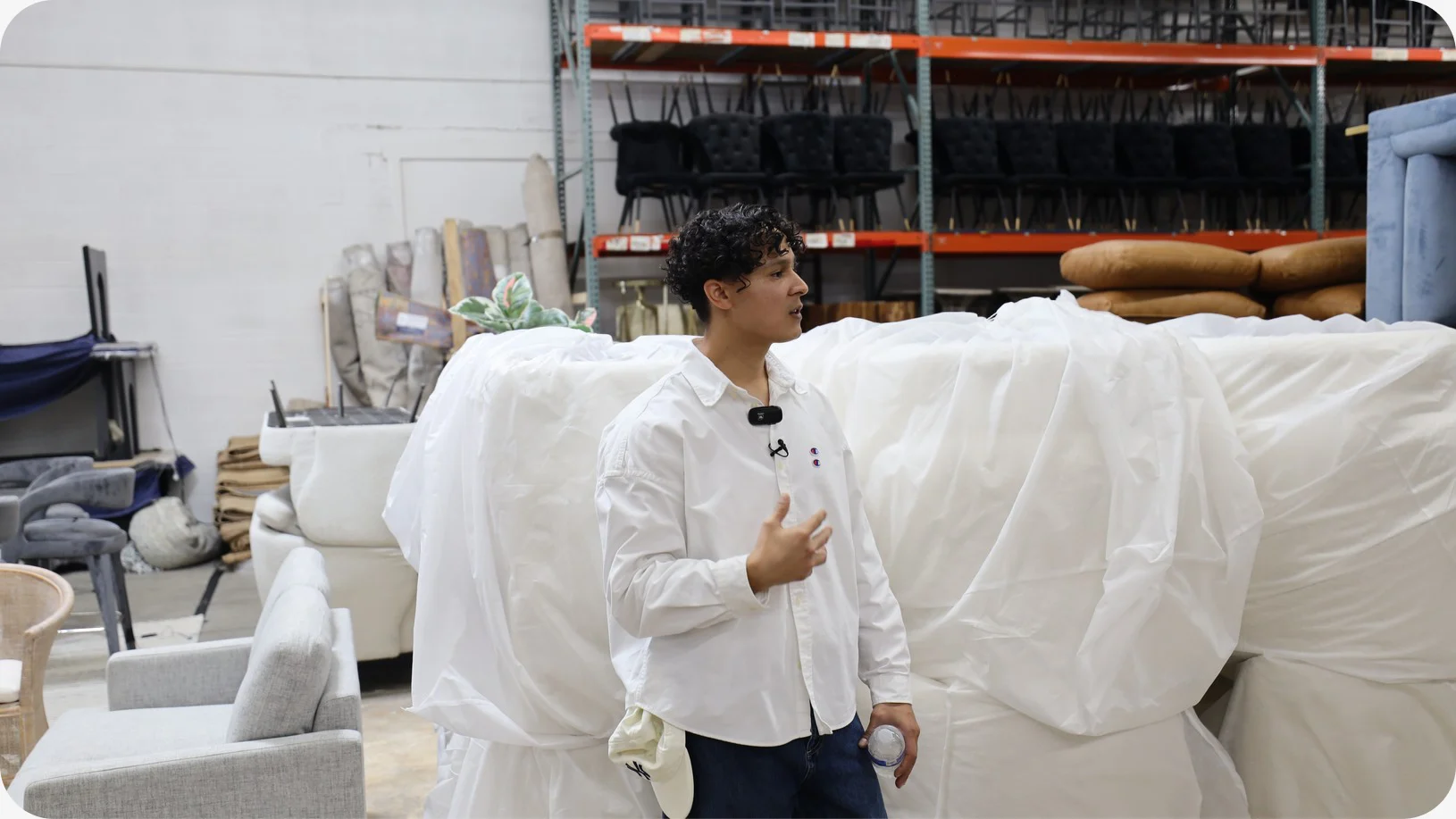
Staging Design DC laid out its 24,000-square-foot warehouse around how its own crew moves through a day. Operations coordinator Gustavo Ortega mapped how the designers, the movers, the clients and the account manager each work, then built the zones from that. The floor plan came second.
Building around the crew also decides what sits where. The most-booked pieces sit where the crew can reach them and see them, which is also how Gustavo checks their condition without hunting. White sofas top that list, so they’re in plain view. Dining chairs move less often but live in bulk. They go high, stay together, and stay countable.
How another team tags and tiers its racks goes deeper on layout.
Everything Comes Back to One Spot
Everything coming back at Staging Design DC drops in one zone and gets checked there before it re-enters stock. The zone came out of a recurring problem: chairs coming back that weren’t clean, or weren’t prepped.
The fix wasn’t a stricter rule about cleaning. It was a place.
“Sometimes you wanna trust your team, that they tell you that it’s clean,” says Gustavo Ortega, Operations Coordinator at Staging Design DC.
But with high-end clients, what looks clean to one person isn’t clean enough, and no amount of reminding makes everyone’s standard the same.
A Photo After Every Delivery
Staging Design DC’s movers post two things to a group chat on every job: an ETA on the way out, and a photo of the finished setup when they’re done.
That photo catches the gap between “we delivered it” and “it’s stacked in the corner of the room.” Hannah Howe, their sales and account manager for event rentals, has caught it more than once and called the client while the crew was still on site.
It works on the crew too. They know the photo is coming, and the setup gets more attention because of it. The good ones end up on social media.
Getting there took some teaching. Rather than telling the crew their photos weren’t good enough, the team pulled real examples from their own group chats. Several that worked, several that didn’t, from enough different people that nobody felt singled out. Hannah thinks the quality improved after that.
Pair the photo with a signed receipt of goods and services and a client who has signed for what arrived, and can see how it was left, has very little to argue about later.
When the Shelf and the Screen Disagree
Staging Design DC runs home staging and event rentals out of one warehouse, and both sides pull from the same shelves. One time, a designer took two rugs for a staging job that a rental client had already been promised. When the rental went out, the rugs weren’t there, and the team had to send something different.
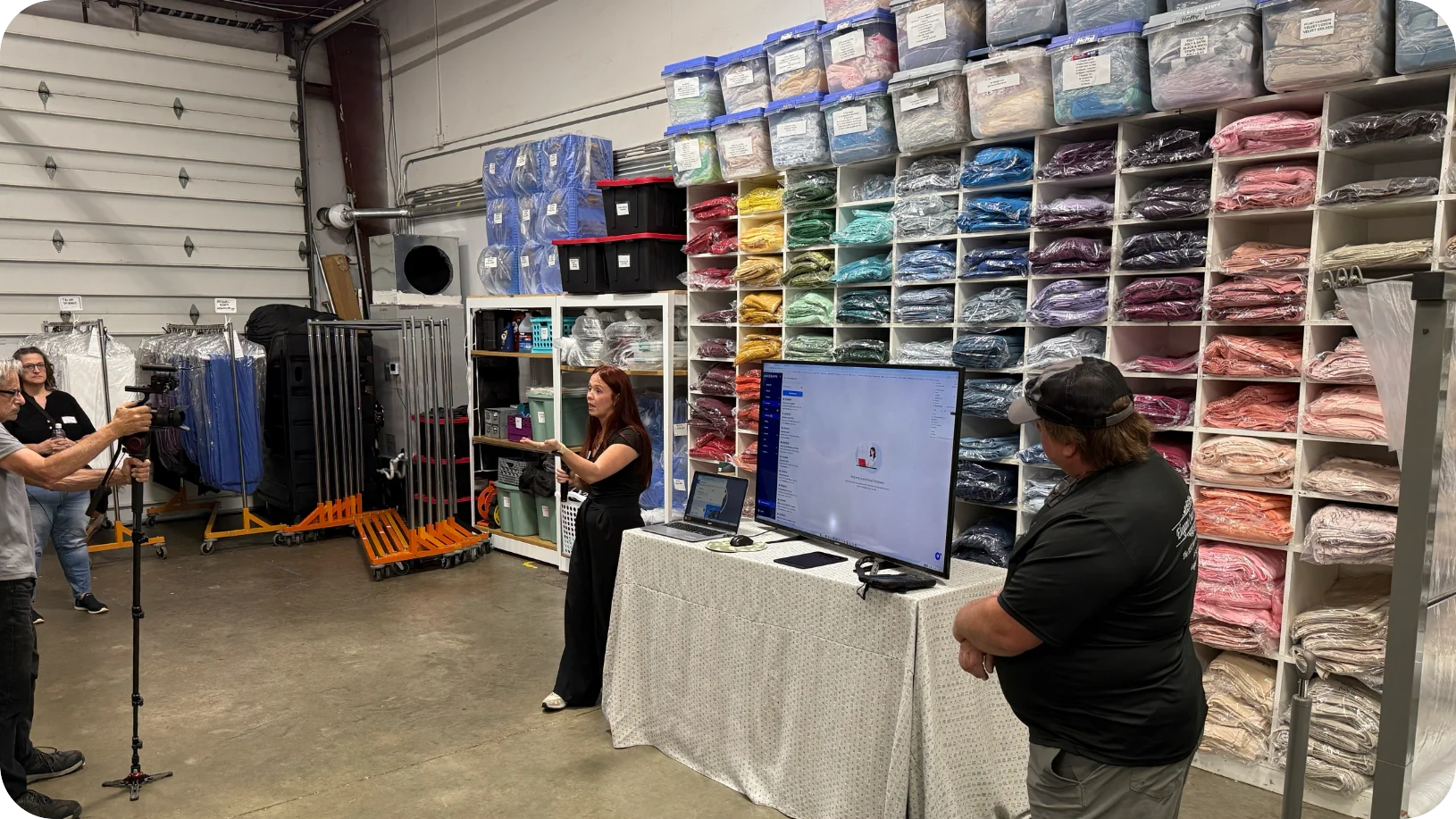
That’s why Gustavo audits. He takes a laptop out to the racks and counts each item against what the system says they have. The count is how the shelf and the system stay in agreement.
He’s most rigorous about what sales is quoting heavily. If Hannah asks whether they have 80 chairs and the real number is 79, she needs to know before the quote goes out. Getting warehouse knowledge out of one person’s head is the same problem from a different angle.
What the Warehouse Does for Sales
An event rental business that can’t trust its own counts sells defensively. It hedges. It pads the timeline, and it quietly stops offering the pickup. A company that trusts its counts says yes faster.
Hannah works off her event list constantly, and she’s trusting that what she sees there is true.
“The organization of the warehouse gives me such a peace of mind that if I were to send a client here to come do a pickup, which we offer, I know that the guys can handle that.”
She never sends a client an email that just says no. Instead she offers:
- three other options
- pictures of each
- to jump on a call
In high season that’s the difference between a lost booking and a different booking.
She plans for delivery day the same way. Before the truck leaves, Hannah adds the loading dock instructions to the event in the system and asks the client for two or three people the crew can call on site, even if that feels like overkill. The worst case, she said, is a crew stuck on site for 15, 30, even 50 minutes “and not getting a hold of anyone.”
No Egos in the Departments
None of this survives a company where the two halves are keeping score.
Founder Christian Salinas hires with that in mind. He wants to picture a new person working alongside the team before he makes an offer, and he treats how the team feels inside the building as something clients pick up on. It’s also why, asked what limits the business most, Gustavo said people.
Why These Habits Cost Almost Nothing
Nothing Staging Design DC does here is expensive:
- a zone for returns
- a photo in a group chat
- a laptop and a count
- two or three contacts on every delivery
Each one was built by someone asking what their own team needed, and each one makes it easier for the person selling to tell a client the truth.
If your sales side is quoting around the warehouse instead of from it, that’s usually because nobody has made the shelf and the screen agree.
FAQs
Start by making the warehouse legible to the people who sell. When the sales side can trust the number on the rack, most of the friction disappears on its own. Staging Design DC also walks through the coming week’s deliveries in a standing Friday operations meeting. Nobody is discovering problems on the morning of the job.
Give returns their own zone and inspect there, before anything re-enters stock. The point is to catch it while the item is still in your building, rather than when the next client opens the box.
Often enough that you never have to guess. Staging Design DC’s operations coordinator walks the shelves with a laptop and counts by hand, especially on the items sales quotes most. The audit is what lets the sales team answer with a number instead of a maybe.
It proves what was delivered and how it was set up, and the good ones become social content. Paired with a signed receipt of goods and services , a client who can see how the setup was left has very little to argue about later.

Share On