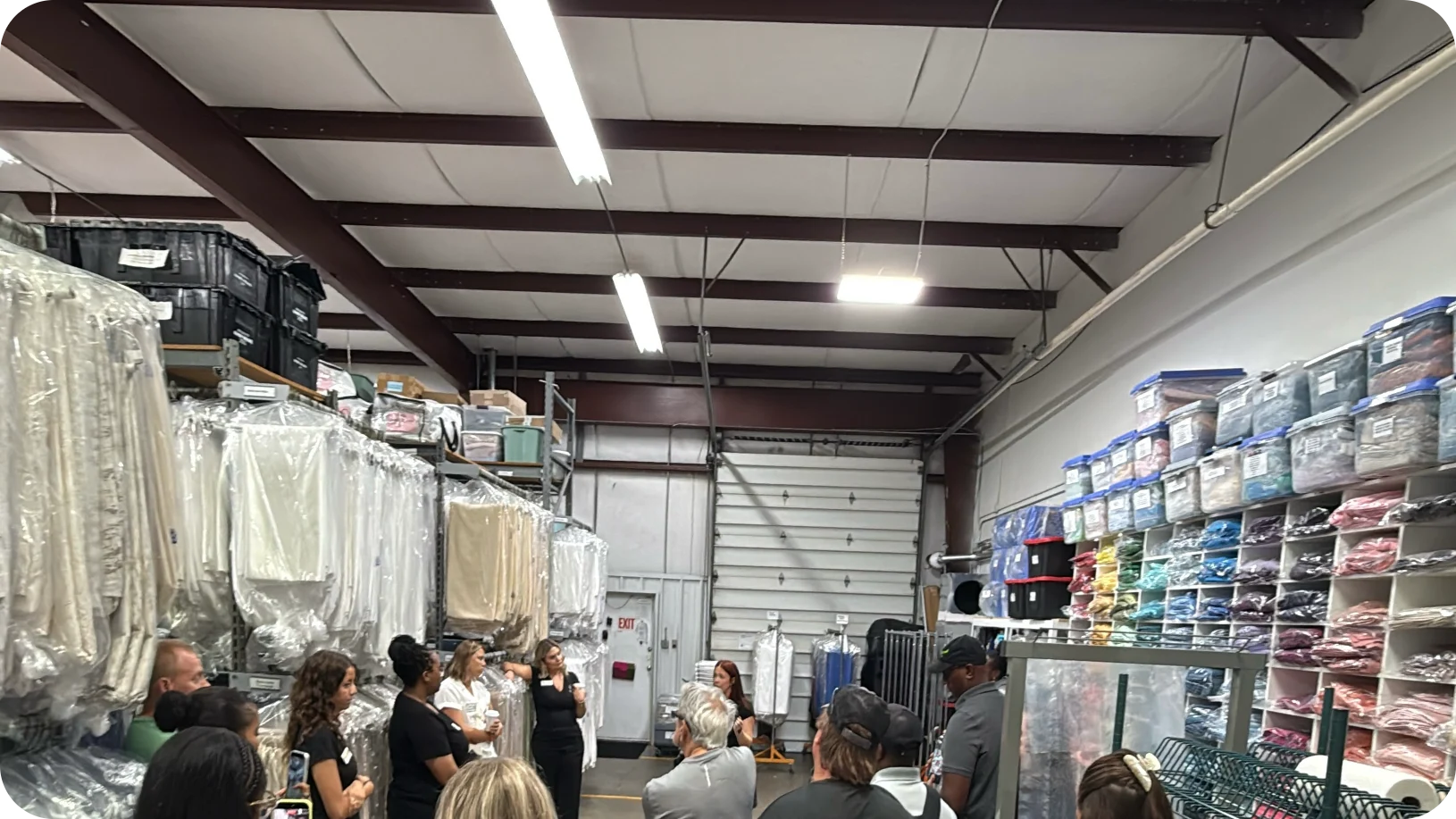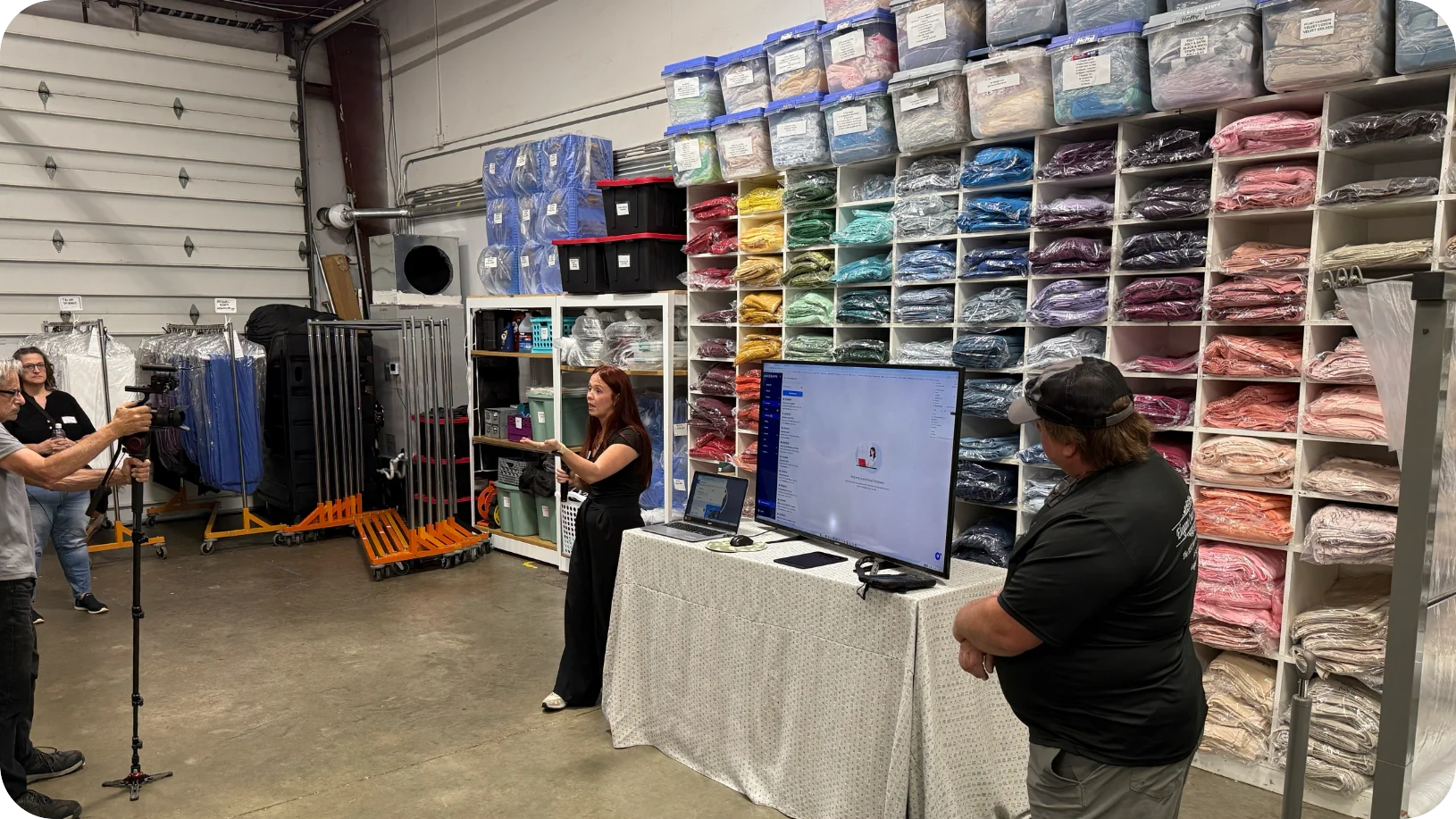

The 2026 User Summit opened with a promise about your nights.
“We want your 1:00 AM late nights to end at 7:00. We want you to bring smiles to the faces of those you serve without bringing tears to yours.”
— Andrew Garcia, CEO and co-founder, Goodshuffle
Every session that followed came back to the reasons those nights run late: the inquiry that went unanswered, the job that didn’t pay, the pull sheet that only ever existed in your head. This recap gives you the one idea from each session, grouped the same way as the library, so you can pick the problem that’s costing you most and watch that session in full in the on-demand library.
Key Takeaways:
-
Booked, profitable, and holding cash are three different things for an event rental business.
A full calendar looks identical in all three, and only the books tell you which one you’re in.
-
The event rental booking usually goes to whoever answered first.
Buying intent peaks the moment someone reaches out, and a short plain reply that lands in minutes beats a polished proposal that lands tomorrow.
-
An event rental website earns the booking by saying what region it serves.
Buyers decide in a fraction of a second whether they’re in the right place, and a surprising number of rental sites never say.
-
The 11pm fire drill is a systems gap, and systems can be built.
The owners who ended it started with inventory, written terms, and hard boundaries on delivery.
-
The recorded User Summit sessions are in the on-demand library.
One form opens all of them, for users and for anyone who didn’t register.
Money and Margin
We hosted two finance sessions, one with a CPA and one with a CFO, and both landed on the same warning: a booked calendar tells you nothing about cash.
Accounting 101: Booked Up and Still Short on Cash
Rebecca Warnick, CPA, of The Warnick Group, hears one sentence from owners constantly. We’re booked every weekend, where is all the money? Her answer is that the $5,000 event was never $5,000 to you. Delivery labor, setup and strike, fuel, cleaning, breakage, subrentals, warehouse space, insurance and card processing all come out of it first.
Her buying rule applies before you order anything else. Ask what you can rent it for and how often, because you need both numbers to know whether it pays. If pricing is where you want to start, running a profitable tent shop covers the same ground in detail.
Margin & Money: Where the Margin Goes
Sam Jahanbeen, Goodshuffle’s fractional CFO through Varus One, took the same problem from the other end. Margin leaks in small amounts across a job, and a job you quoted at a 20 percent margin can land at 9.
His fix is three moves:
- Get payroll, card accounts and your event rental software feeding one set of books.
- Move to accrual, so a job’s revenue and its costs sit in the same month.
- Close the books on the same schedule every month, and review them.
If the books close on the fifth, you find out in July that June leaked, while there’s still a season left to fix it.
Rebecca’s session runs 27 minutes and Sam’s runs 33. Together, that’s an hour with a CPA and a CFO, free.
Watch the Summit sessions
Every recorded session from the 2026 User Summit is one form away.

How Event Rental Clients Find You
Most bookings are decided before anyone talks price, by whether the buyer could find you and how fast you answered. Our Busy Season newsletter has covered both, in local SEO quick wins and the five-minute reply, and three Summit sessions went deeper.
Marketing 101: Fix Findability First
Emily Foster of Emily Foster Creative argues that being findable is the job, and the rest of your marketing falls in behind it. Visitors decide in a fraction of a second whether they’re in the right place, and most event rental sites never say what region they serve. That loses the buyer and the AI search result in the same move.
The searches that fill a summer calendar start months earlier. Structuring your site for search is the practical follow-on.
Sales 101: Whoever Answers First
Jeff Borovitz of Sandler started with a diagnosis. Most rental companies think a slow month means a weak pitch. He thinks they’re just slow to reply. Buying intent is highest the moment someone reaches out, and over-personalizing a response is often procrastination in a nice outfit.
He made the case for disqualifying leads early. The chase goes to the people who’ll book. And never end a conversation without a next step the client has agreed to. On a day with three load-outs and a full inbox, that discipline is what turns inquiries into a calendar.
Positioning & Demand: One Site, Two Buyers
The market has split between clients who want it cost-conscious and fast, and clients who want it custom and slow. Your rental website has to serve both without looking like two businesses. The panel gave your site three questions to answer above the fold:
- Am I in the right place?
- Can I afford you?
- What do I do next?
Answer them and you stop quoting people who were never going to book.
How to End the 11pm Fire Drill
The 11pm fire drill is the late-night scramble that starts when a system was never written down.
Operations 101: Inventory Is the Backbone
Melissa Teague of Goodshuffle ran her own rental company for six years before joining us, and her session was a list of things she wishes she’d done sooner. Inventory first, because it’s what stops the double-booking. Then written terms, which protect both sides.
But the boundaries mattered most. She took every delivery anywhere, charged nothing for it, and watched a side business turn into a full-time night and weekend nightmare. Delivery windows and zone-based rates pulled it back. Start with SOPs to steal and write down what lives in your head.
Systems & People: Automate It, Check It, or Hire for It
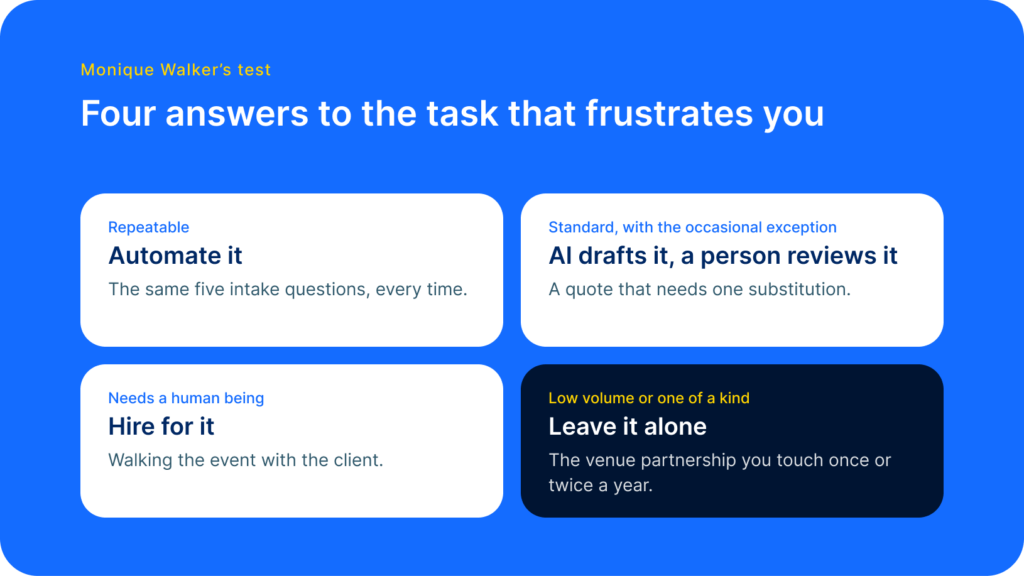
Monique Walker, an AI strategist with Midas Web, started from the observation that most tools do the job. The setup around them is what scales: what feeds your event rental software, what it feeds, and where a person has to touch the data on the way through. Every handoff is a place for something to get lost.
Her test for anything frustrating you is three questions, plus one reason to do nothing:
- Repeatable, like the same five intake questions every time? Automate it.
- Standard with the occasional exception, like a quote that needs one substitution? Let AI build it and a person review it.
- Needs a human being, like walking the event with the client? Hire for it.
- Low volume or one of a kind, like the venue partnership you touch once or twice a year? Leave it alone.
Keep your people, she was emphatic about that, and make their jobs easier. Her homework: record yourself talking through a perfect event from first inquiry to follow-up, then hand the transcript to an AI tool and ask it what SOPs are in there.
Where the 1am Nights End
Andrew opened the day by promising that your 1am nights would end at 7. Nobody who followed him had a shortcut, but every session landed on the same shape of answer: decide it before the season, so it doesn’t have to live in your head at midnight. Price the item before you buy it. Answer the inquiry the hour it lands, and set the delivery window before the first truck rolls. Hearing the speakers make that case themselves beats any recap, and every session is waiting in the library behind one short form.
Watch the Summit sessions
Every recorded session from the 2026 User Summit is one form away.
FAQs
The Goodshuffle User Summit is a one-day virtual event for event rental businesses. The 2026 Summit ran on September 16 with parallel tracks by business stage, covering accounting, sales, marketing, operations and hiring, plus two peer panels with owners. The speaker sessions are in the on-demand library .
In the accounting session, CPA Rebecca Warnick’s benchmark for event inventory was roughly twice what the item cost you, within 12 months. A $100 chair should bring in about $200 a year. What you charge per rental depends on how often you can realistically rent it. The same chair is $10 a rental at 20 rentals a year, and $20 at 10.
Within minutes, and faster than feels comfortable. The sales session made the case that buying intent peaks the moment someone reaches out. A short reply naming their request beats a customized proposal that lands a day later. Using their name, answering their main question, and offering one clear next step takes a couple of minutes.
When your customers start feeling it, and when the work is straining your household. Owners on the panels described hiring slightly before it feels affordable. The alternative is turning down work, or sending out orders that aren’t up to standard.
In the User Summit on-demand library , grouped by topic: money and margin, marketing and sales, and operations and people. One form opens the whole library, and it’s open to users and to anyone who didn’t register.

Share On