Cam Petty of Render Events did every follow-up by the book and still lost the job. She asked the client what led to the decision, the question she asks everyone who says no.
“Because you didn’t call me. Because another company did call me.”
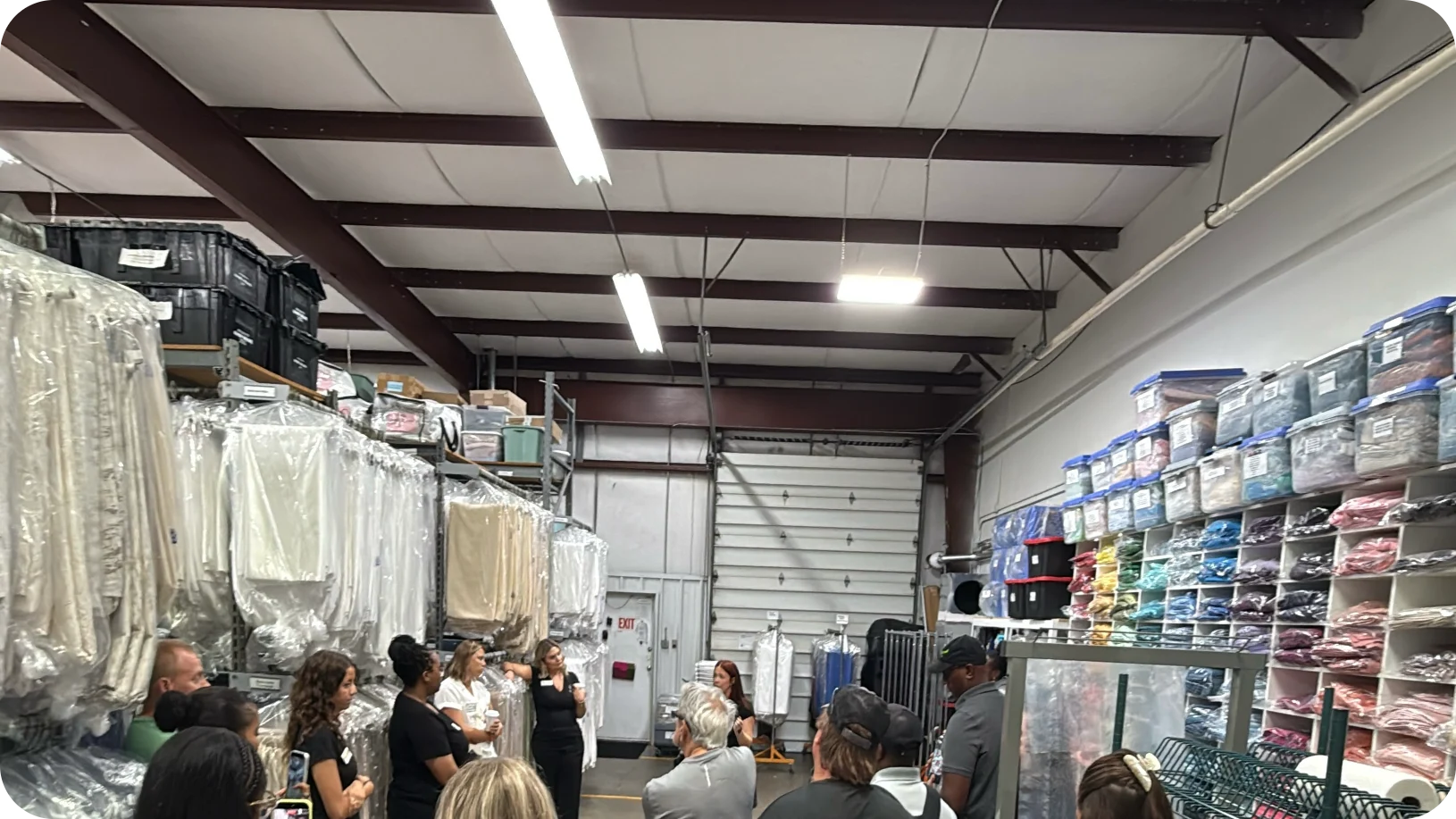
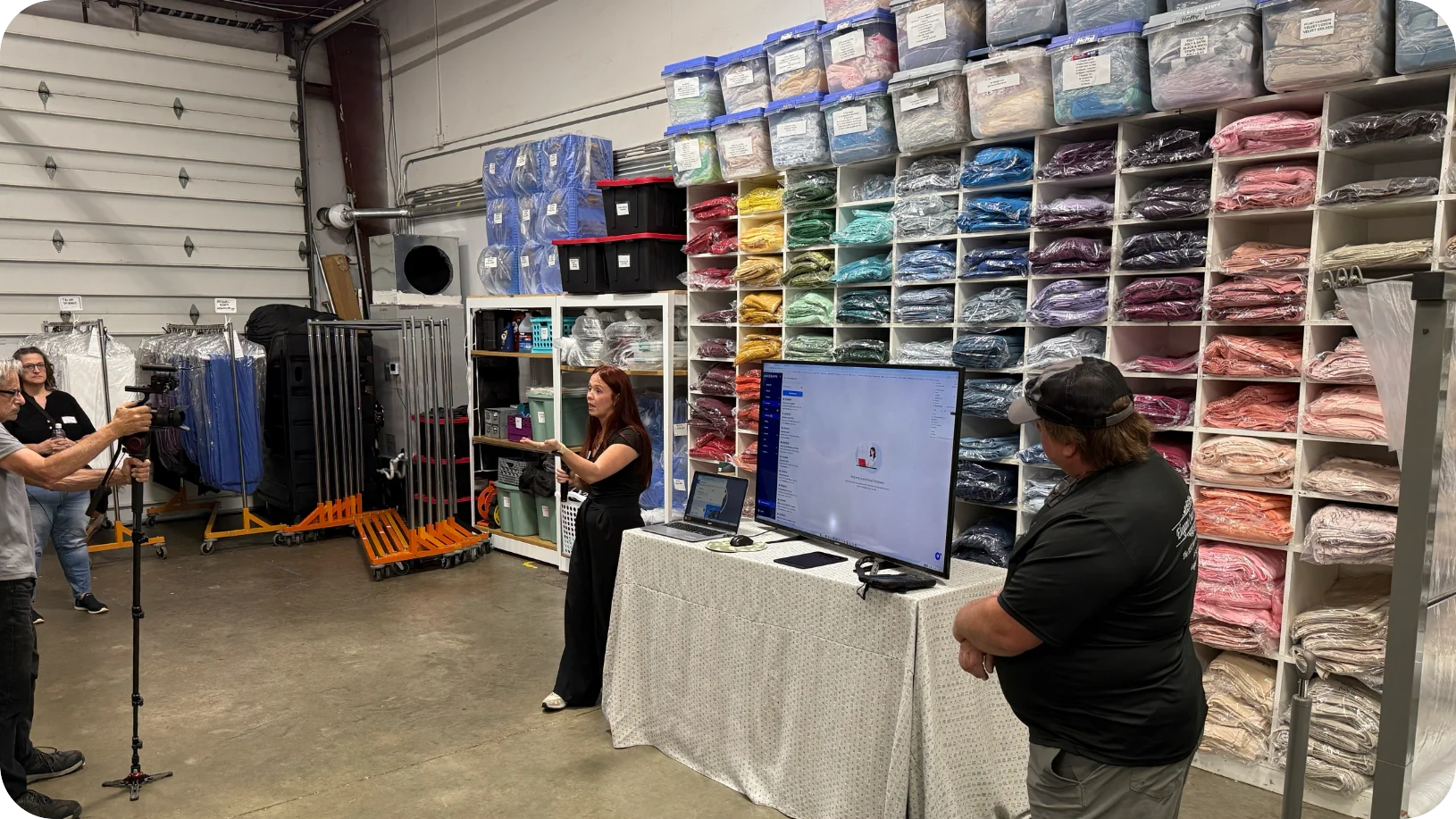
Cam shared that story to close the Sales 101 session at our 2026 User Summit, which you can watch in our User Summit on-demand library. Jeff Borovitz of Sandler, who led the session, argues that most event rental owners lose bookings before price or pitch ever comes up: in the slow first reply, and in the conversation that never happens. This post walks through his fix, from a reply that takes almost no time to a follow-up schedule that ends the guessing.
Key Takeaways:
-
Most event rental owners who think they need more leads have a response-time problem.
That’s Jeff Borovitz’s diagnosis from the Sales 101 session at the Goodshuffle User Summit, and it’s one you can fix this week.
-
A good first reply to an event rental inquiry runs about 60 words.
Thank them, name what they asked for, ask a couple of questions to see if you’re a fit, and offer one clear next step.
-
Event rental owners should try to disqualify an inquiry before they quote it.
Treating every inquiry as a fit drives close rates and margins down, and anyone you turn away should leave with somewhere else to go.
-
Every event rental sales conversation should end with a next step the client has accepted.
A calendared next step ends the “is it too soon to follow up” guessing and gives every follow-up a reason.
-
A short phone call before the event rental quote can decide who wins the job.
One good-sized rental company Borovitz works with won 30 percent more of the jobs where it called first, even briefly, and now won’t quote without a call.
What Is Speed to Lead for Rentals?
Speed to lead is how quickly a new inquiry gets a real reply. Jeff Borovitz of Sandler argues that for most solo event rental owners, a slow reply costs more bookings than a weak pitch. His fix is a first reply of about 60 words, a couple of disqualifying questions, and a next step the client accepts.
“You may not have a sales problem, and that’s kind of the uncomfortable truth here. Most people have a response time problem.”
— Jeff Borovitz, Sandler
An inquiry comes in while you’re loading the truck for Saturday, and you’ll reply later. Hours pass, sometimes days, and by the time you write back they’ve booked with somebody else. Usually the reply waited because you wanted it to be good, and while you polished it, the client was talking to your competitors.
More leads won’t fix that, because the new ones leak through the same gap. We’ve made the case for replying within five minutes before.
What a Slow Reply Tells Rental Clients
From your side, a slow reply means you’re busy, and busy feels good. The client hears that you’re too busy for them, or not that interested, or going to be hard to work with. Worst of all, they wonder what happens after they sign and pay, if it’s this slow now.
A fast, clear reply says you’re reliable, organized, and easy to work with. Borovitz says the most common mistake owners make is adding friction to the sale, and a slow reply is the first friction a client meets.
He compares it to the waiting place in Dr. Seuss’s Oh, the Places You’ll Go!, where everyone sits around waiting for something to happen. Clients won’t sit there. They keep taking action until somebody talks to them.
“Clients, once they have that first impression of you, they spend the rest of their time trying to justify that first impression.”
— Jeff Borovitz, Sandler
The 60-Word Reply to a Rental Inquiry
The trap is the reply you keep meaning to write: a custom proposal, some research on the client, a full setup designed before you’ve spoken.
“Personalization is valuable, but over-personalization is procrastination.”
— Jeff Borovitz, Sandler
He called it avoidance behavior: busywork that feels safe. The proposal feels safe, the conversation feels risky, and the client waits. A fast reply alone won’t save the booking, though. He once got a ten-second reply promising to be in touch soon, and a day later nobody had been.
His version of personalization takes almost no time, and it has five parts:
- Thank them for reaching out.
- Say “I understand you’re looking for” and name it.
- Ask a couple of quick questions to see if you’re a good fit for them.
- Ask one or two real qualifying questions.
- Give one clear next step.
His example, for a graduation party inquiry:
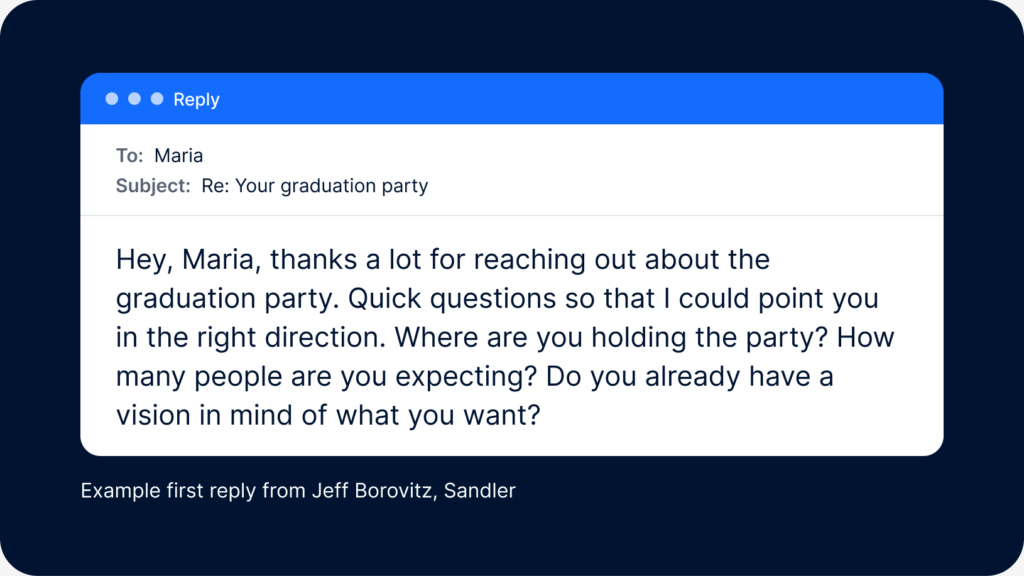
“Hey, Maria, thanks a lot for reaching out about the graduation party. Quick questions so that I could point you in the right direction. Where are you holding the party? How many people are you expecting? Do you already have a vision in mind of what you want?”
If it looks like a fit, the next step follows: “Based on what you’ve told me, here’s what I would suggest we do next.” It comes in around 60 words, and it gets the client answering questions, which is how trust gets built.
It’s a shape you reuse, so you never reinvent your sales process at 9pm between a pickup and tomorrow’s load. For more on answering inquiries promptly, see our post on turning event inquiries into contracts.
Try to Disqualify Every Rental Inquiry
Borovitz’s process has a qualifying step, and he told the room to rename it disqualify. Owners look at inquiries through rose-colored glasses and decide everyone’s a fit. Trying to rule people out means your time goes to the ones likely to book.
Treat everybody as a fit, he said in the Q&A, and your close rate and margins drop because you get desperate. Qualify well and you put out fewer bids, win more of them, and work with clients who trust you enough to be less price-sensitive.
His questions:
- What are they actually trying to accomplish?
- Is the timeline realistic?
- Is the budget compatible?
- Who makes the decision?
- Are they working with an event planner?
He ranks the planner question near the top, because people who hire a planner have already proven they’ll spend on the event.
Cam added qualifiers your own setup already answers. A minimum rules out the inquiry for one $400 sofa, your inventory rules out a date when the pieces they want are already out on another job, and some owners only take clients who have a planner.
Every client makes two decisions, Borovitz said: whether to do the rental at all, and whether to do it with you. Until they’ve made the first, don’t present.
And when the answer is no, send them somewhere.
If you just disqualify and say, ‘I’m sorry, I can’t help you,’ that’s how you get the bad Google review.
Never End Without a Next Step
One mistake Borovitz sees all the time: the client says they’re just doing research, and the owner says “Okay, great, thanks.” His rule is to never end a call or conversation without a scheduled next step on the calendar that the client has accepted.
Without one, it’s Wednesday and you’re wondering about the client who said they’d get back to you Monday. Too soon to call? Will you look desperate? Call or text?
All that mental calculus is exhausting.
With a Monday 10am call on their calendar, the mystery is gone. Before you hang up, ask what they want you to do if they miss it. When 10:15 comes and they haven’t shown, you text, call, or email exactly as they told you to.
A Follow-Up Schedule With a Reason
Borovitz’s schedule for the week after an inquiry:
Every message has a reason, clarifying something or moving the booking forward, and none of them says “just checking in.”
Call Before You Send the Rental Quote
When Borovitz asks people why they didn’t buy from a company, the number one answer is that they didn’t feel it got them.
Cam calls before she quotes, especially with mothers of the bride, who like to talk on the phone. Sometimes the call only says she got the inquiry and she’s working on it, so the client feels heard.
A good-sized rental company Borovitz works with won’t quote anymore without a phone conversation first. When they talked before quoting, even for less than five minutes, they won 30 percent more of those jobs.
His own shop drafts the first reply with AI and follows it with a call within minutes. AI can make the reply fast. The call makes the client feel understood. It’s the same point he closed his talk on:
“First to respond gets a conversation, but first to understand gets the client.”
— Jeff Borovitz, Sandler
Watch the Summit sessions
Every recorded session from the 2026 User Summit is one form away.

Session Transcript
The full recording is in the User Summit on-demand library, and our User Summit 2026 recap covers the rest of the sessions. Cam Petty (Render Events): This session is First to Respond Wins More Than First to Impress. So solo owners lose more deals to slow replies than a weak pitch. The session that we’re gonna have covers what’s actually costing you the booking, the lag between inquiry and response to too much freestyling where a process could close faster, and where personalization earns its keep versus where it’s just a delay that dresses up as care. Jeff runs Sandler Training territory and has spent decades building sales teams and coaching leaders on solution selling. Sandler’s whole approach is consultive and process-driven. Not a script to memorize, but a repeatable way to sell, which is exactly what a one-person shop needs when there’s no sales team to lean on. So Jeff, get us started, and we’re excited to hear from you. Jeff Borovitz: Great. Thanks, Cam. I really appreciate it. Well, welcome everybody. Hope everybody’s day is off to a great start here at the event. As Cam said, today’s topic is first to respond wins more than first to impress. I wanna be very, very clear here. The thing I hear from business owners is, “Oh, I need more leads,” or, “My sales process is broken.” And oftentimes, it’s amazing, spending more money on marketing, spending more money to get more leads doesn’t solve the problem if your problem is that you’re too slow to respond, and you’re losing leads as you go. And so what I wanna talk about today is you may not have a sales problem, and that’s kind of the uncomfortable truth here. Most people have a response time problem. Here’s what happens to the typical solo business owner. An inquiry comes in, you get busy ’cause you’ve got a lot of stuff going on, a lot of fires to put out, and then you think, “Oh, I’ll reply later.” And then hours or sometimes days pass, and you finally reach out to the lead, and they’ve already moved on. They’ve already booked with somebody else. And it’s amazing ’cause I’ll see people that will say, “Well, I’ve gotta put a really nicely worded response together, and it’s gotta be personalized to the buyer and everything else.” And while you’re doing all that, the buyer is talking to your competitors and booking deals with them. And so I found this little comment on one of the marketing sites that says, “Buying intent is highest at the moment that they reach out. Every hour of delay is basically a discount you’re giving to your competitors for free. You’re helping your competitors get more business.” And I don’t know about you, Cam, but I’m not in business to help my competitors get more. So what we’re gonna talk about today is how do we be fast to reply? How do we still personalize it? And how do we make it so that it’s fast enough that it doesn’t take all of our time, so that we can still run our businesses and help the clients get what they need, which gives us what we need? So I have this very, very basic premise that says, as business owners, we can have everything we want if we just help enough other people get what they want. So speed is part of your client experience. There are some things that happen when you’re slow that clients think. When you’re slow, you think, “Well, it’s busy. Being busy is good.” Well, sometimes clients will think, “You’re too busy for me. Well, maybe they’re just not that interested in my business. This person, this company will be hard to work with. If it’s slow now, what happens after I actually sign a contract and give you money?” ‘Cause most clients think that the fastest you’re gonna be is right at the beginning before you sign the contract, and that the experience goes down after that. Not true, but it’s what some people feel. And, well, someone else will just be easier to work with. Here’s what a fast, clear reply says. It says that you’re reliable, that you’ll do what you’re supposed to do. It gives them confidence in you. It lets them see how organized you are. Most importantly, it shows how easy you are to work with. I believe the number one thing that most business owners have happen is they create friction in their sales process. They make it harder to do business with them than it really needs to be. And if you can make it easy to do business with you, more people will. It’s not about price. It’s about how easy are you to work with. And that easy process creates momentum and lets the client feel like they’re moving forward and not waiting. One of my favorite books I used to read to my kids when they were little was Dr. Seuss’s book, Oh, the Places You’ll Go! And they talk about the waiting place in all the places you go, and the waiting place is a horrible place to be. Well, when clients call you and they’re waiting for you to come back to them, they’re in the waiting place, and people just don’t sit in the waiting place. They will keep taking action till somebody talks to them. So response speed isn’t an operations metric. It’s really the very first experience the client has with your business. And a fast response creates a positive image and a positive experience for the client. And clients, once they have that first impression of you, they spend the rest of their time trying to justify that first impression. Whether it’s good or bad, they’re gonna try to justify that first impression. And so if you’re slow and you give them a bad first impression, guess what? They’ll spend the rest of their time figuring out why and justifying why you’re not good to work with. And if you give them a great first impression, they’ll spend the rest of their time justifying and figuring out and telling people how great you are to work with, and more importantly, telling themselves. So personalization is valuable, but over-personalization is procrastination. We have all these behaviors that we do at times that we say makes us busy, makes us work. Guess what? Sometimes it’s just avoidance behavior. It’s doing the stuff that we feel is safe and easy to do so we don’t have to do the things that are risky and things we don’t like to do. And so a good example of this, a high-value, low-effort response to somebody when they come in is, hey, use their name, reference their specific requests, answer their primary question, and mention one relevant detail. If we can do that as part of our response, and I’m gonna show you an example of how to do that in a few minutes, that’s high value, low effort. Here’s high value, high effort, and I see a lot of people. Oh, before I do anything, they left me information about the event. I’m gonna go ahead and put together a customized proposal and design a really good solution and do a bunch of research and then be able to make strategic recommendations before you ever talk to them. Huh? How? I don’t understand. Here’s a low effort, low value example, and I got one the other day. I was reaching out to a company about something, and I got back this email in, like, 10 seconds. So they were fast to respond, but the response was awful. It said, “Jeff, thank you for reaching out to us. We are excited to work with you on your project. And we will be in touch soon.” Okay, well, guess what? A day later, still not in touch. So I’m not sure how much value that quick response had. It’s not enough to be quick, it has to be effective, too. And the trap is the low value, high effort one. This is where, hey, we do a long reply before we ever qualify them. We research the prospect and spend time on that prospect who may not be a good fit, and we start doing custom pricing before we understand what the need they really have is. Folks, that’s a little crazy. Don’t be crazy. Be simple. Be fast. Be nimble. Use their name, reference their specific request, answer their primary question, and mention one relevant detail. That’s good personalization. That’s highly effective and takes you almost no time whatsoever. You cannot reinvent your sales process every time. If you do, you don’t really have a good sales process. I hate scripts. Scripts feel robotic, and it makes you sound like somebody you’re not. What I like is a good, predictable, repeatable process where we can repeat it every single time, and because it’s predictive, we know what’s gonna happen. So really, this is really simple. The first thing we have to do in a good sales process is we have to respond to them quickly, respond to the lead quickly, and build some trust. That fast response where you acknowledge their inquiry builds trust. And write this down. If you’re taking notes right now, you should write this down. No trust equals no sale. If they don’t trust you, they are not going to buy from you. It’s really, really simple. Then I want you to get into qualifying them. This is where you ask questions about them. And so here’s the thing. I’m gonna tell you, change this third step to the word disqualify. I want you to try to disqualify the client, because too many business owners wear rose-colored glasses and they say, “Oh, well, this person’s a fit, this person’s a fit, this person’s a fit,” when really they’re not all fits. Not everybody is your ideal client. It’s just not possible. And so I want you to try to disqualify them. Ask them questions, and if they don’t answer right, they have disqualified themselves. And here’s the good news. You can move on and only deal with people who are highly likely to buy from you. It’s the point of a predictable, repeatable process. So we’re gonna ask some questions to qualify or disqualify them, and disqualifying them is a totally legitimate thing to be able to do. Matter of fact, Cam, you’re a business owner. Have you ever told a client no? Cam Petty (Render Events): Oh, yeah, of course. Jeff Borovitz: Have you ever told a client you don’t think you can help them? Cam Petty (Render Events): Of course, yeah. Jeff Borovitz: Is there anything more freeing than that feeling in that moment? Cam Petty (Render Events): It’s freeing, but it’s also scary at the same time. Jeff Borovitz: It is scary. But here’s the thing. When we disqualify somebody, here’s what we’re gonna do. We’re gonna give them somewhere else to go. ‘Cause if you just disqualify, “I’m sorry, I can’t help you,” that’s how you get the bad Google review. We don’t need that as part of our lives. So if we have to disqualify them, we’re going to give them somewhere else to go. Then we’re gonna ask more questions, do some discovery, and really get into the details. Once they’re qualified, get into the details of what they want so that we can recommend the right solution for them. And then here’s the one mistake that most people make. The client says, “Okay, well, we’re just doing some research, and we’ll get back to you.” And I can’t believe the number of business owners that say, “Oh, okay, great. Thanks,” and they don’t schedule a next step. Here’s the second rule, the second thing I want you to write down today. Never, ever get off the phone, off of an internet call, out of an in-person conversation without having a scheduled, calendared next step that’s been accepted by the client. And if you’ll do this, you’ll find your sales flow faster. Remember I said earlier, lubrication for the sales process, make it easy and slick, and make it fast. Having next steps allows me to never, ever have to do the mental calculus of, well, I talked to Fred Nickelplitz last week. He said he’d get back to me on Monday. Well, now it’s Wednesday. Is it too soon to call him? Will I look desperate? Should I call him today? Should I call him this morning? Should I email? Should I text him? Oh my gosh, all that mental calculus is exhausting. Don’t do it. If I have a scheduled next step with Fred where we’re talking on Monday at 10:00 AM, and he’s accepted the calendar invite, the mystery is gone. And then we’re gonna follow up in the way that we agreed upon in that next step, in number six. And we’re gonna qualify it like this. We’re gonna say, “Hey, Fred, listen, something happens, world gets busy, things happen in your world, you have a fire, and something happens and you can’t make our 10:00 AM on Monday appointment, what should I do next?” You wanna take away that mental calculus? Here it is. Oh, just text me. Just call me. Just email me. Great, now at 10:15 when Fred didn’t show up, boom, it’s a text, it’s an email, it’s a phone call based on what he told me to do, and he can’t get mad at me because I’m just doing what he told me to do. So when somebody calls in, here is the five steps we’re gonna do. We’re gonna thank them for reaching out, which is just common courtesy. I understand you’re looking for, blank. A couple of quick questions that we can do to figure out if we are a good fit for them. Notice, it’s if we’re a good fit for them. It’s not that they’re not a fit for us. If we can’t work with somebody, it’s always us. It’s never them. It’s like when you break up with somebody, it’s not you, it’s me. And so it’s always gonna be us. We’re gonna ask one to two real qualification questions, and we’re gonna give one clear next step. So: “Hey, Maria, thanks a lot for reaching out about the graduation party. Quick questions so that I could point you in the right direction. Where are you holding the party? How many people are you expecting? Do you already have a vision in mind of what you want?” There’s a couple quick questions to see if we’re a good fit. Then I’ll get into asking her a couple qualification questions, and then I’ll say, if I think we’re a good fit for her, “Based on what you’ve told me, here’s what I would suggest we do next.” And listen, it’s not that long. It’s maybe under 60 words, and it starts everybody answering questions, and the most important thing you can do is ask questions because questions build trust. The more questions you ask, the more trust you’ll build. The more you yap at them, the less trust you build. So we’re gonna respond because a quick, good response builds confidence. We qualify, and that builds momentum. Listen, not every inquiry deserves the same amount of your time. You’ve gotta answer some questions to figure out, how much time should I spend on this? Only spend time on qualified people who meet your ideal client profile, who are good fits for your business and who you’re a good fit for them. The number one thing that people don’t realize when they say, “Well, everybody’s a good client for me,” it’s not true. It can’t be true. I don’t care what you’re selling, not everybody’s a good client for you. I sit on a board in Silicon Valley where we help award money to startups. The number one way to make sure you don’t get money from our group is when we say, “Tell me about your target market,” and they say, “Well, everybody’s in my target market.” Eh, you’re gone. You’re done. You’re out. Or if you say, “All we need is one tenth of 1% of the total addressable market,” eh, you’re out. You better be able to tell us who is that one tenth of 1%. So you have to answer a couple questions. What are they actually trying to accomplish? What problem are they trying to solve? Is their timeline realistic? Is their budget compatible? What’s their decision-making process? Look, here’s the big two things that I think we miss. One, every single client has two decisions they have to make. One, are they gonna go through with the rental? Two, if they are gonna do a rental, is it gonna be with you? Those are the only two decisions that they have to make, and if they don’t make the first one of are they actually gonna do the rental, then we’re wasting our time if we’re trying to build a custom solution. Until they’ve decided they’re gonna do the rental, don’t present. But understand everything that’s gonna go into that decision. Here’s that hidden cost of everyone is my client. I’m just gonna pick a couple of these out. We make exceptions for them. They take a lot of emotional energy. The most important one on here is they give you less capacity for your real ideal clients. The cost of saying yes to the wrong customer is the opportunity you lose in your time to deal with clients who would be better fits for you. So here’s a little exercise for you. Think of your three best clients. What do they have in common? What are their characteristics? What problems are they trying to solve that you can help them with? And what actions do they take? Things like, are they good decision-makers? I find my best clients tend to be people who can make a decision quickly. Now think of your three difficult clients. What do they have in common? What are their common characteristics? What common actions do they take or not take that makes it difficult, and what problems do they have that you have so much trouble solving? That’s a little exercise for you. How do we follow up without becoming annoying? We respond with the next step first day they call. There’s a short follow-up the second day, on day one after they call. Then two days later, there’s a question or clarification that we send out. And if they haven’t responded to you, “Are you still interested in this rental?” That’s all you have to do. You don’t have to go, “Hey, it’s Cam over at blah, blah, blah, and we work with companies just like yours. We work with people just like you, blah, blah, blah.” No. “Are you still interested in doing this rental?” will be more than enough information. Usually seven days later, final meaningful follow-up. And then after that, we can go into a long-term nurture if we think they’re a fit. But whatever we do, any time we reach out to a client, we always have a reason. We’re either trying to clarify something or build momentum. We are never, ever going, “Ah, just checking in, just closing the loop.” Don’t do that. Here’s a couple things that buyers are likely to value. They value speed. They value trust above all else. I said no trust equals no sale. They want to feel understood. When we ask people why they don’t buy from somebody, the number one thing we get is not price. It’s, “I didn’t feel like they got me. I didn’t feel like they understood what I was trying to do.” Listen, AI is awesome. AI is fantastic. It can help you make generic fast responses. It doesn’t replace the human element. The human judgment, human relevance and humans building trust by communicating directly with one another become more, not less, important when you use AI. The edge isn’t just to respond fast. You have to be fast, relevant, respond intelligently, and make the next step easy. Make it easy to do business with you. I’m just gonna review this solo owner sales system, and then we’ll do questions. I’ll do it fast. Step number one, respond fast. Qualify early, step number two. If they qualify, discover what their real need is. Everybody when they call in has a surface need. That’s the easy one. Digging, asking questions to dig down deeper to find out what they’re really trying to accomplish, which isn’t usually what they say at the beginning. And then make a recommendation with confidence, follow up with consistency. But part of that follow-up is always having a next scheduled step. And then be willing to walk away when it’s not a fit. Be willing to walk away. First to respond gets a conversation, but first to understand gets the client. Cam Petty (Render Events): To kick us off, for event rental people, how important is it to qualify leads, and what are some good questions to ask when you are trying to qualify them? Jeff Borovitz: Well, I think qualifying leads is incredibly important. What I’ll tell you is that that first conversation with a client is the most important one you have, ’cause if you qualify everybody, your closing rates go down, your margins go down, ’cause you get desperate, and nothing really good happens after that. If you qualify effectively, you have to put fewer bids out, you win a higher percentage of those bids, and generally, once people trust you and feel like you get them, they aren’t as price-sensitive, so you end up with a little bit better margin. Cam Petty (Render Events): Yeah. I would also add onto that that if you’re not qualifying people, you are going to run into a very similar situation that we were talking about in the last session where we were talking about minimums and how minimums can be really effective to help you regulate the amount of inquiries coming in to the amount of work that you’re actually doing. Qualifying can also help you do that. And so if you’re asking the right questions, if you have the systems in place that help you qualify them as well, like for example, someone reaching out for one sofa that costs $400 to rent, if you have a minimum in place that you can talk about, that already will qualify them. Also, if their event date lines up with an available weekend that you have, if your product is even available for that date. Those are some qualifiers. But also, some people will require that you work with a wedding planner or an event planner in order to do business with them, so that’s a qualifier. So having these systems in place will help you qualify them. It’s not necessarily what stores do you shop at and are you aligned with me, or do you believe the same things that I believe on whatever spectrum that might look like. It is really more about your systems and your processes, and can they align in those areas. Jeff Borovitz: Yeah, I think that asking if they’re working with an event planner of some kind is one of the most important qualification questions you can have. Mainly because of this: people who work with event planners have already proven they’re willing to spend money on the event. Cam Petty (Render Events): Exactly. Having a planner can make your life a heck of a lot easier, too. Jeff Borovitz: They generally make better clients. Cam Petty (Render Events): Another question for you. How do you personalize a response without slowing yourself down? Many people are using AI to help them speed that up, but how do you personalize a response without spending 15 minutes personalizing it? Jeff Borovitz: Well, so we do use AI for our initial responses. But we have developed a really good AI prompt, which is about six paragraphs long, to make a personalized response. It took us a while to do that six paragraphs of the prompt, but now it takes us no time at all. It’s all done automatically. So we do use AI to do it, but the key is there is a follow-up phone call within minutes, not hours, not days. There’s a follow-up phone call within minutes. We leave a voicemail, and the voicemail’s very simple. It’s, “Hey, Cam. It’s Jeff over at Sandler. Reaching back out to you.” Click. That’s all we do in that voicemail because it’s either you wanna talk to me or you don’t at that point. Cam Petty (Render Events): Right. I also believe, in the last couple of minutes that we have, calling them first sometimes before you actually send a quote is really helpful, especially when you’re working with mother of the brides or people who are not Gen Z or Millennial. They like to chat on the phone, and so just following up. And sometimes my phone call is just this: “Hey there. This is Cam over at Render. Wanted to just let you know that I got your inquiry. I’m working on it, and I’m gonna get back to you soon.” Just so that they feel heard. And sometimes it can look like a text if you’re friends with that planner or anything like that. Sometimes it’s just the human element. We are inundated with AI. That human element of calling them or texting them just to say, “I heard you, I got it, and you’re on my list to get back to you.” Jeff Borovitz: Here’s what’s amazing, Cam. One of the rental companies I work with, which is a good-sized rental company, they will not quote anymore unless there’s a phone conversation first. Because what they found was when they had a phone conversation, even if it was less than five minutes, their closing rate went up by over 30%. They won 30% more of those jobs when they had a phone conversation with somebody before, didn’t just send a verbal quote. Cam Petty (Render Events): I believe it. I have lost business because I didn’t call someone. I was doing my follow-ups, doing all the things the right way of what we’re supposed to do. And finally, they said, “Hey, we decided to go with someone else.” And I said, “Okay. Do you mind helping me understand what led to that decision?” Which is what I ask every client. If they say no, I always ask, “Can you help me understand what led to that decision?” And she said, “Because you didn’t call me. Because another company did call me.” Jeff Borovitz: Yep. Cam Petty (Render Events): And it was like, oh, there it is. Jeff Borovitz: People crave connection, Cam.Expand to read the full transcript
Jeff Borovitz: First to respond wins more than first to impress
FAQs
Fast enough that the client never has time to keep shopping. Jeff Borovitz’s point is that event rental clients don’t sit and wait while you polish a reply. A short reply now beats a detailed one tonight. Our newsletter on replying within five minutes makes the case for the benchmark.
Jeff Borovitz uses five parts. Thank them, and say “I understand you’re looking for” and name it. Ask a couple of quick questions to see if you’re a good fit for them, then one or two real qualifying questions. End with one clear next step. It comes in around 60 words and takes almost no time to send.
What they’re trying to accomplish, whether the timeline is realistic, whether the budget fits, and who makes the decision. Jeff Borovitz ranks “Are you working with a planner?” among the best, because a client with a planner has already decided to spend on the event. Cam Petty of Render Events adds two that your own setup answers: your minimum, and whether the pieces they want are free on that date.
Jeff Borovitz’s schedule: set the next step on day one and send a short follow-up the next day. Two days after that, send a question, and make day seven the final meaningful follow-up. Every message has a reason, like clarifying something or moving the booking forward. None of them says “just checking in.”

Share On