
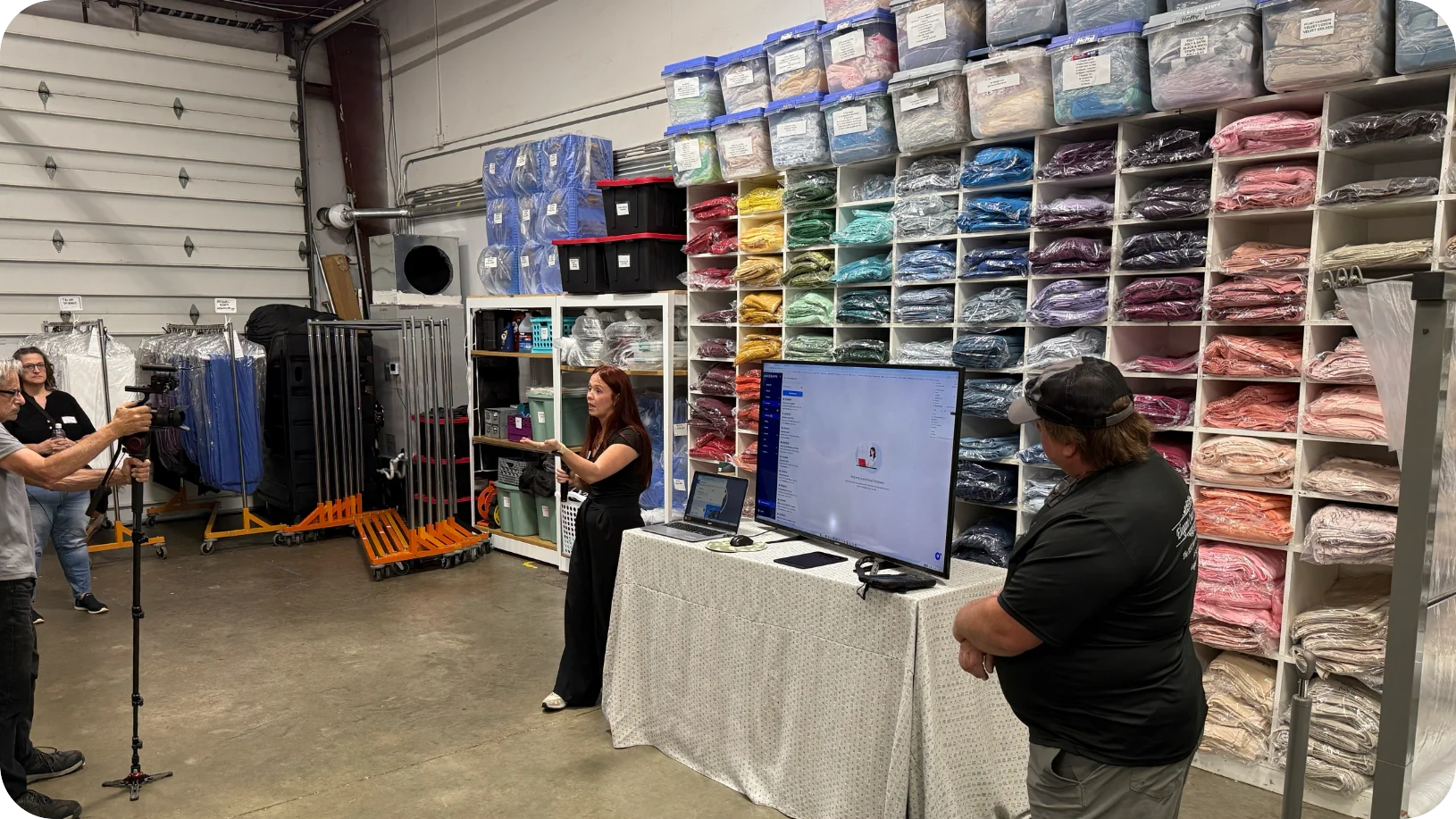
“If you’re in rentals, you have a space issue,” Alyse Conyers told a room of event pros touring her warehouse. She started Location d'événements à Waterford in her garage and now runs three warehouses. The shelves are still full, and when her team says there’s no room, she tells them to figure it out.
At Waterford, figuring it out comes down to two rules you could start using in your own event rental warehouse on Monday. Every item has to earn its shelf or it gets sold, and a late order only gets pulled once it’s signed and paid. This recap of our Waterford roundtable walks through both rules and the contract that backs them up.
Principaux enseignements :
-
An event rental warehouse runs out of space at every size.
Waterford Event Rentals grew from a garage to three warehouses, and its owner still says that if you’re in rentals, you have a space issue.
-
Every item on the shelf should pay its rent.
Waterford’s operations manager asks whether each linen is paying its rent, and items that stop renting move up top and out of the way.
-
Retired event rental inventory can go straight to a resale shop.
Waterford lists items on a resale shop linked from its main website as soon as they come off the rack, before they gather dust.
-
Late orders come from what's already on the shelf.
Waterford’s sales team won’t sell out-of-stock pieces two weeks out, and its last-minute quote tells clients nothing gets pulled until they sign and pay.
-
An event rental contract can be written around item counts.
Waterford’s contract holds the items and quantities a client reserves, allows reductions of up to 30 percent, and stops reductions at the 14-day final payment.
Use the Height, Rotate the Rest
When an event rental warehouse runs out of space, Waterford Event Rentals makes room three ways before anything leaves. Racks go higher, slow and seasonal items rotate in and out, and backstock sits boxed under the matching hanging inventory. Anything that still doesn’t rent often enough loses its prime shelf and, eventually, gets sold.
- Height: taller racks, with bins up top.
- Rotation: what’s on the shelves at any moment is only part of what Waterford owns.
- Backstock: the spare ivory polyester sits in a box right below the ivory polyester on the rack.
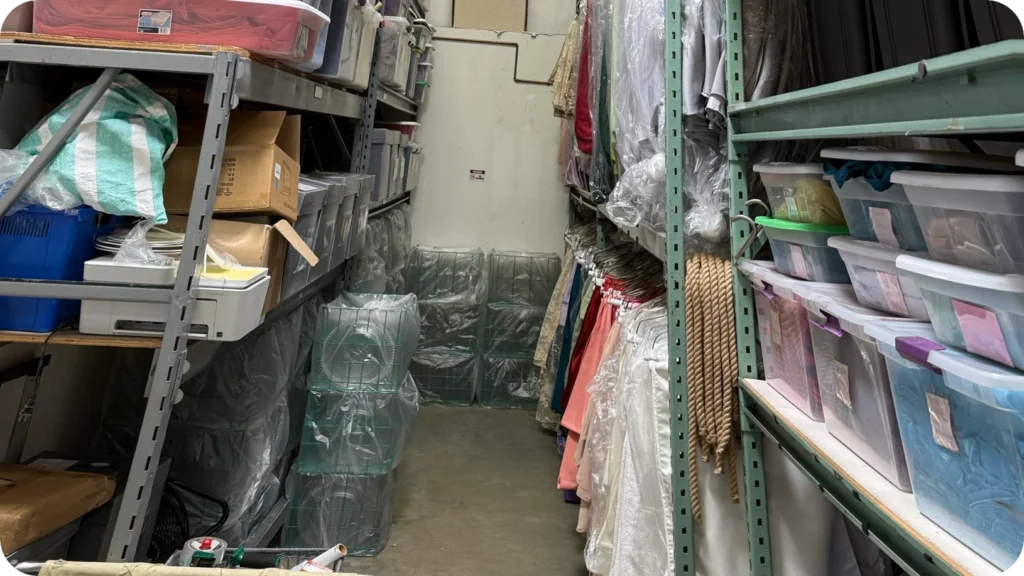
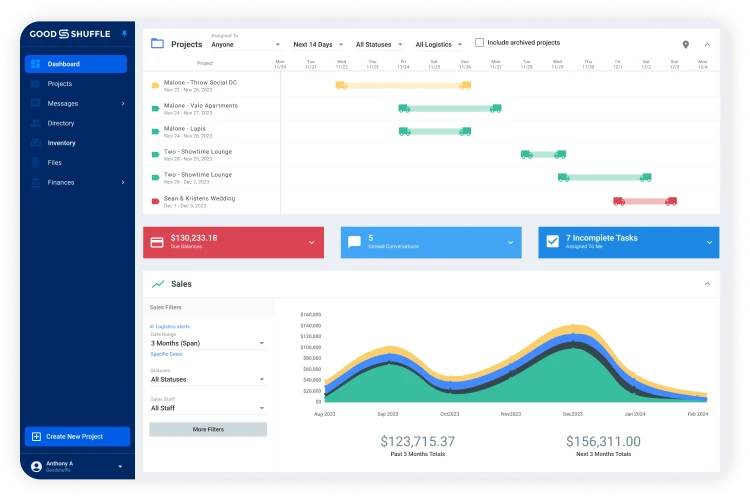
Boxed backstock only works if nobody has to open the box to know what’s in it. Alyse credits Goodshuffle Pro for that, because it shows the team how much of each item it has.
Operations manager Kari Mustain’s rule is to label and log everything, and an annual count of the whole inventory keeps the numbers right. Since the team started using set-asides in Goodshuffle Pro to hold back pieces that can’t go out, it knows what’s truly available to sell.
Waterford plans the layout too. The crew kept forgetting napkins until the napkins moved next to the bay door, where orders go out. For more setups like this one, Party! Dallas Rentals uses color tags and tiers.
Make Every Rental Item Pay Its Rent
Kari has one question for anything that’s been sitting too long.
“Is this linen paying for its rent here on this shelf? I don’t think so.”
Every shelf costs you something, and the item on it either rents often enough to cover that or it doesn’t. At Waterford, items that don’t get used move up top, out of the way. Then the team decides whether to push that piece in sales or retire it.
The team makes that call from numbers it already has. It looks at the item’s past and future orders and at how often it rents, which it checks in Goodshuffle Pro’s utilization reports. Our inventory audit newsletter makes the same case from the owner’s side.
Sell Retired Rental Inventory Right Away
Waterford sells its retired inventory through a resale shop linked from its main website. Moving an item up top clears the prime shelf, but the item still takes up space, and the resale shop is where it goes next.
When an item stops renting often, it goes on the resale shop as soon as it comes off the rack. The team calls that a full life cycle, where a piece rents until it stops earning and then sells. It sells while someone still wants it, and nothing gets given away or stashed in a back corner.
Take Last-Minute Orders From Stock
Waterford counts anything two weeks out or less as last minute. Sales and marketing manager Kayla Wortham’s first rule for those orders is that they don’t sell what’s out of stock. If a client asks again for the pink polka dot sequin and it isn’t there for tomorrow, the conversation moves to something that is. The only exception is a huge order that could make it worth their while.
“If it’s like these two sequins and that’s all you need, you can either shift to something we have in stock or, the $80 isn’t worth it.”
Notre guide to last-minute bookings has more questions to ask before you say yes.
Pull Late Orders Only Once They're Paid
Once a last-minute sale reaches the warehouse, the ops team doesn’t pull, size, or count anything until the client has signed and confirmed. Waterford built a last-minute event template in Goodshuffle Pro, with one version for partner vendors (friendors) and one for everyone else. The quote tells the client up front:
“Your order will not be pulled until you sign and pay.”
Then Kayla tells the warehouse to wait for the signature. For a friendor Waterford rents to all the time, she can tell the crew to start prepping. Late orders still go through Waterford’s three order checks before they ship.
Write Rental Contracts Around Item Counts
Waterford writes its contracts around the items and quantities a client reserves. Two hundred chairs held for one client are 200 chairs nobody else can rent. Clients can change their order as often as they like, but they sign and book first.
Kayla talks the numbers through early, in the showroom. Clients can reduce by up to 30 percent from what they sign for, and she helps them start realistic. If 200 people are invited and half of them live in Europe, she’ll suggest booking closer to 130.
From there, the dates run the order:
- At booking: a 30 percent deposit and a signed contract hold the items.
- 17 to 18 days out: an automated message asks for final counts.
- 14 days out: final payment is due, and the order can grow from what’s on the shelf but can’t shrink.
Two Rules for a Full Rental Warehouse
Three warehouses in, Waterford still runs out of room, and Alyse’s answer to “we don’t have room” is still “figure it out.” Her team does it with two rules: Every item earns its shelf, and late orders ship from stock once they’re paid.
Explorer Goodshuffle Pro
Réservez une démonstration pour voir notre logiciel d'organisation d'événements en action.
FAQ
Waterford Event Rentals organise son espace de stockage en superposant des étagères et des bacs plus hauts tout en haut. L'entreprise fait tourner lentement les articles saisonniers, en les entrant et en les sortant, et conserve les stocks de réserve dans des cartons sous les articles suspendus correspondants. Elle se demande ensuite si chaque article « paie son loyer » sur les étagères ; tout ce qui ne le fait pas est déplacé vers le haut et finit par être vendu.
Waterford Event Rentals se demande si chaque article « paie son loyer » sur les rayons. L'équipe examine l'historique et les prévisions de commandes de l'article, ainsi que sa fréquence de location. Les articles qui ne génèrent plus de revenus sont d'abord déplacés vers les rayons les plus hauts. L'équipe décide ensuite s'il faut les promouvoir en promotion ou les retirer pour les proposer dans sa boutique de revente.
Vendez-le tant qu'il y a encore des acheteurs potentiels. Waterford Event Rentals propose les articles qui ne sont plus souvent loués sur une boutique de revente accessible depuis son site web principal. L'entreprise procède ainsi dès qu'un article est retiré du stock, afin qu'aucun ne soit donné ou relégué dans un coin.
Waterford Event Rentals les prélève directement de son stock. Toute commande passée deux semaines ou moins avant la date prévue est considérée comme de dernière minute, et l'équipe commerciale ne vendra pas d'article en rupture de stock pour cette date. Une commande importante peut valoir la peine ; ce n'est généralement pas le cas pour deux petits articles.
After the client signs and pays. Waterford Event Rentals’ last-minute quote template tells the client that up front, and until then the warehouse doesn’t pull, size, or count anything. The exception is a vendor Waterford rents to all the time, where the sales team may tell the crew to start prepping.

Partager sur