Here’s the short version: WeddingWire and event florist software do two different jobs. WeddingWire is a directory that helps couples find you. Event florist software runs the business behind the booking: proposals, contracts, deposits, and the vases and arches you have to keep straight. The real question isn’t which one wins. It’s which one fixes the bottleneck in your business.
If you’ve ever spent three hours rebuilding a wedding proposal from scratch because there was no way to copy the last one, you already know which problem is costing you. Let’s break down where each tool helps, where each one doesn’t, and how to spend your money in the right place.
Event florist software vs WeddingWire at a glance:
Pricing as of 2026. WeddingWire pricing is not published; ranges are from independent reviews.
Key Takeaways:
-
They solve two different problems.
WeddingWire is a directory that helps couples find you. Florist software runs the business behind the booking: proposals, contracts, deposits, and the vases and arches you have to keep track of.
-
Leads alone don't pay you.
A full inquiry inbox still leaves you rebuilding proposals by hand and chasing deposits over Venmo. For most growing floral businesses, the bottleneck is the back-and-forth after the inquiry, not the inquiry itself.
-
Directory ads get expensive fast.
WeddingWire listings often start around $125 to $150/mo on a 12-month contract and can climb past $1,000 in competitive markets, with no proposal or inventory tools attached.
-
Most florists end up needing both.
Keep the directory if it sends you good couples, then run everything after the inquiry through software built for how florists actually work.
-
The software keeps your substitutions private.
Clients see the finished look you promised, not the broken urn you swapped or the stem counts behind it, which is the part a directory listing can’t touch.
Getting Found vs Running the Business
WeddingWire and event florist software sit at opposite ends of the same job. One gets the inquiry in the door. The other turns that inquiry into a signed, paid, well-run wedding. Mixing the two up is how florists end up paying for leads they can’t keep up with.
WeddingWire is a marketplace where engaged couples browse and contact vendors. Per its own vendor materials, it lists roughly 8,000 florists alongside tens of thousands of other wedding pros, so a listing puts you in front of couples who are ready to spend. That visibility is real, and it’s the whole point of the platform.
But the inquiry is where WeddingWire’s job ends. It won’t build your proposal, hold a deposit, or tell you the ceremony arch is already promised to Saturday’s wedding. That’s the work that eats your evenings, and it’s exactly what event florist software is built for: branded, visual proposals a client can sign and pay in one link, deposits collected online, and real-time tracking of the hard goods you reuse event after event.
What Will You Pay?
The two tools price completely differently. WeddingWire sells advertising on annual contracts. Florist software is a monthly subscription you can usually start or stop on your own terms. That difference matters more than the sticker price.
WeddingWire doesn’t publish fixed rates. Independent reviews put premium listings at roughly $125 to $150 per month to start, climbing past $1,000 in competitive markets, typically on a 12-month commitment. A directory listing is one of those tactics that only pays off when something converts the lead on the other end. As wedding-business coach Heidi Thompson puts it in a 2026 episode on why more marketing isn’t the answer:
“Random marketing produces random results every single time.”
— Heidi Thompson, Evolve Your Wedding Business, 2026
Goodshuffle Pro, by contrast, publishes its pricing. The Lite plan starts at $39/mo for solo florists who mostly need professional proposals and organized inventory. Standard adds team coordination, dedicated onboarding, and more advanced features as you grow. You’re paying to run the business, not to rent a spot in a directory.
What's the Client Experience Like?
From the couple’s side, WeddingWire and event florist software show up at different moments. WeddingWire is where they first find and message you. Florist software is everything they feel after that, and it’s where you either look like the artist they’re dreaming of or look like a hassle.
On WeddingWire, a couple sends an inquiry through the platform’s inbox and waits. What happens next is on you. If your follow-up is a Word doc, a few screenshots of past work, and a “Venmo me the deposit,” you’re competing on price with every other florist in their inbox.
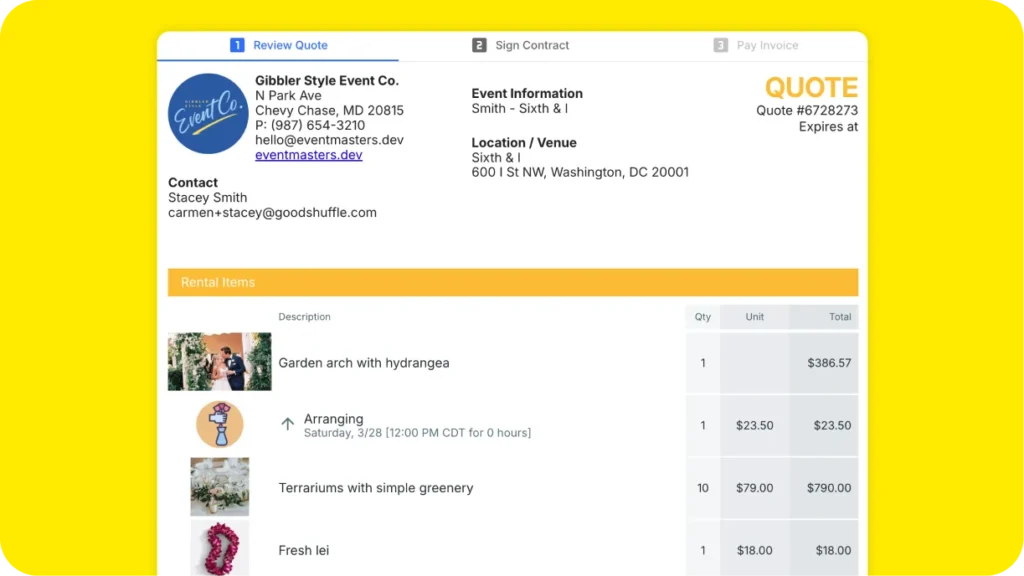
With florist software, that same couple gets a branded, image-rich proposal they can review, sign, and pay from one link. They see the finished look you’re promising. They don’t see the stem counts, the substitutions, or the urns you swapped at the last minute. The polish does the convincing for you, and it matches the artistry they already saw in your portfolio.
Where Each Platform Saves Your Hours
Florist software is where the hours actually come back. WeddingWire can shorten the search for couples, but it adds nothing to the admin behind each wedding. Florist software goes after the three time sinks every event florist knows.
Proposals and Recipes
Rebuilding the same proposal from scratch for every inquiry is dead time. A lot of weddings means a lot of arrangements, and recreating them by hand is where the hours disappear. With reusable recipes and templates, you assemble a proposal in a fraction of the time, send it branded, and skip the back-and-forth of a separate design tool plus a separate contract.
Deposits and Payments
Chasing money is the worst part of the job, and florists feel it more than most because weddings book six to twelve months out. Built-in payments let you collect a deposit the moment a client signs, set up payment schedules, and keep a card on file for the add-ons that always show up the week before the wedding.
Vases, Arches, and Conflicts
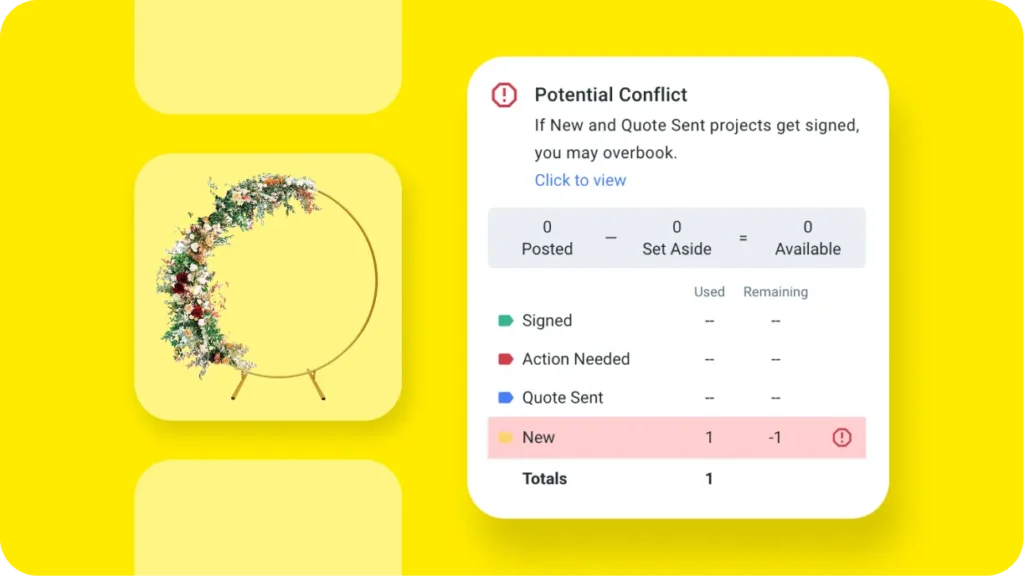
Most florists run light on inventory tracking until the morning a single big wedding wipes out every votive and urn they own, and the next day’s event has nothing to pull from. Real-time tracking flags that conflict while you’re still building the quote, not the morning of setup when there’s nothing you can do. You never promise the same arch to two weddings again.
When Florals Aren't the Whole Business
Here’s the pattern that shows up again and again with florists: most don’t go looking for “florist software” at all. They reach out because they’ve bolted something onto the floral business, whether that’s rentals, candles, vases, or full event styling, and the tools they’re using won’t bend that way.
It’s a real trend, not a hunch. Among florists whose businesses we’ve been able to classify, the most common add-ons are event rentals, event planning and styling, and even venue space. They’re running two operations out of one inbox, and a directory listing does nothing to hold that together.
This is where the directory-versus-software split gets sharp. WeddingWire can send a couple who wants “flowers plus a few rentals,” but it can’t quote florals and rentals on one project, track both, and invoice them together. Florist software can. You put one proposal together that handles everything, instead of straddling two systems for the same wedding.
Where WeddingWire Wins
To be straight about it: WeddingWire does one thing software can’t. It puts you in front of couples who are actively shopping for a florist and don’t know you exist yet. Software assumes you already have the lead.
If you’re newer, in a competitive market, or trying to fill a slow stretch, that visibility can be worth the spend. Directory leads also tend to be cheaper per lead than running your own ads. The honest trade-offs are the annual contract, the price-shopper couples a directory tends to attract, and the recurring complaints about lead quality. But the discovery function is real, and no software replaces it.
That said, the line between “get found” and “run the business” is starting to blur. Goodshuffle Pro is building toward discovery too, with a marketplace at goodshuffle.com where couples can find event pros. The pitch there is simple: get discovered and run the booking in the same place, instead of paying a directory to send you a lead you then manage somewhere else.
What Switching Actually Looks Like
Moving your business into software is less disruptive than most florists expect, and the before-and-after tends to rhyme. The florists who switch usually describe the same starting point: proposals living in Word docs, designs mocked up in Canva, contracts printed and signed and scanned back, and deposits collected over Venmo or PayPal. It works, technically. It’s just a lot of steps, and none of them talk to each other.
The shift is consolidation. One branded proposal a client can sign and pay, deposits scheduled and collected online, and the vases and arches tracked in the same place the proposal lives. Florists who make the move most often point to two things: they look more polished to couples, and they get hours of their week back from rebuilding the same proposals over and over.
Setup is lighter than the dread suggests. Onboarding for most businesses runs about two to three weeks, with a dedicated specialist and free training on Standard plans and above. Implementation support is free, and you can import your existing inventory rather than rebuilding your catalog by hand. You don’t have to wait for a slow season to start, either. You can run a single proposal through it this week and see how it feels.

Which One Fits Your Floral Business?
Pick based on your actual bottleneck, not the louder pitch. If you can’t get enough couples to find you, a directory like WeddingWire earns its keep. If the inquiries are coming but you’re drowning in proposals, payment chases, and last-minute substitutions, that’s a management problem, and that’s what florist software fixes.
If you’re a solo florist getting steady inquiries: the win is looking professional and getting paid faster. The Lite plan is built for exactly this, and you can start a free trial and run a real proposal through it without booking anything. Scale back the directory spend once the software is doing the convincing.
If you’re newer or in a crowded market: keep WeddingWire for discovery, but don’t expect it to run your business. Pair it with software so the couples it sends actually convert.
If you rent vases and arches or do more than pure design: you’ve outgrown a directory and an inbox. You need real-time inventory tracking, hidden substitutions, and one system for proposals, deposits, and the rental side of the house.
Most growing floral businesses land in the same place: a directory can fill the top of the funnel, but the business runs on software. Get the management side right, and every couple, wherever they find you, turns into a booked, paid, and well-run wedding.
See what running your event floral business in one place looks like. Solo florists can start a free trial and send a real proposal today. If you’re running a team or juggling florals and rentals, book a demo and we’ll walk you through it.

FAQs
No. WeddingWire is a vendor directory and advertising marketplace. It helps couples discover and contact you, but it doesn’t build your proposals, hold deposits, or track your vases and arches. To run the business after the inquiry comes in, event florists use dedicated event florist software like Goodshuffle Pro.
WeddingWire doesn’t publish fixed pricing. Premium listings commonly start around $125–150 per month and can exceed $1,000 per month in competitive markets, usually on a 12-month contract. The cost depends on your market and how many other florists are advertising near you.
Yes, and many florists do. WeddingWire brings in couples who are actively shopping; florist software handles the proposal, contract, deposit, and inventory once they reach out. They’re complementary. One fills the funnel, the other runs it.
Look for software that sends branded, visual proposals, collects deposits online, and keeps your substitutions private from the client. Goodshuffle Pro’s Lite plan starts at $39/mo and is built for solo event pros who want to look polished without managing weddings out of spreadsheets and Canva.
Not for your bookings. WeddingWire is built around lead generation and reviews, not payment processing. To collect deposits and final payments online, you need separate florist software with built-in payments, which is where a tool like Goodshuffle Pro’s Stripe-powered proposals comes in.

Share On