

Most event rental companies don’t switch software the day the old way starts failing. They switch at a breaking point. Talk to enough rental business owners and the same three moments come up again and again: a double-booking, a big job the old program couldn’t keep up with, and the day the one person who knew how everything worked walked out.
“If I had a dollar for every time someone said, ‘I wish I would’ve done this sooner,’ I would be in a different tax bracket by now.”
— Marshall McCormick, Account Executive, Goodshuffle Pro
That was on the Fresh Rental podcast, and he hears the same stories all day from tent companies, party rental businesses, and equipment rental companies that haven’t decided anything yet. If you’ve been “meaning to look into this” for a season or two, the reason you’re still waiting is probably not the one you’d name first.
Key Takeaways:
-
Most rental companies switch software at a breaking point, not because the old way slowly got worse.
The three that come up most: a double-booking, a big job the old program couldn’t keep up with, or losing the one person who knew how everything worked.
-
What's really holding you back usually isn't the new software.
It’s the memory of a switch that burned you years ago, and a switch today looks nothing like that.
-
"It's all in my head" works right up until it doesn't.
Knowledge that lives in one person’s memory becomes a liability the first time they take a week off or give notice.
-
Waiting for the slow season usually costs more than switching now.
Every busy season on the old program is another round of fire drills and hours you don’t get back.
The Double-Booking You Can't Undo
The first moment is almost always public. Two events, one dance floor, and no way for it to be in both places at once.
A double-booking shows up in front of the client on the worst possible day. Marshall’s example on the podcast was a wrong-color delivery, and it lands the same way. A guest might never notice that the bride wanted black chiavari chairs and got white ones, but the bride knows the second she steps out to walk down the aisle.
When sales and the warehouse are working from different information, it’s only a matter of time before something gets promised twice. The owners who switch after a double-booking aren’t really reacting to their software. They’re reacting to the fact that they never saw it coming.
The Big Job Your Program Can't Handle
The second moment comes when a job gets big enough to expose everything the old way was hiding. You can run a couple of backyard parties a weekend on memory, a few spreadsheets, and some group texts. A 300-guest wedding with two trucks going out can’t be run that way.
Suddenly you’re tracking hundreds of items across overlapping events, and the gaps you used to catch by hand start slipping through. Picture wanting software just to handle contracts, then finding out mid-event you’ve run short on dance floor sections because nothing was counting real quantities against what was already out the door.
When the job outgrows the program you’re on, it doesn’t fail quietly. It fails in front of a paying client. This is usually the point where tracking your inventory as it goes out the door and comes back stops being a nice-to-have.
When Your One Expert Walks Out
The third moment is quieter. The only person who knows how everything works gives notice.
Plenty of rental businesses run on one person’s memory. Usually it’s the owner, or someone who’s been there twenty years, set it all up, and never wrote it down. It holds right up until they retire or give notice, and the business finds out how much risk was riding on one person the whole time. Marshall hears “it’s just all in my head” constantly, and his answer is blunt:
“You don’t want to be someone that you have to get called every time you’re on vacation because it’s all in your head.”
— Marshall McCormick, Goodshuffle Pro
Software the whole team can log into keeps that knowledge with the business instead of walking out the door with one person.
The Real Reason You Haven't Switched
If it’s this painful, why do people keep putting it off? The fear usually isn’t about the new software at all. Marshall’s word for it on the podcast was exhausted. The folks he talks to have been through a switch before, moving everything over was a mess, and they’re in no hurry to live through it again.
The switch that burned you was probably years ago, with a program that made you do all the work yourself.
Marshall makes a related point: most people don’t realize how chaotic things are until they have something else to compare it to. This is also where a lot of owners quietly talk themselves into waiting, right when waiting has become the more expensive choice.
What a Rental Software Switch Looks Like
Switching today isn’t the multi-month project you remember. Goodshuffle Pro typically gets you up and running in about a week, with a dedicated onboarding specialist working through the setup alongside you.
The payoff is bigger than a nicer-looking program. Take Elite Tent & Events in Sykesville, Maryland. After moving off their old rental program to Goodshuffle Pro, the person who had been holding a full-time position just to keep the old program running was able to step out of it. The family member stuck in that job, patching the old program, got to move on to work she cared about.
Fewer mistakes, and a person back on work that helps you grow your business instead of babysitting a workaround. If you’re weighing what a switch is even for, it helps to get clear on the software you actually need before you start comparing names.
Why Waiting for Slow Season Backfires
The instinct to wait for the quiet months feels responsible. In practice it means running one more full busy season on software you already know is failing you.
Every busy season on the old program costs you another round of double-checking and workarounds, and those hours don’t come back. Getting set up before the rush is what lets your crew get comfortable with the software by the time the weekends start stacking up, instead of learning it under pressure.
If you’re ready to act, the next question is how to switch well, and that’s its own playbook worth reading first: a smart switching timeline built from how one rental business owner planned her move.
Which Moment Is Your Rental Business In?
If you recognized your business in any of these, you’re not early. You’re right on time.
The owners who hold out for a fourth or fifth breaking point usually just pay for the first three twice. The ones who move do it once staying costs more than changing.
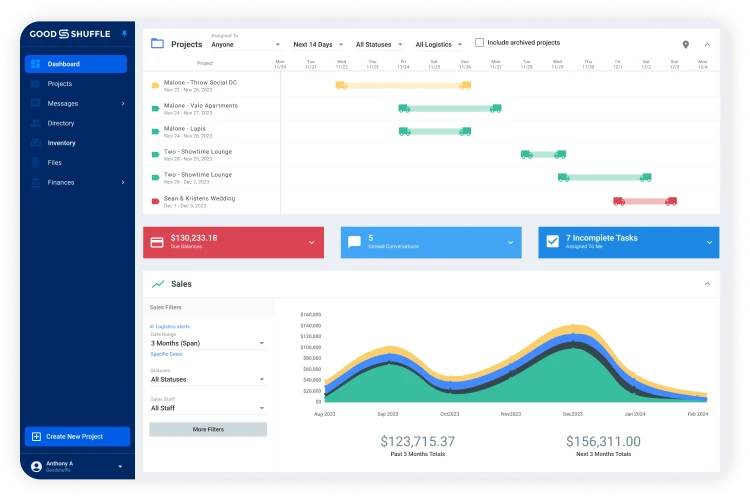
If you’re comparing options and want to see what running everything in one place looks like in practice, that’s exactly what a demo is for. And if you want the longer view, the other half of Marshall’s conversation covers where software is headed, and this look at the 2026 rental software roadmap covers the software that’s starting to tell you what to do next instead of only keeping the records.
FAQs
Most rental companies switch after a specific breaking point, not on a set schedule. The three most common triggers are a double-booking you can’t take back, a job too big for your current program or spreadsheets to track, and losing the one person on the team who knew how everything worked. If any of those sound familiar, you’re already past the point where new software pays for itself.
That fear stops most people, and it usually traces back to a bad experience years ago moving to different software. Goodshuffle Pro typically gets you set up in about a week with a dedicated onboarding specialist. Moving everything over looks very different now, and you’re not doing it alone.
Waiting sounds safer, but it usually means running one more full busy season on software that’s already failing you. The better move is getting set up before the rush. Your crew is comfortable by the time busy season hits, and the software gets a real test when it counts. Onboarding typically takes about a week, not months, which is why waiting for a quiet stretch rarely holds up.
It’s a fair worry, and it’s the one people ask about most. If you’re on an annual subscription, your onboarding specialist imports your inventory, client list, and active projects for you. Monthly subscribers can add an inventory setup package. Either way, you’re not rebuilding your business by hand or figuring it out on your own.
A few clear signs: sales and the warehouse can’t see the same information at the same time, things slip through the cracks between the office and the truck, and the details that keep events perfect live in one person’s head instead of somewhere the whole team can see them. If you’re working around the program you’re on instead of with it, it’s costing you more than you think.

Share On