
Table des matières
-
Quand le propriétaire est le frein
-
Quand un seul pas lent met tout à l'arrêt
-
Quand la contrainte porte sur la superficie en pieds carrés
-
Ce dont personne ne vous parle quand vous signez un bail à long terme
-
Pourquoi refusent-ils d'acheter ce que Dallas possède déjà ?
-
Déterminer ce qui mérite sa place
-
Le fil conducteur
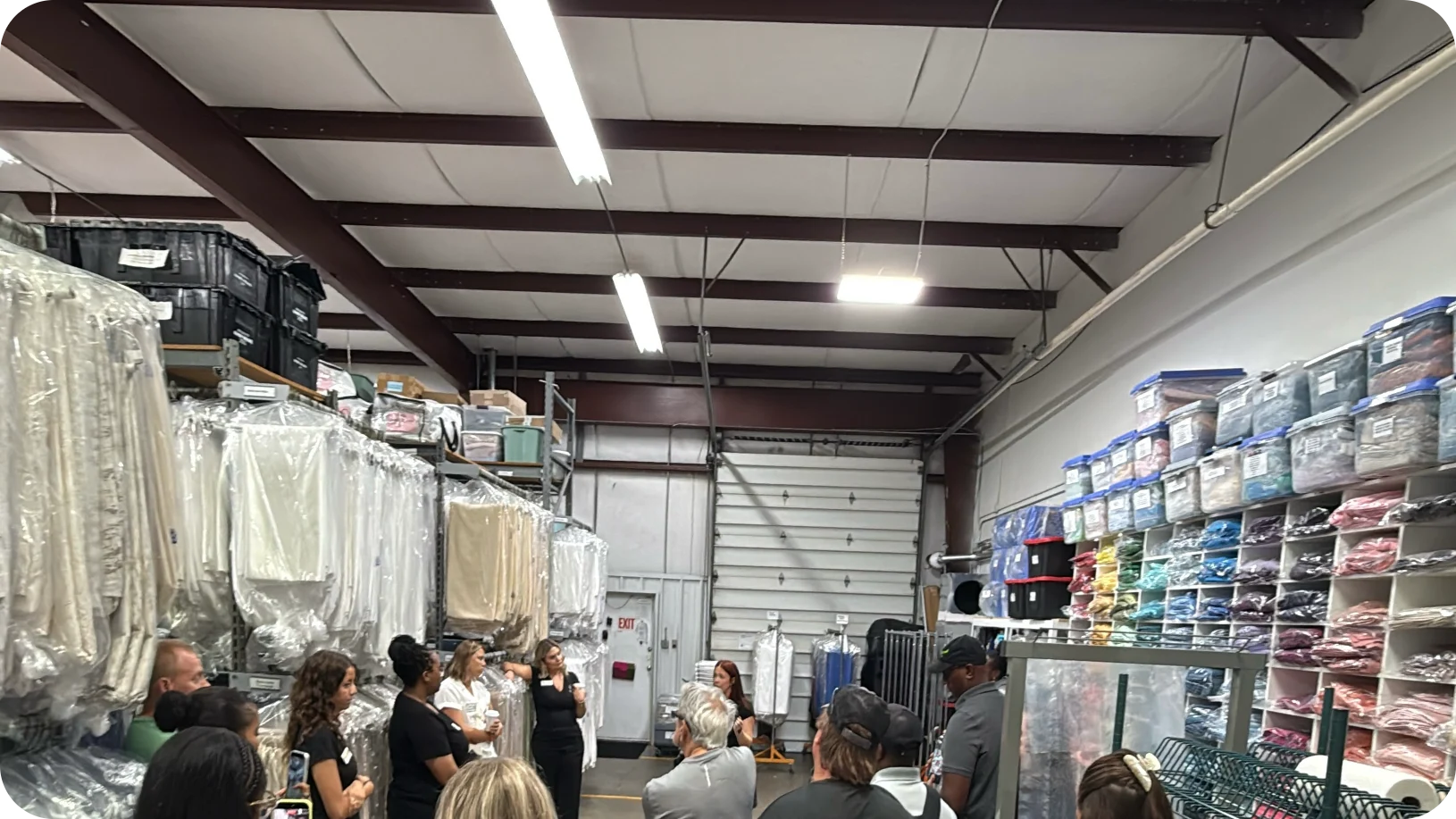
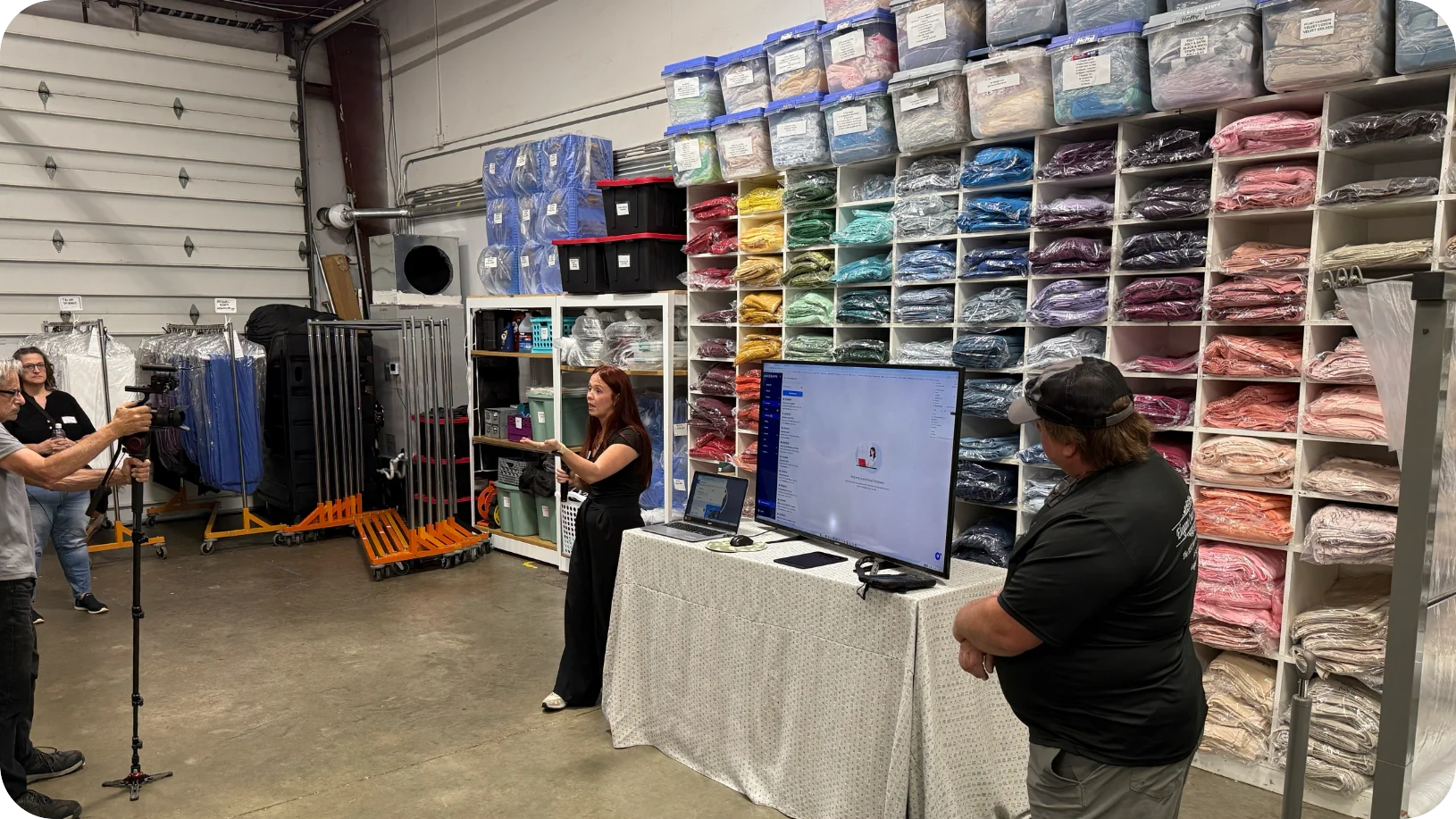
Lors de la visite de l'entrepôt de Dallas-Fort Worth, Colin Connor, de Goodshuffle, a posé au panel une question à laquelle il est plus difficile de répondre qu'il n'y paraît : quelle est actuellement la principale contrainte de votre activité ? Trois exploitants ont donné trois réponses différentes, et aucun d'entre eux n'a hésité.
Vous pouvez regarder la vidéo dans son intégralité ici, ou continuer à lire pour en découvrir le résumé :
Principaux enseignements :
-
C'est souvent le propriétaire qui constitue le frein.
Cam Petty s'est désignée comme le « goulot d'étranglement » de sa propre entreprise, car c'est par elle que transitent à la fois la gestion des stocks et les relations avec les clients.
-
Un ralentissement au sein d'un seul service peut freiner l'ensemble de l'équipe commerciale.
Les devis pour les tentures nécessitant un délai de traitement plus long que ceux pour la location, Party! Dallas Rentals a décidé de scinder ce service pour en faire une activité distincte.
-
L'espace est une véritable limite, et non une limite abstraite.
Lorsque Melissa Teague dirigeait sa propre agence immobilière, la question de la superficie en pieds carrés était un problème qu'elle n'arrivait jamais à résoudre.
-
Acheter ce que votre marché propose déjà vous fait perdre votre seul véritable avantage.
Les responsables de ce comité consultent les catalogues de la concurrence avant de procéder à d'importants achats de stock et renoncent à un article lorsque le marché local est déjà saturé.
-
C'est lors des négociations de bail que les projets de croissance échouent souvent en silence.
Les clauses d'indexation annuelle des loyers, les conditions d'obtention du certificat d'occupation et la nature des dépenses à la charge du propriétaire sont toutes définies avant votre emménagement.
Quand le propriétaire est le frein
Cam Petty est la propriétaire de Render Collective, la société mère basée à Dallas-Fort Worth qui chapeaute Render Events et Scout Floral. Elle a débuté comme organisatrice de mariages, s'est lancée dans la location il y a quatorze ans, puis s'est diversifiée dans la décoration florale il y a dix ans. C'est elle qui a répondu en premier, et elle a parlé d'elle-même.
“ C'est moi qui suis le goulot d'étranglement de mon entreprise. ”
— Cam Petty, Render Collective
Son raisonnement était très précis. C’est elle qui a créé l’entreprise ; elle connaît donc parfaitement les stocks, gère les relations avec les clients et assume une charge de travail plus importante que n’importe quel autre membre de l’équipe. Le problème ne réside pas dans le fait que les connaissances se trouvent par hasard dans la tête d’une seule personne. Il réside dans ce qui se passe lorsqu’une entreprise dépasse les capacités des systèmes qui lui ont permis d’en arriver là.
Pour elle, la solution réside dans les processus, et non dans les heures de travail. Petty a mis en avant les systèmes, les processus et les procédures opérationnelles standard qui ont bien fonctionné pendant un certain temps, mais qui ont cessé d'être efficaces après la croissance de l'entreprise. Elle a déjà abordé ce sujet publiquement, et notre Guide pour la rédaction des modes opératoires normalisés a été élaboré à partir d'une conférence qu'elle a donnée précisément sur ce sujet.
Quand un seul pas lent met tout à l'arrêt
Liz Curlin court Fête ! Location à Dallas, qu’elle a contribué à lancer au sein de Todd Events après y avoir débuté il y a dix ans. Son obstacle n’était pas une personne. Il s’agissait d’une étape précise du processus de vente.
Les rideaux avaient toujours fait partie de l'offre. À mesure que la demande augmentait, l'établissement des devis pour les rideaux prenait nettement plus de temps que celui pour le mobilier, et ce retard se répercutait sur les clients qui attendaient des informations. Curlin a donc décidé de séparer l'activité « rideaux » pour en faire une entité distincte, Vertical 360, dotée de son propre compte et de son propre flux de travail.
Le raisonnement était d’ordre structurel. Demander quatre barres, c’est simple. Demander quarante pieds de rideaux soulève des questions concernant la hauteur du plafond, le fait que le site soit en extérieur ou non, et la manière dont le vent sera pris en compte. Les rideaux sont souvent installés deux jours avant l’arrivée du mobilier, et c’est une autre équipe qui s’en charge. Deux lignes de service, suivant deux calendriers distincts, devaient être intégrées de force dans un seul et même processus.
Quand la contrainte porte sur la superficie en pieds carrés
Melissa Teague a dirigé pendant des années « Simply Chic », une entreprise de location de matériel événementiel qu'elle avait créée en 2014 avant de la céder, et elle a participé à la table ronde en tant qu'ancienne propriétaire plutôt qu'en tant que prestataire. Sa réponse tenait en un seul mot : l'espace.
“ Je n'avais jamais assez d'espace. Et c'était vraiment difficile de s'adapter à cette situation. ”
— Melissa Teague, ancienne propriétaire de Simply Chic
Il est important de parler clairement de l'espace, car il ne se prête pas aux solutions astucieuses. Il limite la quantité de stock que vous pouvez détenir, la rapidité avec laquelle une équipe peut traiter une commande et le chiffre d'affaires que le bâtiment peut générer. Parfois, la solution la plus honnête consiste à opter pour un bail plus spacieux plutôt que pour un processus plus efficace.
Ce dont personne ne vous parle quand vous signez un bail à long terme
Mme Petty a déménagé à plusieurs reprises et se prépare à un nouveau déménagement. Son avertissement portait sur l'écart entre le loyer convenu et celui que l'on finit par payer.
Dans ses anciens locaux de 7 000 pieds carrés, son bailleur était un particulier et le loyer était resté inchangé pendant près de sept ans. Le fait de passer à un bailleur professionnel a entraîné la mise en place de clauses d'indexation annuelles. Elle a âprement négocié ces pourcentages lors de la signature d'un bail de sept ans, car sinon, à la fin du bail, le loyer aurait atteint plusieurs fois son montant initial.
Vient ensuite le bâtiment lui-même. Petty a passé en revue les questions qu’elle devait régler avant de signer : quelles réparations et modifications esthétiques incombaient au propriétaire par rapport à son allocation d’aménagement locatif, et quelles seraient les exigences de sa ville pour obtenir un certificat d’occupation. Le nombre de salles de bains par pied carré, les portes ouvertes de la salle d’exposition qui obligeraient la climatisation à refroidir l’ensemble du bâtiment, les couleurs extérieures qui juraient avec son image de marque. Son conseil : s’adresser à des exploitants ayant récemment emménagé plutôt que de se fier à un moteur de recherche ou à un chatbot pour savoir ce qui est considéré comme normal.
Pourquoi refusent-ils d'acheter ce que Dallas possède déjà ?
L'idée la plus transposable de cet après-midi n'avait rien à voir avec l'immobilier. Curlin a décrit une philosophie sur laquelle elle et Todd s'étaient mis d'accord lors du lancement de Party! Dallas, sachant qu'ils se lançaient sur un marché déjà saturé : s'il y a déjà un millier de chaises Chiavari dans la rue, il n'y a aucune raison d'en ajouter d'autres.
Avant de passer une commande importante, ils vérifient si les concurrents proposent déjà cet article. Si c'est le cas, ils y renoncent souvent et cherchent un produit qui manque encore dans la région métropolitaine. L'objectif est de combler les lacunes du marché plutôt que d'aggraver sa saturation.
Petty a décrit le revers de la médaille, à savoir ce qui se passe lorsque la duplication est inévitable. Plusieurs entreprises de Dallas proposent la même chaise « Black Ghost » qu’elle. Les clients la choisissent lorsqu’elle dispose également des comptoirs et des banquettes qu’ils recherchent, et elle se tourne vers un concurrent lorsqu’un client a besoin d’une centaine d’articles dont elle ne possède que soixante-seize. Parfois, c’est la quantité qui fait la différence, parfois c’est la disponibilité des éléments complémentaires, et souvent, c’est une relation forgée au fil des années en participant aux mêmes événements professionnels.
Déterminer ce qui mérite sa place
Lorsqu'on lui demande comment elle décide de conserver ou non un article, Petty commence par consulter les rapports générés par son système, puis fait appel à son jugement là où les chiffres ne suffisent pas. Un article qui se vend occasionnellement mais qui est facile et peu coûteux à remplacer peut être supprimé sans hésitation. En revanche, un article difficile à remplacer et parfois indispensable mérite d'être conservé, même si les chiffres semblent modestes.
Deux facteurs priment dans ce rapport. Le premier est l'espace : un article qui donne satisfaction sur le papier mais qui occupe une surface importante est examiné de près. Le second est la fiabilité sur le terrain, c'est-à-dire le fait de savoir si un article semble nécessiter constamment des réparations sur place. Elle soumet également la décision à un vote.
“ Nous sommes en démocratie. Je veux que tout le monde se prononce là-dessus. ”
— Cam Petty, Render Collective
Les services commerciaux et de production ne sont pas toujours d'accord, mais elle considère ces divergences comme des informations utiles plutôt que comme du bruit. Pour mieux comprendre comment une entreprise en pleine croissance décharge son dirigeant de certaines décisions, Luna Tolunay, de Fun Planners, nous explique les procédures opérationnelles standard (SOP) qui permettent d'atteindre un total de 1 200 événements par an.
Le fil conducteur
Trois opérateurs, trois contraintes totalement différentes, et un point commun : chacune a su résumer la sienne en une seule phrase. C’est plus rare qu’il n’y paraît, et c’est justement ce qu’il faut s’inspirer. Vous pouvez lire les conclusions tirées par Teague elle-même de cette même journée dans son compte rendu de la visite de l'entrepôt de Dallas.
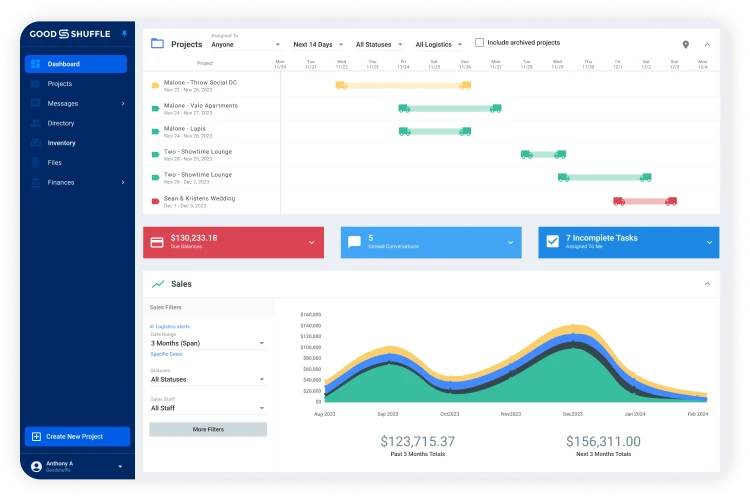
Explorer Goodshuffle Pro
Réservez une démonstration pour voir notre logiciel d'organisation d'événements en action.
FAQ
Identifiez l’étape unique où le travail s’accumule et demandez-vous ce qui se passerait si vous ne remédiez qu’à celle-là. Les opérateurs présents lors de cette table ronde ont chacun pu citer la sienne en une seule phrase : la disponibilité des responsables, le délai de réponse aux devis et l’espace physique. Si vous ne parvenez pas à exprimer la vôtre à voix haute, c’est généralement le premier signe qu’elle n’a pas été examinée.
Lorsque cela s'inscrit dans un calendrier différent de celui du reste de vos travaux. Les rideaux sont posés plusieurs jours avant l'arrivée du mobilier, nécessitent des réponses à des questions spécifiques au chantier et font appel à une équipe de pose distincte. Il s'agit là de différences d'ordre structurel, et non de différences de calendrier.
Les plateformes de petits boulots constituent souvent une solution à court terme, avec des filtres permettant de sélectionner les candidats en fonction des exigences physiques et du code vestimentaire. Les opérateurs participant à cette table ronde demandent également plus de travailleurs qu’ils n’en ont besoin, car tout le monde ne se présente pas. La question à plus long terme est de savoir si ce même goulot d’étranglement revient sans cesse, ce qui orienterait plutôt vers le recrutement.
Ce n'est pas sans raison. Sur un marché saturé, proposer un produit déjà largement disponible revient à se livrer à une concurrence purement tarifaire. Plusieurs opérateurs de la région préfèrent donc acheter délibérément ce qui manque dans leur métropole.
Les clauses d'indexation annuelle du loyer, les travaux dont la charge incombe au propriétaire par rapport à votre enveloppe d'aménagement locatif, ainsi que les exigences de votre ville pour l'obtention d'un certificat d'occupation. Renseignez-vous auprès d'autres exploitants ayant récemment déménagé plutôt que de vous livrer à des conjectures.

Partager sur