
Índice
-
Cuando el dueño es el cuello de botella
-
Cuando un paso lento lo detiene todo
-
Cuando la limitación es la superficie en pies cuadrados
-
Lo que nadie te advierte sobre un contrato de arrendamiento más largo
-
¿Por qué se niegan a comprar lo que Dallas ya tiene?
-
Decidir qué merece un lugar
-
El hilo conductor
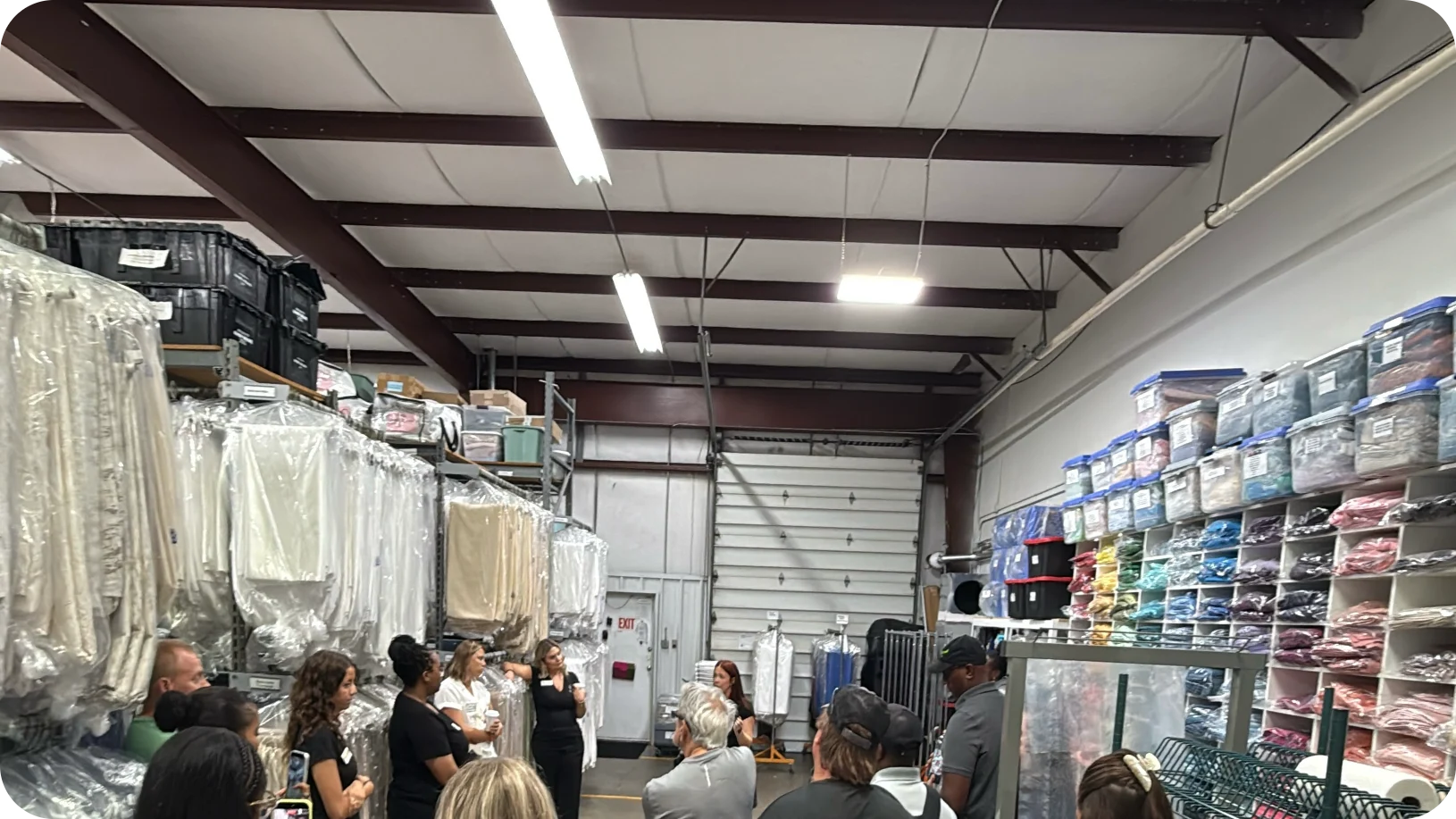
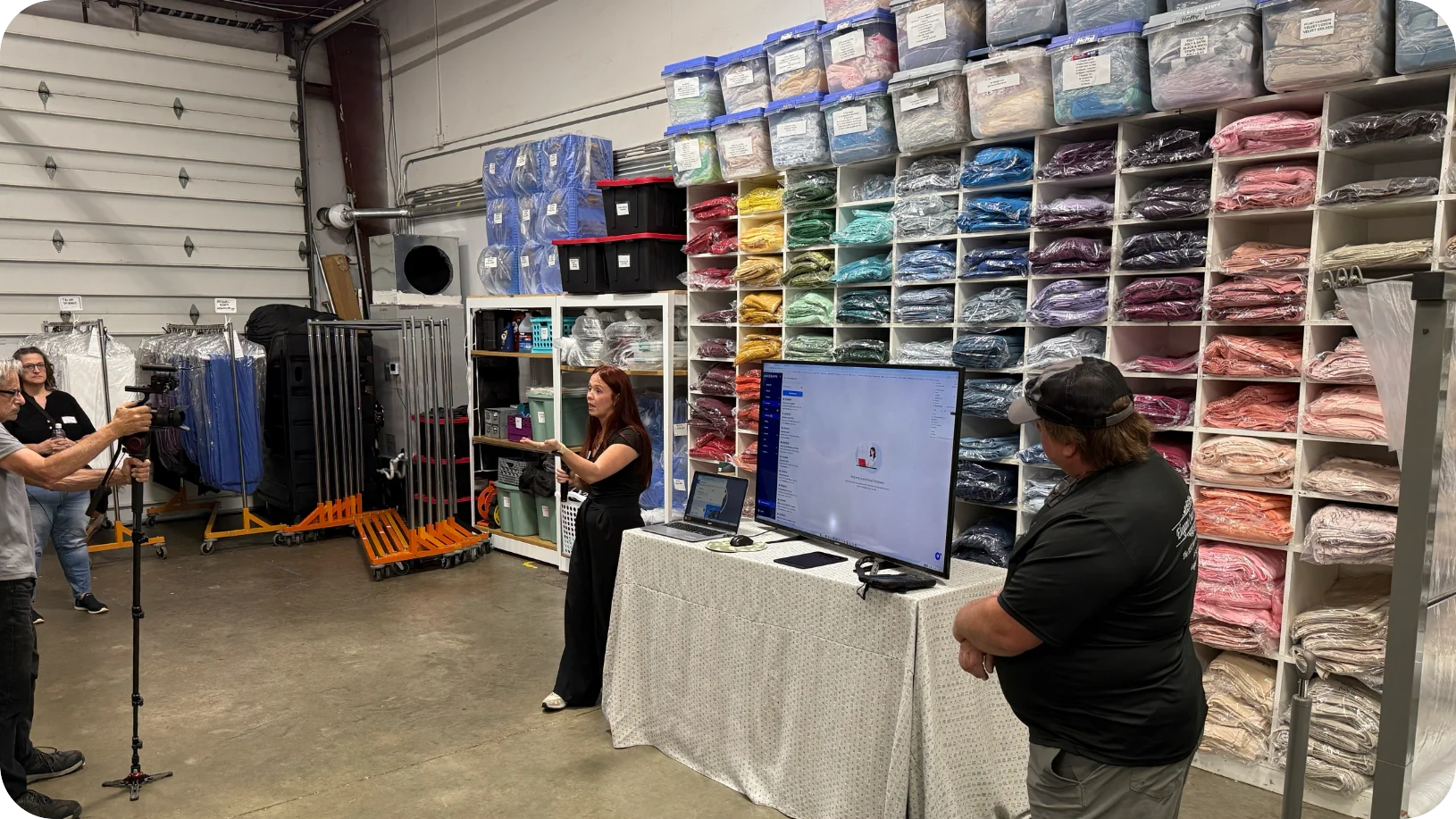
Durante el recorrido por el almacén de Dallas-Fort Worth, Colin Connor, de Goodshuffle, planteó al panel una pregunta que es más difícil de responder de lo que parece: ¿cuál es la principal limitación de su negocio en este momento? Tres operadores dieron tres respuestas diferentes, y ninguno de ellos dudó.
Puedes ver el video completo aquí, o seguir leyendo para conocer el resumen:
Puntos clave:
-
A menudo, el propietario es el que pone las limitaciones.
Cam Petty se consideró a sí misma el cuello de botella de su propia empresa, ya que tanto el control del inventario como las relaciones con los clientes pasan por ella.
-
Un retraso en una sola línea de servicio puede retrasar a todo el equipo de ventas.
Las cotizaciones de cortinas tardaban más en procesarse que las de alquiler, por lo que Party! Dallas Rentals separó ese servicio para convertirlo en una operación independiente.
-
El espacio es un techo real, no uno imaginario.
Cuando Melissa Teague dirigía su propia empresa de alquileres, los pies cuadrados eran el problema que nunca lograba resolver.
-
Comprar lo que tu mercado ya tiene te hace perder tu única ventaja real.
Los operadores de este panel revisan los catálogos de la competencia antes de realizar compras importantes de inventario y descartan un artículo cuando ya hay un exceso de la misma en el mercado local.
-
La negociación del contrato de arrendamiento es donde los planes de crecimiento se desvanecen sin que nadie se dé cuenta.
Los aumentos anuales de la renta, los requisitos del certificado de ocupación y lo que se considera un gasto del arrendador se deciden antes de que te mudes.
Cuando el dueño es el cuello de botella
Cam Petty es la dueña de Render Collective, la empresa matriz con sede en Dallas-Fort Worth de Render Events y Scout Floral. Comenzó como organizadora de bodas, se pasó al negocio de los alquileres hace catorce años y añadió los arreglos florales hace diez años. Ella fue la primera en responder y habló sobre sí misma.
“Soy el cuello de botella de mi empresa”.”
— Cam Petty, Render Collective
Su razonamiento fue muy concreto. Ella fundó la empresa, por lo que conoce el inventario, se encarga de las relaciones con los clientes y tiene más responsabilidades que cualquier otra persona del equipo. El problema no es que el conocimiento se quede en la cabeza de una sola persona por casualidad. Es lo que pasa cuando una empresa supera los sistemas que la llevaron hasta donde está.
Su solución está en los procesos, no en las horas. Petty señaló los sistemas, los procesos y los procedimientos operativos estándar que funcionaron durante un tiempo, pero que dejaron de hacerlo cuando la empresa creció. Ella ya ha hablado de esto públicamente antes, y nuestro Guía para redactar cartas de presentación se basó en una conferencia que dio precisamente sobre este tema.
(es-419) Español de América LatinaCuando un paso lento lo detiene todo
Liz Curlin corre ¡Fiesta! Alquileres en Dallas, que ella ayudó a poner en marcha desde Todd Events después de haber comenzado a trabajar allí hace una década. Su obstáculo no era una persona. Era un solo paso en el proceso de ventas.
Las cortinas siempre habían formado parte de la oferta. A medida que crecía la demanda, elaborar cotizaciones para ellas comenzó a llevar notablemente más tiempo que hacerlo para los muebles, y ese retraso afectaba a los clientes que esperaban recibir información. Curlin separó el negocio de las cortinas en una operación independiente, Vertical 360, con su propia cuenta y su propio flujo de trabajo.
El razonamiento fue de carácter estructural. Pedir cuatro barras es sencillo. Pedir cuarenta pies de cortinas plantea dudas sobre la altura del techo, si el lugar es al aire libre y cómo se manejará el viento. Las cortinas suelen colocarse dos días antes de que llegue el mobiliario, y las instala un equipo diferente. Se estaba tratando de forzar la integración de dos líneas de servicio, que seguían dos cronogramas distintos, en un solo proceso.
(es-419) Español de América LatinaCuando la limitación es la superficie en pies cuadrados
Melissa Teague pasó años dirigiendo Simply Chic, una empresa de alquiler de equipos para eventos que fundó en 2014 y que posteriormente vendió, y participó en el panel en calidad de expropietaria y no como proveedora. Su respuesta fue una sola palabra: espacio.
“Nunca tenía suficiente espacio. Y por eso era tan difícil adaptarlo a las necesidades”.”
— Melissa Teague, ex dueña de Simply Chic
Vale la pena hablar abiertamente del espacio porque este se resiste a las soluciones ingeniosas. Limita la cantidad de inventario que puedes almacenar, la rapidez con la que el personal puede preparar un pedido y los ingresos que el edificio puede generar. A veces, la respuesta más honesta es un contrato de arrendamiento más amplio en lugar de un proceso más eficiente.
(es-419) Español de América LatinaLo que nadie te advierte sobre un contrato de arrendamiento más largo
Petty se ha mudado varias veces y se está preparando para otra expansión. Su advertencia se refería a la diferencia entre el alquiler que acordas y el que terminas pagando.
En su anterior local, de 7,000 pies cuadrados, el arrendador era un particular y la renta se mantuvo constante durante casi siete años. Al pasar a tener un arrendador corporativo, se introdujeron aumentos anuales. Ella negoció con firmeza esos porcentajes al firmar un contrato de arrendamiento de siete años, ya que, de lo contrario, la renta al final del plazo sería varias veces mayor que la inicial.
Luego está el edificio en sí. Petty repasó las dudas que tenía que resolver antes de firmar: qué reparaciones y cambios estéticos son responsabilidad del propietario y cuáles corresponden a su asignación para mejoras de inquilino, y qué requisitos exigirá su ciudad para otorgar el certificado de ocupación. El número de baños por pie cuadrado, las puertas abiertas de la sala de exposición que obligarían al aire acondicionado a enfriar todo el edificio, los colores exteriores que chocaban con su marca. Su consejo fue hablar con operadores que se hayan mudado recientemente, en lugar de confiar en un motor de búsqueda o un chatbot para saber qué se considera normal.
(es-419) Español de América Latina¿Por qué se niegan a comprar lo que Dallas ya tiene?
La idea más aplicable de toda la tarde no tenía nada que ver con los edificios. Curlin describió una filosofía en la que ella y Todd se pusieron de acuerdo cuando lanzaron Party! Dallas, sabiendo que se estaban metiendo en un mercado ya saturado: si ya hay mil sillas Chiavari en esa misma calle, no hay razón para agregar más.
Antes de realizar una compra importante de inventario, verifican si los competidores ya tienen ese artículo. Si la respuesta es afirmativa, a menudo descartan la opción y buscan algo que no haya en el mercado metropolitano. El objetivo es llenar los vacíos del mercado en lugar de aumentar la saturación.
Petty describió la otra cara de la moneda: lo que ocurre cuando la duplicación es inevitable. Varias empresas de Dallas tienen la misma silla «Black Ghost» que ella. Los clientes la eligen cuando ella también tiene las barras y los bancos que buscan, y ella subarrenda a un competidor cuando un cliente necesita cien unidades de algo de lo que ella solo tiene setenta y seis. A veces, lo que marca la diferencia es la cantidad; otras veces, es tener las piezas complementarias; y, con frecuencia, es una relación forjada a lo largo de años de participar en los mismos eventos del sector.
(es-419) Español de América LatinaDecidir qué merece un lugar
Cuando se le pregunta cómo decide si un artículo se queda o no, Petty comienza por analizar los informes de su sistema y luego aplica su criterio en los aspectos que el informe no puede cubrir. Un artículo que se vende de vez en cuando, pero que es fácil y barato de reemplazar, es fácil de eliminar. Un artículo que es difícil de reemplazar y que, en ocasiones, resulta indispensable, vale la pena conservarlo, incluso si las cifras parecen bajas.
Hay dos factores que prevalecen en el informe. Uno es el espacio: cualquier elemento que funcione adecuadamente en teoría pero que ocupe una superficie significativa es objeto de un análisis minucioso. El otro es la confiabilidad en el campo, es decir, si parece que algo siempre necesita reparaciones en el lugar. Además, ella somete la decisión a votación.
“Esto es una democracia. Quiero que todos voten sobre esto”.”
— Cam Petty, Render Collective
A veces, los departamentos de ventas y producción no están de acuerdo, y ella considera que ese desacuerdo es información útil y no solo ruido. Para analizar más a fondo cómo una empresa en crecimiento traslada las decisiones más allá del escritorio del dueño, Luna Tolunay, de Fun Planners, nos explica los procedimientos operativos estándar (SOP) que permiten llegar a los 1.200 eventos al año.
(es-419) Español de América LatinaEl hilo conductor
Tres operadoras, tres limitaciones completamente diferentes y una cosa en común: cada una pudo expresar la suya en una sola oración. Eso es más raro de lo que parece, y es la parte que vale la pena imitar. Puedes leer las propias conclusiones de Teague sobre ese mismo día en su resumen de la visita al almacén de Dallas.
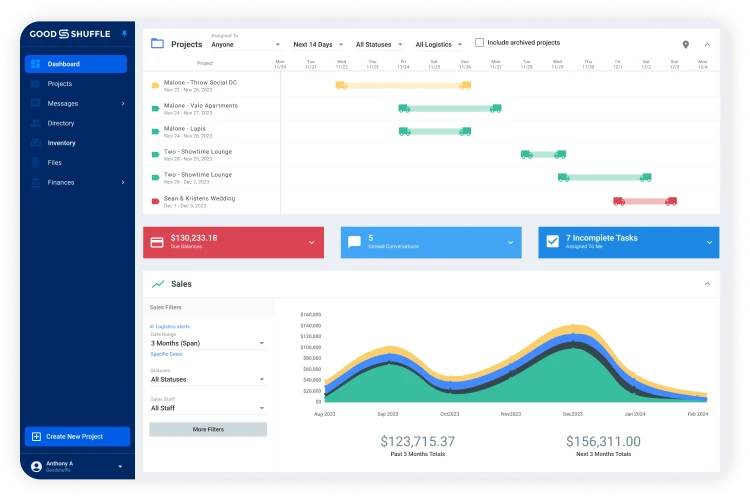
Descubre Goodshuffle Pro
Reserve una demostración para ver nuestro software para la gestión de eventos en acción.
Preguntas frecuentes
Elige el único paso en el que se acumula el trabajo y pregúntate qué pasaría si solo solucionaras eso. Cada uno de los participantes en este panel pudo identificar el suyo en una sola frase: ancho de banda del cliente, tiempo de respuesta de las cotizaciones y espacio físico. Si no puedes expresar el tuyo en voz alta, esa suele ser la primera señal de que no lo has analizado.
Cuando se lleva a cabo en un plazo diferente al del resto de tu trabajo. Las cortinas se instalan días antes de que lleguen los muebles, requieren respuestas a preguntas específicas sobre el lugar de instalación e implican un equipo de instalación independiente. Esas son diferencias estructurales, no de programación.
Las plataformas de trabajos temporales son la solución habitual a corto plazo, con filtros para los requisitos de levantamiento de peso y el código de vestimenta. Los operadores de este panel también solicitan más trabajadores de los que necesitan, porque no todos se presentan. La pregunta a largo plazo es si este mismo cuello de botella sigue repitiéndose, lo que apunta a que sería mejor recurrir a la contratación.
No es sin razón. En un mercado saturado, duplicar un artículo que ya está ampliamente disponible te obliga a competir únicamente en precio. Varios operadores de aquí, en cambio, compran deliberadamente lo que falta en su área metropolitana.
Los aumentos anuales del alquiler, qué mejoras son responsabilidad del arrendador y cuáles corresponden a tu asignación para mejoras como inquilino, y cuáles son los requisitos de tu ciudad para obtener un certificado de ocupación. Pregunta a otros operadores que se hayan mudado recientemente en lugar de hacer conjeturas.

Compartir en