Table of Contents
We’ve talked with too many rental business owners who build their website through their rental software. When they needed to switch platforms, they discover something that shocks them: they don’t actually own their website. Instead, they face starting over completely — losing years of SEO work, custom content, and design investment in the process.
This scenario plays out more often than you might think. Your website is likely your biggest marketing asset, driving customer inquiries and showcasing your inventory 24/7.
But if it’s tied to your rental software platform, you might be unknowingly putting that investment at risk. What seems like a convenient, all-in-one solution today could become a costly mistake tomorrow.
Understanding the difference between having a website and owning a website is a critical business decision that affects your long-term flexibility, growth potential, and marketing investment. Let’s break down what every rental business owner needs to know about website ownership and how to protect your digital assets.
Key Takeaways:
-
Check who actually owns your website.
Review your domain registration, hosting access, and control over core files to understand what you can take with you if you switch platforms.
-
Platform lock-in costs more than monthly fees.
Factor in potential switching costs, years of lost SEO rankings, and the growth opportunities you’ll miss if you can’t customize your site.
-
Choose integration over dependency.
Your rental software should feed data to your website, but your site should function independently so you can switch platforms without losing it.
-
Think long-term about your business growth.
A website locked into generic templates makes it harder to stand out from competitors and limits your marketing options as you scale.
-
Plan website transitions strategically.
Gradual migrations preserve your SEO rankings and minimize downtime, protecting the traffic and leads your site currently generates.
What Most Rental Businesses Don't Realize About Their Website
Many rental software platforms offer website builders as part of their package, and it’s easy to see the appeal.
You get inventory integration, automatic updates, and everything managed in one place. The problem is that “having” a website through your software isn’t the same as “owning” one.
When your website is built through your rental platform, you’re essentially renting web space and functionality from that company. This means several critical limitations that might not be obvious at first. You typically can’t move your website to a different hosting provider, you’re restricted to the design templates and features that platform offers, and most importantly, if you ever want to switch software, your website disappears with it.
The rental software company controls your domain setup, hosting infrastructure, and often even your website’s core files. This creates what’s known as “vendor lock-in” — where switching becomes so costly and complicated that you’re essentially trapped with that provider, even if their software no longer meets your needs or their prices increase dramatically.
The Real Cost of Platform-Dependent Websites
The financial impact of platform-dependent websites extends far beyond the monthly fee you’re paying.
Consider what happens when your business outgrows your current software or when you find a platform that better serves your specific needs — scenarios that happen frequently as rental businesses evolve and grow.
Business owners often tell us about discovering their rental software lacked features they needed, like advanced reporting, better inventory management, or integrations with other tools they wanted to use. But when they looked into switching, they realized they’d have to completely rebuild their website, losing years of search engine optimization work that had been driving steady customer traffic.
The hidden costs add up quickly: hiring a web designer to recreate your site, rewriting all your content, losing your search rankings while Google indexes your new site, and potentially losing customers who can’t find you during the transition.
Beyond the direct costs, there’s the opportunity cost of all the business you might lose while rebuilding your online presence from scratch.
Another challenge that comes up frequently is when rental software companies change their pricing structure or modify their website features. Since you don’t control the platform, you have no choice but to accept these changes or face the massive undertaking of starting over with a new website.

What True Website Ownership Actually Means
Website ownership goes beyond just having your company name in the domain.
True ownership means you control the key elements that make your website work and can make decisions about its future independently of any software provider you might be using for your rental operations.
Real website ownership starts with domain control — you should be the registered owner of your domain name, with access to change where it points and how it’s configured. You should also have access to your website’s core files and database, meaning you could theoretically move your site to a different hosting provider if needed. (This doesn’t mean you need to be technical enough to do it yourself, but the option should exist.)
Equally important is the ability to modify your website’s functionality and design without being limited to predetermined templates or features. Your website should be able to integrate with various tools and services as your business needs change, not just the specific rental software you’re currently using.
This flexibility becomes crucial as your business grows and your marketing needs become more sophisticated.
Red Flags: 4 Signs Your Website Isn't Really Yours
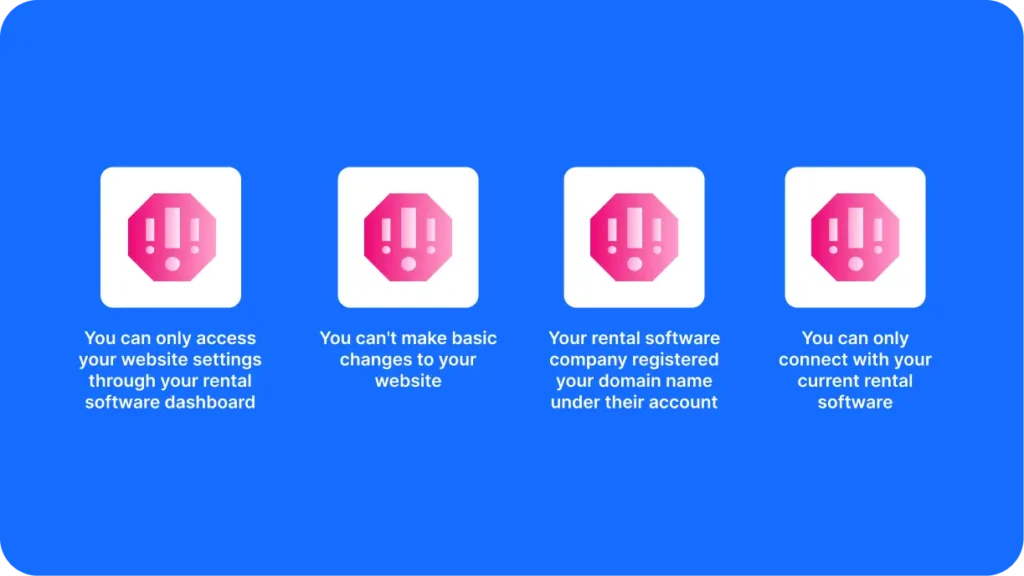
Below, we’ve listed out some warning signs that indicate that your website setup might be putting your business at risk. If:
- You can only access your website settings through your rental software dashboard, that’s a major red flag that you don’t have independent control over your site.
- You can’t make basic changes to your website without going through your software provider’s support team or being limited to their specific templates and features. Your website should be flexible enough to accommodate your unique business needs and marketing strategies, not force you into a one-size-fits-all approach.
- Your rental software company registered your domain name under their account rather than yours, you don’t actually control that crucial piece of your online identity. This can create significant complications if you ever need to make changes or switch providers.
- You can only connect with your current rental software. Pay attention to integration limitations too. If your website can only connect with your current rental software and can’t integrate with other marketing tools, analytics platforms, or future software solutions you might want to use, you’re likely dealing with a closed system that prioritizes vendor lock-in over your business flexibility.
How to Protect Your Website Investment
Protecting your website investment starts with understanding your current situation and making informed decisions about any changes you’re considering.
Begin by auditing your existing setup — who controls your domain registration, where your website is hosted, and what level of access you have to your site’s core functionality.
If you’re already using an integrated solution, don’t panic. You have options, though they might require some planning and investment. Consider gradually transitioning to an independent website while maintaining your current setup during the changeover.
This approach minimizes downtime and preserves your search engine rankings during the transition.
For businesses evaluating their options, prioritize solutions that keep your website separate from your rental software while still allowing for integration where it makes sense. Your rental software should be able to feed inventory information to your website without your website being dependent on that software for its basic functionality.
Building on this point, work with web developers or agencies (you can find our recs here) who understand the rental industry but aren’t tied to a specific software platform. This ensures your website can evolve with your business needs and integrate with whatever tools serve you best, rather than being limited by your current software choice.

Making the Smart Choice for Your Growing Business
Think long-term about your business goals and growth trajectory. Where do you want your rental business to be in five years, and what kind of flexibility will you need to get there?
A common situation we see is rental businesses starting with simple needs but quickly discovering they want more sophisticated marketing features, better analytics, or integrations with specialized tools for their niche.
When your website is locked into your rental software, these growth opportunities become complicated and expensive to pursue.
Plus, consider the competitive advantage that comes from having a truly customized website that reflects your unique brand and serves your specific customers’ needs. Generic templates from rental software platforms often look similar to your competitors who use the same system, making it harder to differentiate your business in the market.
FAQs
If your website is built through your rental software, you typically lose it entirely when switching platforms. You’ll need to rebuild from scratch, losing all your SEO rankings, content, and custom design work in the process.
Check if you can access your website independently of your rental software login, whether you control the domain registration, and if you can make changes without going through your software provider. If the answer to any of these is no, you likely don’t own your website.
While integrated solutions might seem cheaper upfront, the long-term costs of potential migrations, lost SEO value, and reduced flexibility often make separate websites more cost-effective over time.
Content migration is possible but often requires rebuilding your site design and structure from scratch. You’ll also lose SEO rankings and may face temporary downtime during the transition.
Choose solutions where you control the domain registration, have access to your website files, can make changes independently, and aren’t locked into a specific platform or provider for basic website functionality.

Share On