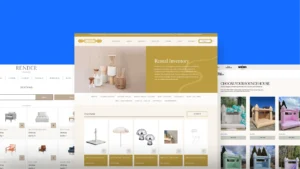
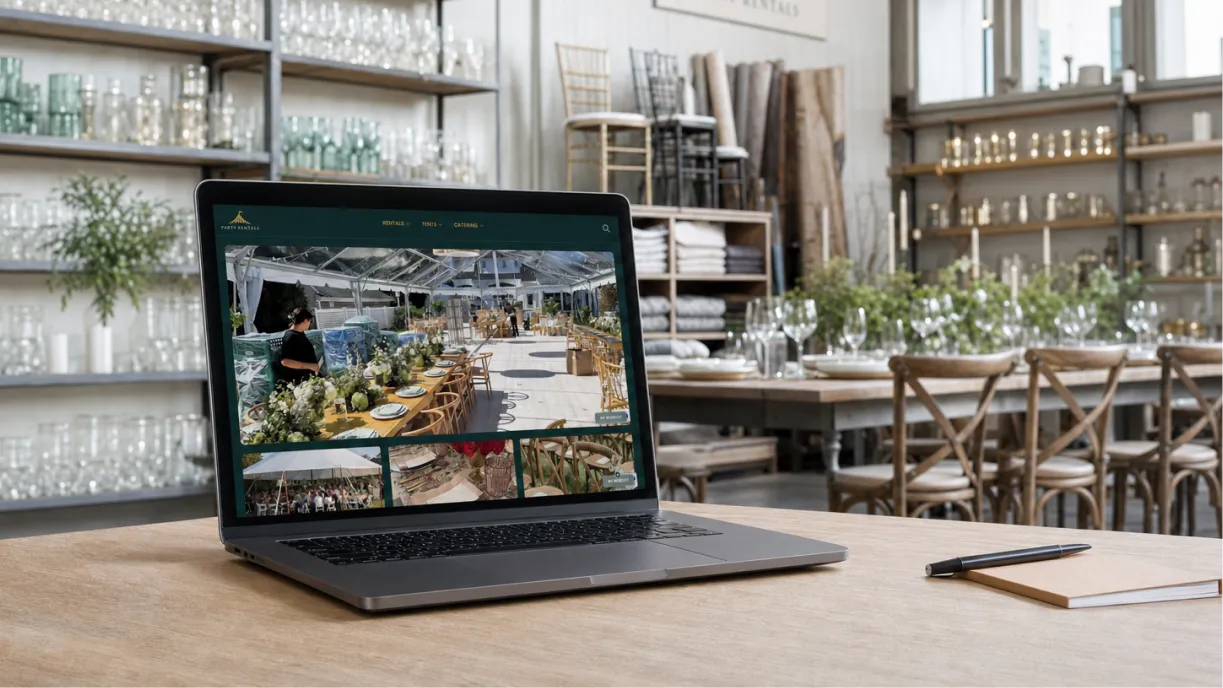
A beautiful website is only half the equation. If your clients can’t browse your actual inventory, build a wishlist, and request a quote without picking up the phone, your site is a brochure — not a sales tool.
The right rental website builder gives you both: a professional-looking site and a real connection to your business. When your website is integrated with your rental management software, inventory stays current, clients can self-serve around the clock, and quote requests flow directly into your workflow. And best of all, no manual price updates every time you adjust a package.
But not all event website builders and partners handle integrations the same way, and picking the wrong platform or partner can limit what you’re able to do as your business grows. Here’s how to evaluate what actually matters.
Key Takeaways:
-
The best rental website builder is the one that connects to your business.
A beautiful site means nothing if it can’t display your actual inventory, accept quote requests, and stay current without manual updates.
-
Squarespace, WordPress, and Wix each handle integrations differently.
WordPress offers the most flexibility for custom builds, Squarespace is easiest to manage yourself, and Wix works for simple sites but limits third-party connections.
-
Checkout friction kills conversions before the conversation starts.
If your website forces clients to enter payment information just to request a quote, you’re losing leads. Look for a wishlist-based flow that keeps the barrier low.
-
A developer who knows the event rental space is worth the investment.
Agencies with rental software experience can build custom features like tablescape designers and themed browse pages that templates can’t touch.
-
Your rental website builder should grow with you.
Before committing, think about where your business will be in two years — second warehouse, new verticals, larger team — and whether the platform can handle it.
The 3 Best Rental Website Builders
These three platforms have proven themselves with event rental businesses across the industry. They balance ease of use with the flexibility to connect your rental software — and they all work with Goodshuffle Pro’s Website Integration, which turns your site into a virtual showroom where clients can browse inventory and submit quote requests.
Squarespace is the easiest rental website builder to manage on your own. Its drag-and-drop editor and polished templates make it a solid choice for event pros who want to build and update their own site without touching code. It supports third-party integrations, and connecting your rental software is straightforward. Squarespace’s Business Plan starts at $23 per month. Learn how to connect Squarespace with Goodshuffle Pro.
WordPress offers the most flexibility of any event website builder. If you want custom layouts, advanced functionality, or a developer to build something tailored to your exact workflow, WordPress gives you room to grow. The trade-off is a steeper learning curve and some ongoing technical maintenance. Paid plans start around $25 per month, and most rental businesses use a managed hosting setup. Learn how to connect WordPress with Goodshuffle Pro.
Wix is intuitive and beginner-friendly, with a visual editor that requires no coding. It works well for straightforward party rental websites, but there’s an important limitation: Wix only supports integrations sold through its own app marketplace. That means no third-party widgets or plugins that aren’t in their store. If you need deep rental software integration long-term, check whether your provider’s plugin is available in the Wix ecosystem before committing. Paid plans start at about $17 per month. Learn how to connect Wix with Goodshuffle Pro.
Before you commit to any platform, sign up for free trials and test how the integration actually works on each one. The builder itself is just the foundation — what matters is how well it connects to the tools running your business.
What Makes a Website Integration Worth It
Choosing a rental website builder is the first step. The second — and arguably more important — step is connecting it to your rental management software.
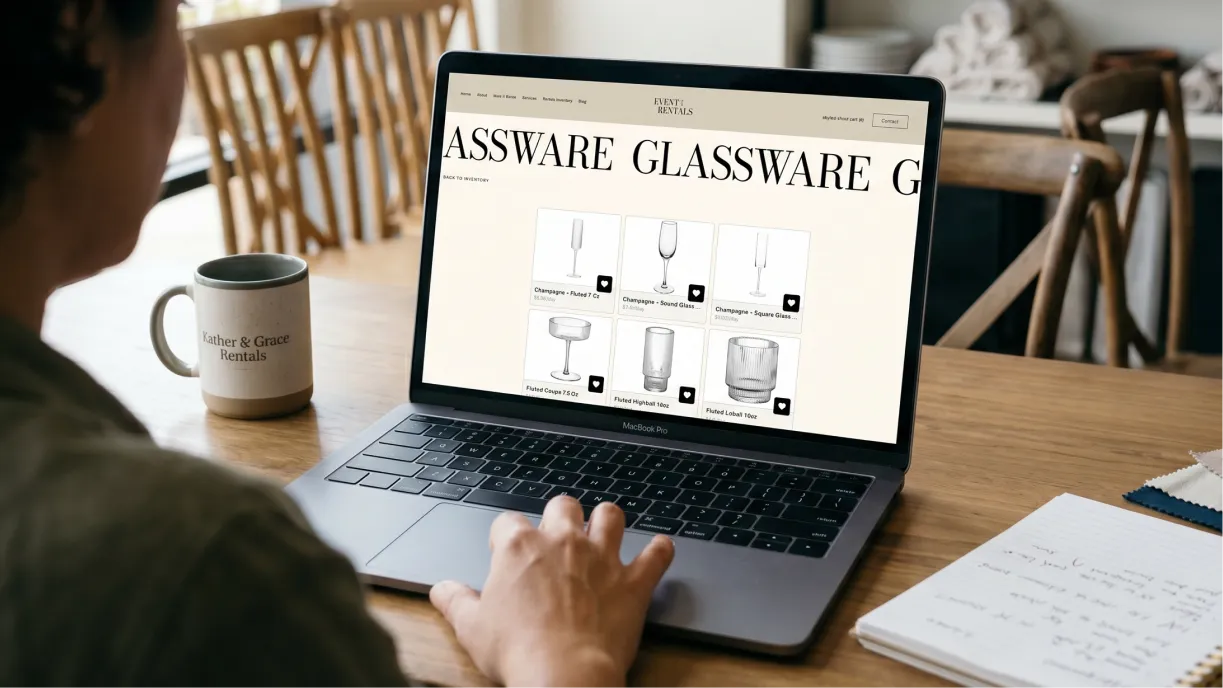
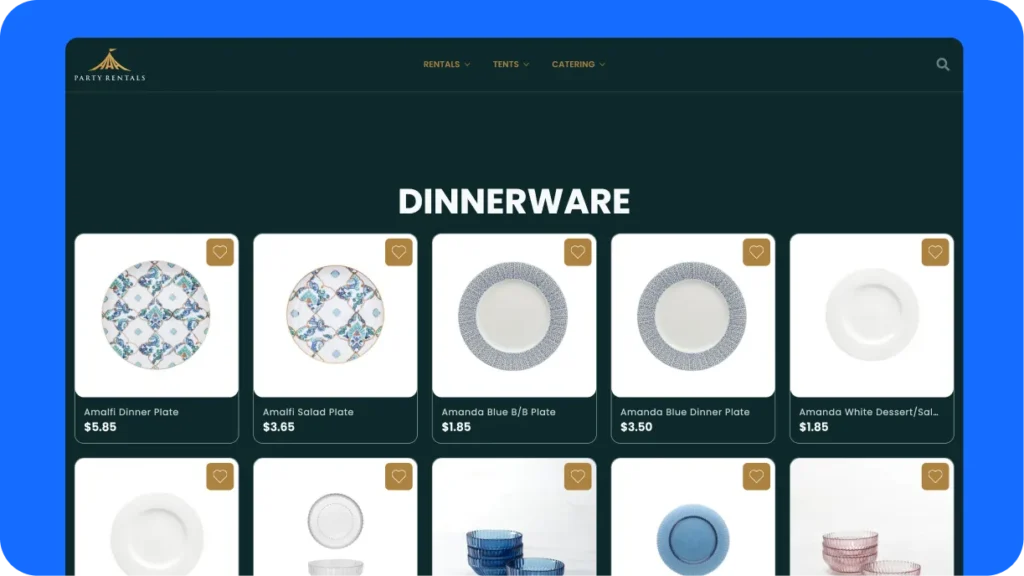
A website integration bridges the gap between your back-end inventory and your public-facing site. When a client visits, they see what’s actually available. They can filter by category, browse individual items, and add what they want to a wishlist. When they submit that wishlist, it creates a quote request on your end. You still review every request, catch conflicts, suggest alternatives, and control the conversation.
That distinction matters. A website integration enables quote requests, not bookings. You stay in the driver’s seat.
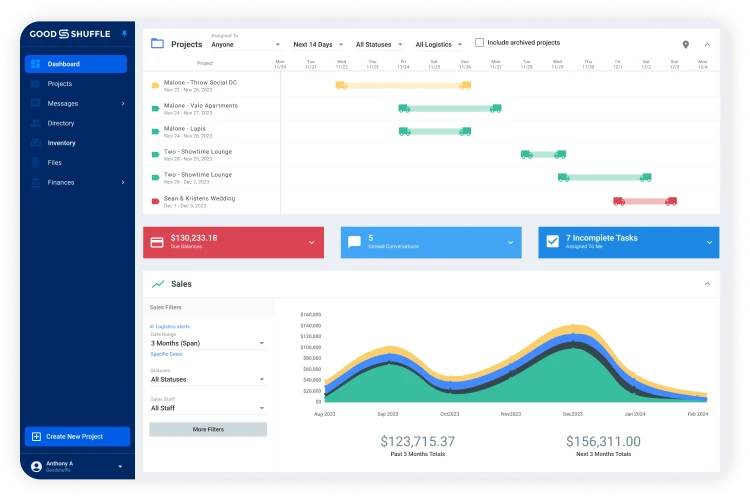
The practical upside is real: your site works around the clock without you having to. And once the integration is live, you update inventory from one place — add photos, change a price, mark an item unavailable — and your website reflects it instantly. No extra login, no developer call for a minor change.
Why Checkout Flow Matters More Than You Think
One of the biggest differences between rental website integrations is what happens when a client is ready to take the next step.
Some integrations force clients to enter a credit card before they can even submit a request. That’s a conversion killer. A client browsing arch rentals or linen options at 9pm isn’t ready to pay — they want to see options, get a sense of pricing, and start a conversation. If your checkout flow demands payment information upfront, you’re losing leads before they ever reach you.
The better approach: let clients build a wishlist and submit it as a quote request with no payment gate. From there, you review the request, check availability, and send a polished quote when you’re ready. It feels low-pressure for the client and gives you full control over what goes out.
When evaluating any rental website builder, walk through the client experience yourself. Browse your own site. Add items to the cart. Try to submit a request. If the process feels clunky or demands too much too soon, your clients feel it too.
When to DIY and When to Call a Pro
If you’re booking 10–20 events a year and your inventory fits neatly into standard categories, a DIY rental website builder like Squarespace or WordPress will get the job done. You’ll have full control, lower monthly costs, and the ability to make quick changes on your own schedule.
But as your business grows, you’ll probably outgrow the template. Maybe you want a custom tablescape designer where clients can mix and match glassware, linens, and place settings. Maybe you need themed browse experiences organized by event style rather than product category. Maybe your checkout flow needs to accommodate complex delivery logistics across multiple warehouses.
That’s where a developer who specializes in event rental websites earns their investment. They understand the specific integration requirements, they’ve solved the edge cases before, and they can build something that scales with your operation.
A few things to look for in a development partner: experience with your specific rental software, a portfolio of event rental sites (not generic e-commerce), and a pricing structure you understand upfront.
Twelve Legs Marketing is a WordPress agency that specializes in event and tent rental companies. Their sweet spot is mid-to-large operations, but they also offer entry-level website packages that smaller businesses can build on as they grow.
Where most rental websites are built to show products, Twelve Legs focuses on removing the friction between browsing and requesting — so visitors who land on your site actually complete a quote request instead of picking up the phone. They also handle SEO, Google Ads, and video production, so your website and your marketing can work from the same playbook.
One thing to keep in mind when working with any developer: make sure you can still make basic updates yourself. Some agencies build sites where even changing a date requires a billable call. The best setups give you day-to-day control while the developer handles structural changes and feature builds.
5 Things to Check Before You Commit
- Can you update inventory from one place? The best website builder for a rental business lets your software do double duty. When you add a photo, change a price, or mark an item unavailable in your rental management software, your website should update automatically — no extra login, no manual edits.
- What does the client experience feel like? Walk through the browse-to-request flow as if you’re a client. Can you find items easily? Can you filter by category or search by keyword? Does submitting a wishlist feel smooth or frustrating?
- Does it require payment information upfront? If the integration forces clients to enter a credit card before submitting a quote request, expect drop-offs. A wishlist or request-based flow that starts the conversation without a payment gate will convert more browsers into real leads.
- Can you customize the look and feel? Your website should match your brand — colors, layout, category structure, photography. A good integration gives you control over how inventory is displayed without needing custom code for every change.
- Will this scale with your business? Think about where you’ll be in two years. Adding a second warehouse? Expanding into new verticals? Building out packages and styled collections? Make sure your platform and integration can handle the complexity before you invest in a full build.
“The integration made our website look incredible — and reduced the time we spend on website updates by 95%.”
— Cam Petty, Render Events
Your Website Should Work as Hard as You Do
The event rental businesses getting the biggest return from their websites aren’t the ones with the prettiest designs. They’re the ones where the site is connected to the business — inventory stays current, clients can self-serve, and quote requests flow directly into their workflow. For inspiration on what that looks like in practice, check out these event rental websites that get it right.
Whether you’re building your first site on Squarespace or hiring a developer to create something custom, the rental website builder you choose sets the foundation. But it’s the integration that turns it from a digital brochure into a revenue-generating tool. And if you’re not sure where to start, here’s a roadmap for building your event business website at every stage.
FAQs
Squarespace, WordPress, and Wix are the most popular rental website builders for event businesses. Squarespace is the easiest to manage on your own, WordPress offers the most customization, and Wix works well for straightforward sites. The most important factor is whether the platform supports a rental software integration that connects your inventory directly to your website.
Yes, tools like Goodshuffle Pro’s Website Integration allow real-time inventory connection, letting clients browse items, create wishlists, and submit quote requests directly from your website.
DIY platforms like Squarespace work well if you want hands-on control and lower monthly costs. If you need custom features — like themed browse pages, tablescape designers, or deep rental software integration — a developer who specializes in event rental websites is worth the investment. Just make sure you can still make basic updates yourself.
At a minimum, your party rental website builder should support inventory browsing, quote request forms, photo galleries, and mobile-friendly layouts. Ideally it also connects to your rental management software so inventory, pricing, and availability update automatically without manual website edits.
DIY website builders run $14–50 per month depending on the plan. A custom website build from a developer who specializes in event rentals typically costs $3,000 to $15,000 or more, depending on complexity. Factor in the cost of a rental software integration add-on if your provider charges separately for it.

Share On