
Table of Contents
-
Step 1: Automate Your Customer Journey (Or Drown in Admin)
-
Step 2: Build Your Pricing Strategy Around Your Life, Not Just Revenue
-
Step 3: Package Your Tents Properly (Or Lose Thousands)
-
Step 4: Master Pull Sheets (And Never Make a "Run Back")
-
Step 5: Control Labor Costs by Becoming the Expert
-
Step 6: Optimize Routes Like Your Schedule Depends on It (Because It Does)
-
Step 7: Flip Tents When You Have To (But Plan for More Inventory)
-
Step 8: Handle Weather Delays with Over-Communication
-
Step 9: Price Complex Installations Using Percentages, Not Hours
-
Step 10: Scale Methodically, Not Desperately
-
The Tools That Make It Possible
-
The Newsletter Worth Following
“Drop off Friday, pick up Monday, and the rest of your week is free to do whatever you want.”
That’s how Ramon Luna’s friend described the tent rental business when he was exploring entrepreneurship options. Four years into running Peachy Party ATL in Atlanta, Ramon can confirm: that’s not exactly how it works.
But here’s what he’s learned instead: how to build a profitable tent rental operation without racing to the bottom on pricing, how to save thousands by understanding your inventory properly, and how to control labor costs while your body (and business) are still intact.
If you’re running a tent rental business or thinking about adding tents to your operation, here’s the unfiltered playbook from someone who’s learned these lessons the hard way.
Key Takeaways:
-
Package your tents properly in your inventory system.
Breaking tents into components (canopy, poles, frame, sidewalls) lets your system track exactly what you have available and prevents buying full tents when you only need one or two parts.
-
Automate your customer communication from quote to pickup.
Set up automated reminders at 2 weeks out, 1 week out, and day-of to reduce manual touchpoints while keeping clients informed throughout the process.
-
Price strategically, not desperately.
Don’t race to the bottom just because inventory isn’t moving. Test your website, photos, and marketing first before dropping prices to fill your calendar.
-
Use pull sheets religiously to prevent "run backs."
Mark every item as pulled, prepped, and loaded before leaving the warehouse. Five minutes of checking saves hours of driving and client embarrassment.
-
Control labor costs by being (or training) a subject matter expert.
One person with deep tent expertise can direct less specialized helpers, keeping your per-install labor costs down while maintaining quality.
Step 1: Automate Your Customer Journey (Or Drown in Admin)
Ramon’s operation is small — primarily homeowners having private events. Site visits are rare. Here’s his streamlined process:
The Ideal Flow:
- Customer adds items to wishlist via Website Integration
- They submit with their address
- Ramon checks Google Maps for space and feasibility
- If no issues, quote goes out immediately
- Customer accepts, project automatically adds to Google Calendar
- Automated reminders trigger at 2 weeks out and 1 week out
The Communication Cadence:
- 2 weeks before: Email reminder asking if they want to add anything + schedule 811 call for utility marking
- 1 week before: Check-in email + map out schedule using dispatch
- Day of: Two text messages
- First: “You’re next up — let us know if there’s anything we need to know”
- Second: “We’re 30 minutes out” with actual ETA
Why this matters: Ramon handles most of this without manual intervention. The automation gives him mental bandwidth to deal with the complex stuff — unusual requests, problem-solving, actual installations.
Your action step: If you’re still manually typing addresses into Google Calendar and setting phone reminders, you’re wasting 10+ hours a week on admin that software can handle. Set up automated email templates for your standard communication touchpoints with Goodshuffle Pro.

Step 2: Build Your Pricing Strategy Around Your Life, Not Just Revenue
Ramon bought a tent about 6 months before our conversation. It’s been out once.
“I’m of the mindset that I don’t want to price things too low. I don’t necessarily want to be going out all the time for pennies. So I priced it a little high, and I got that one booking, but I haven’t gotten any since.”
Is he panicking? No. Here’s why:
His philosophy: “I don’t want to race to the bottom when it comes to pricing. I want to strike a good balance. I don’t necessarily want to be out there on the field all the time, slinging tents if I can do a little bit less of it for the same amount of money.”
What he’s testing before dropping prices:
- Website flow and user experience
- Product descriptions and photography
- Marketing messaging
- Seasonality patterns
The key insight: Just because a tent is sitting in your warehouse doesn’t mean you made the wrong decision. It might mean you need to optimize everything else before you start discounting.
Your action step: Before you drop your tent prices because inventory isn’t moving, audit your website, photos, and marketing first. Are potential customers even seeing the tent? Do they understand what makes it valuable? Can they easily add it to their quote?
Step 3: Package Your Tents Properly (Or Lose Thousands)
This is where Ramon saved serious money, and it’s something most tent operations get wrong.
The mistake: When Ramon started, he had two tents from the same manufacturer. He thought, “I’ll just set up a 20×20 and know which parts go with it.” Simple enough.
The problem: As he grew, parts became interchangeable. He could make tents bigger or smaller by swapping components. Without proper packaging in his system, he had no idea what was actually available.
The breaking point: “I would set up a 20×40 and think I don’t have any more capacity, but I do, because I know I have another top, but I didn’t think I had enough of the components.”
The save: Ramon needed to set up a 15×60 (four 15×15 tents side by side). He thought he only had 3 tents and was about to order a complete fourth tent — probably $1,000-$2,000.
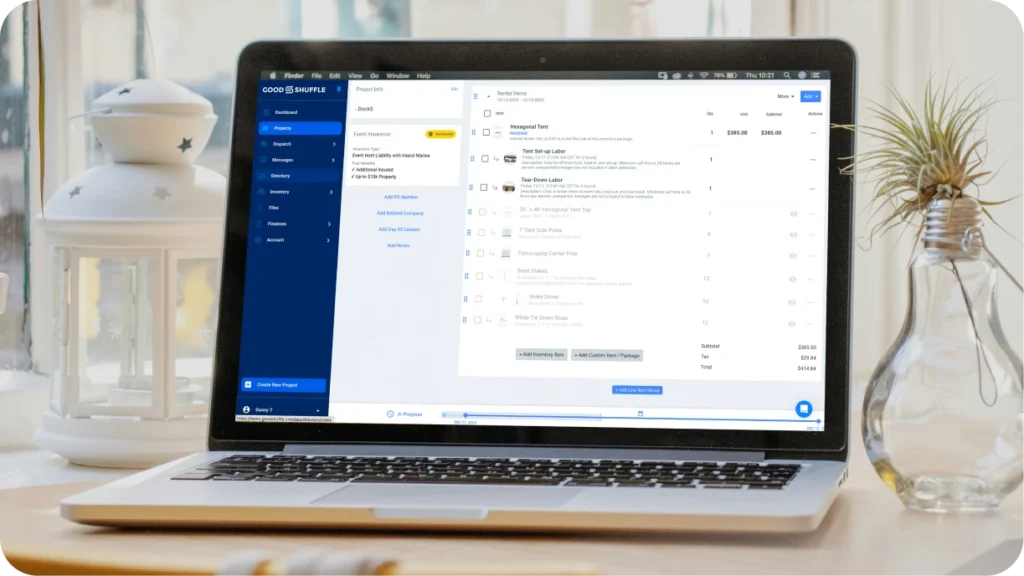
Instead, he created a test project in Goodshuffle Pro with those four tents scheduled for a future date (to avoid inventory conflicts). The system immediately showed him: “You only need one more tent top and one more pole.” That’s it. Not a full tent, just two components.
Why packaging matters: When your tents are properly set up as packages (canopy + poles + frame + sidewalls), your system can tell you exactly what components you’re missing versus what you actually have available.
Your action step: If you haven’t set up your tents as packages in your inventory system, do it today. List out every component, create the package, and let the system track capacity for you. This one change could save you thousands in unnecessary inventory purchases.
Step 4: Master Pull Sheets (And Never Make a "Run Back")
In the event rental industry, there’s a dreaded term: “run back.” That’s when your crew realizes mid-installation that they forgot something critical, and someone has to drive back to the warehouse (or the warehouse has to deliver it).
Ramon has had exactly one run back in four years. It happened before he started using Goodshuffle Pro.
His system now:
- Use detailed pull sheets for every event
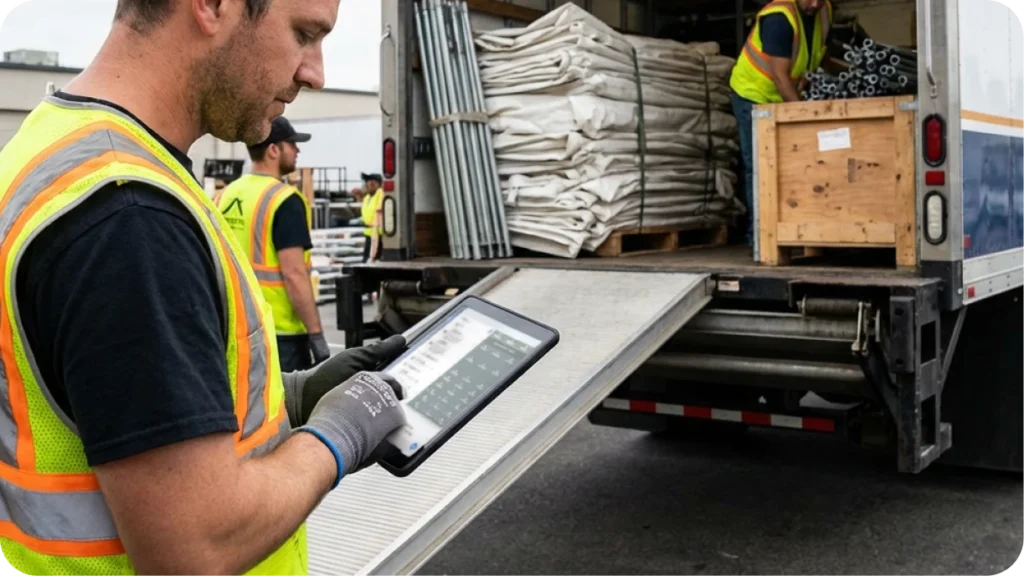
- Mark items as pulled, prepped, and loaded on truck
- Double-check before leaving the warehouse
Why this works: You catch missing items before you’re standing in a client’s backyard explaining why you don’t have tent stakes.
Your action step: Create a checklist protocol for your crew. Nothing leaves the warehouse until every item on the pull sheet is marked as loaded. The 5 minutes you spend checking could save you 2 hours of driving and client embarrassment.
Step 5: Control Labor Costs by Becoming the Expert
Labor is the #1 challenge tent companies face. The work is physical, it wears on your body, and finding reliable people is hard.
Ramon’s approach: “I’m a subject matter expert when it comes to the tents we’re setting up, which is mostly high peaks and some pole tents. All I have to do is grab anybody and just point at where things are going.”
His cost control strategy:
- One person (him) has deep expertise on every tent setup
- Additional labor is less specialized — they just need to be able to follow directions and do physical work
- This keeps labor costs down because he’s not paying premium rates for everyone on the crew
The sustainability question: Ramon knows this isn’t forever. “I don’t plan on being on every install in the future, but right now, if you as an operator or your lead is really specialized in the projects you carry, I think that’s one way to keep costs down.”
Your action step: Document your setup process for each tent type you carry. Create step-by-step guides (with photos) so that eventually, someone else can be the expert. You won’t always be able to be on every install.
Step 6: Optimize Routes Like Your Schedule Depends on It (Because It Does)
Ramon uses Goodshuffle Pro’s Dispatch feature to map out his daily routes. Here’s what he learned:
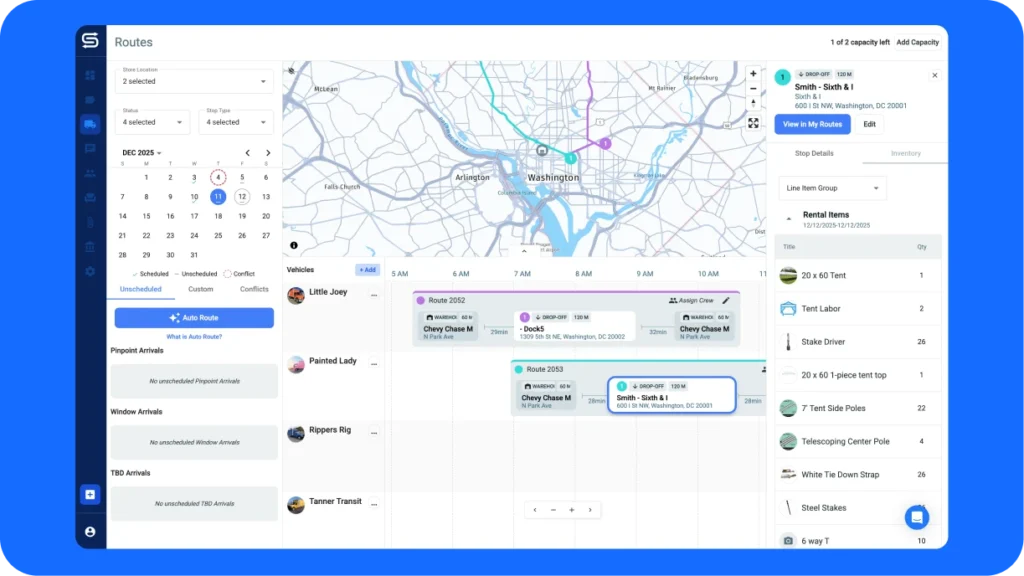
Auto-Route is your friend: “I like to use the Auto-Route feature. I like to see what it suggests, and if I need to split or if I know I’m gonna have to come back to the warehouse, I’ll use the Auto-Route and then split it from there.”
Adjust timing in Dispatch settings: “As long as you adjust the timing — the amount of time that you’re gonna be at each stop — it’s really good. It even accounts for Atlanta traffic somehow.”
Why this matters: Dispatch isn’t just about driving directions. It’s about knowing realistically how your day will flow, what time you’ll arrive at each location, and whether you can actually fit another installation into your schedule.
Your action step: If you’re still manually plotting routes in Google Maps, start using a dispatch tool that accounts for setup time at each location, not just drive time. The difference between “I’ll be there around 2pm” and “I’ll be there at 2:17pm” is client confidence.
Step 7: Flip Tents When You Have To (But Plan for More Inventory)
Ramon’s capacity strategy is simple: Say yes to everything, then figure out how to make it work.
How he manages constraints:
- Prioritize time-sensitive events (corporate events that must happen on specific days)
- Work weekends to pick up tents early for Saturday-to-Monday flips
- Turn around tents quickly between Friday and Saturday events when needed
The reality: “Eventually, we’re probably just gonna need to buy more inventory, but that’s how I’ve been getting around it — seeing what the priority is and supplementing that by working on weekends to take stuff down that I need for another event.”
Your action step: Track how many times per month you’re flipping tents or turning away business due to capacity. If it’s happening weekly, you’ve outgrown your current inventory and need to invest in more — or accept that you’re capping your revenue.
Step 8: Handle Weather Delays with Over-Communication
Ramon refuses to pick up wet tents. Period.
“If it comes down wet, you have to unroll it again and lay it out so it can dry off eventually. There’s no other way around it. So I am not picking up a wet tent.”
His weather delay protocol:
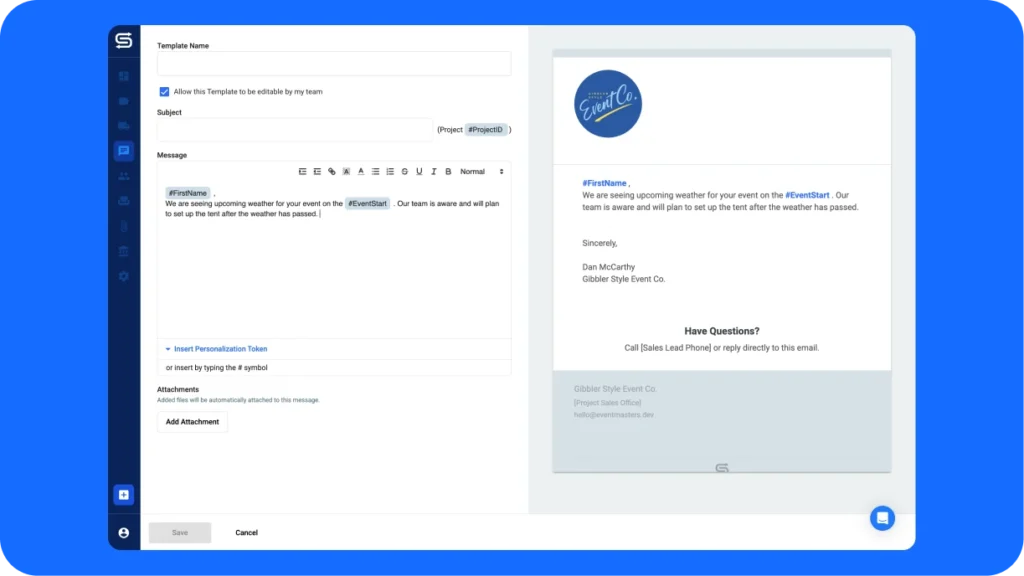
- Email first: Send template via Goodshuffle Pro letting clients know weather may delay schedule and asking if they have flexibility
- Text message second: Use snippets (templates) in his business texting app if no response to email
- Phone call last: Take the temperature of the customer, make sure they’re actually okay with the delay
Why the multi-channel approach: Not everyone checks email. Some people respond better to texts. And sometimes you just need to hear their voice to know if they’re genuinely fine or silently frustrated.
Your action step: Create weather delay templates in your communication tools now — before you need them. When it’s pouring rain and you have 5 clients to notify, you don’t want to be composing custom messages from scratch.
Step 9: Price Complex Installations Using Percentages, Not Hours
When a job is more complex than your standard setup, how do you price it?
Ramon’s approach: Percentage-based line items, not hourly rates.
Why percentages work better:
- As the order grows, so does your complexity fee
- Client adds 20 more chairs last minute? Your setup percentage automatically increases
- You’re not stuck with a fixed fee that doesn’t account for scope changes
Example: Rush fee = 10% of order total
- Original order: $1,000 → Rush fee: $100
- Client adds $500 more last minute: $1,500 → Rush fee: $150
The key insight: “A lot of us resort to saying, oh yeah, I’m going to charge per hour for setup. But if you do it as a percentage and they’re adding chairs and tables at the last minute, that line item grows as well.”
Your action step: Create service line items in your system priced as percentages (rush fees, complex installation fees, difficult access charges). Let the order total do the math for you.
Step 10: Scale Methodically, Not Desperately
Ramon hasn’t reached “scaling” yet by his own admission. But his approach is worth copying:
His advice: “Find a product that you like and that you can grow with. You’ll hear commonly in this industry to stick with one manufacturer, and I think that’s sound advice, but just make sure you like that product. Don’t just pick one blindly.”
Why he’s taking his time on buying a bigger tent: “I want to make sure that I’m in love with the product and I know it well inside and out. That way I’m not scrambling in front of a client.”
The deeper principle: Structure your current operations before expanding. Master what you have. Document it. Make it repeatable. Then add more.
Your action step: Before you buy that next tent size or add that new category of equipment, ask yourself: “Do I have my current operations documented and running smoothly?” If not, fix that first.
The Tools That Make It Possible
Ramon doesn’t just wing it. Here’s his tech stack:
- Goodshuffle Pro: Inventory Management, Website Integration, pull sheets, Dispatch, automated communication
- Quo (formerly OpenPhone): Business phone line for calls and texts (not his personal number)
- Google Calendar: Integrated with Goodshuffle Pro for automatic scheduling
- Text message templates: Pre-written snippets for common scenarios
Why this matters: You can’t scale yourself. You need systems that work when you’re not available, that prevent errors when you’re tired, and that keep clients informed without constant manual effort.
The Newsletter Worth Following
Ramon writes daily at Buy My Party Rental Business. He’s transparent about numbers, shares monthly recaps, and documents his day-to-day reality.
“I’m just trying to build in public here. I’m pretty transparent, and I’m happy to share anything with anybody. I frequently share numbers.”
If you’re newer to the tent rental business or just want to see what the day-to-day really looks like (spoiler: it’s not “drop off Friday, pick up Monday, relax the rest of the week”), subscribe to his newsletter.
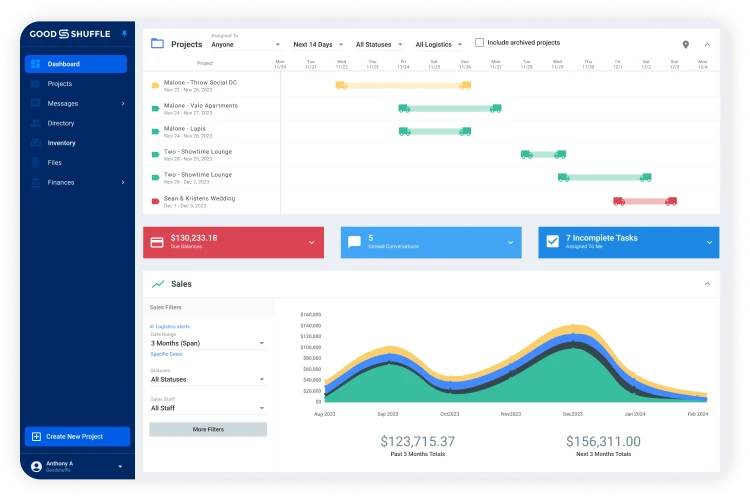
And if you’re curious how Ramon’s processes support his business, schedule a demo of Goodshuffle Pro today. We’ll show you how our all-in-one event rental software can support your business, too.
FAQs
Price based on the value and experience you provide, not just what competitors charge. Consider your true costs: equipment depreciation, labor for setup and takedown, transport, insurance, and the physical toll of the work. Ramon intentionally prices higher and does fewer installations rather than pricing low and burning out his crew. Before dropping prices, optimize your website, photos, and marketing to make sure potential customers can actually find and understand your offerings.
Set up tents as packages in your inventory system with all components listed separately (canopy, poles, frame, sidewalls). This lets your system track what’s actually available versus what you think you have. Ramon saved $1,000-$2,000 by discovering he didn’t need to buy a full tent — just two components — because his packaging showed exactly what was missing.
Have one person (you or a lead installer) become a subject matter expert on your specific tent types. That expert can direct less specialized labor who simply need to follow instructions and handle physical work. This keeps costs down because you’re not paying premium rates for your entire crew. Document your setup processes with photos so eventually you can train others to be experts too.
Don’t pick up wet tents. Period. If a tent comes down wet, you’ll have to unroll it and lay it out to dry later anyway — you’re just delaying the inevitable. Communicate proactively with clients using a multi-channel approach: email first with weather delay templates, text message second if no response, phone call third to gauge their comfort level. Most clients understand when you explain the operational reality.
Start with 2-3 tents from the same manufacturer so parts are interchangeable. This gives you flexibility to create different sizes and configurations without buying complete inventory for every possible tent size. Ramon ran his business for 4 years and is still methodical about adding new tent sizes — he wants to master what he has before expanding. Track how often you’re turning away business due to capacity; when it happens weekly, that’s your signal to invest in more inventory.
Use detailed pull sheets for every event and create a checking protocol before leaving the warehouse. Mark items as pulled, prepped, and loaded on truck — nothing leaves until every item is confirmed. Ramon has had exactly one “run back” (forgotten equipment requiring a return trip) in four years, and that was before he implemented this system. The 5 minutes checking your pull sheet saves 2 hours of emergency driving.
At minimum: inventory management software with automated communication (like Goodshuffle Pro), a business phone line separate from your personal number (Ramon uses Quo), and dispatch/routing capability (also available in Goodshuffle Pro). Integrate your inventory system with your website so customers can add items to wishlists and request quotes without endless back-and-forth. The technology should reduce manual admin work and prevent errors when you’re tired or busy.

Share On