Table of Contents
-
Step 1: Build Systems That Keep Everyone on the Same Page
-
Step 2: Master the Vision Interview
-
Step 3: Set Up Smart Upsell Triggers
-
Step 4: Control Change Orders with Hard Deadlines
-
Step 5: Use Data to Buy Smarter, Not Harder
-
Step 6: Build Your "Friendors" Network
-
Step 7: Structure Your Payment Terms to Protect Your Business
-
Step 8: Scale Adjacent, Not Everywhere at Once
-
The Real-World Test: When Everything Goes Wrong
-
Your Full-Service Readiness Checklist
You’ve mastered chair rentals. You’re thinking about adding linens. Maybe lighting. Perhaps even tents. Before you know it, you’re eyeing the full-service model — handling everything from proposals to install for weddings, galas, and corporate events.
More services = more revenue. But it also means more complexity, more coordination, and more ways for things to fall through the cracks.
We talked to Yvonne Madueke, owner of Avalon Event Rentals in Houston, who’s built a thriving full-service operation handling tents, tables, chairs, furniture, lighting, and staging. She’s survived tornado warnings mid-setup, clear-top tents in Texas summers, and countless last-minute client changes.
Here’s exactly how she (and her team) stay sane while scaling.
Key Takeaways:
-
Create one source of truth for your entire team.
Sales, warehouse, delivery, and install crews need real-time access to the same event details.
-
Start every client relationship with a vision interview, not a checklist.
Understand their vibe, feeling, and goals before you propose a single rental item. This positions you as a partner, not just a vendor.
-
Set hard deadlines for change orders and explain why they exist.
When clients understand the ripple effect of last-minute changes (warehouse prep, crew scheduling, quality control), they respect your boundaries.
-
Use data to decide what inventory to buy versus sub-rent.
Track lifetime gross revenue and frequency of use for every item — don’t invest in specialty items that sit unused when you can partner with other vendors instead.
-
Scale adjacent to your core offering, not everywhere at once.
If you do linens, add tabletops next, not tents. Structure your current processes before expanding into completely different logistics.
Step 1: Build Systems That Keep Everyone on the Same Page
The Problem: In a full-service operation, you risk information living in too many places. Sales knows something the warehouse doesn’t. The delivery crew shows up missing critical details.
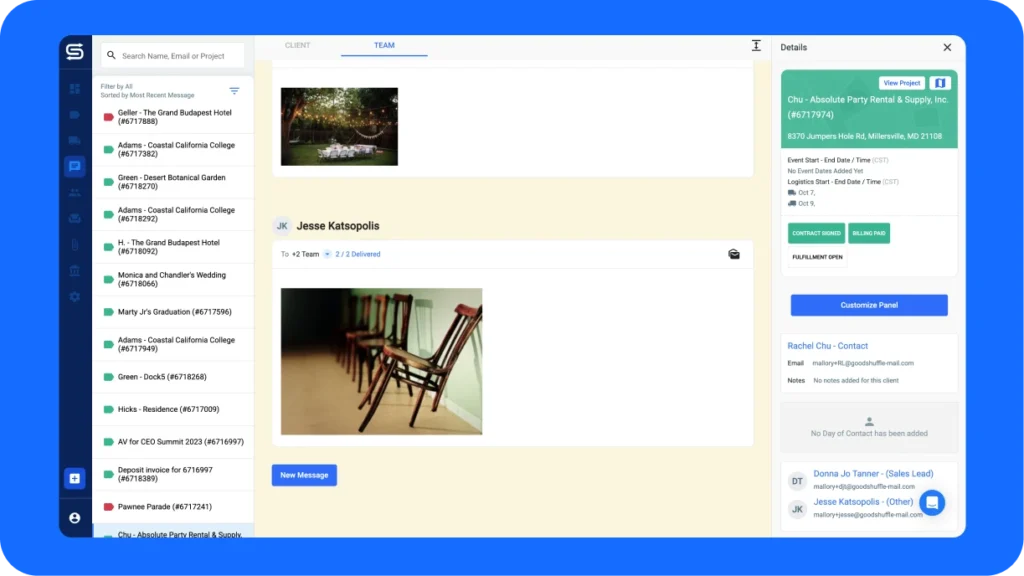
The Solution: Create one source of truth that every team can access in real time.
How Yvonne does it:
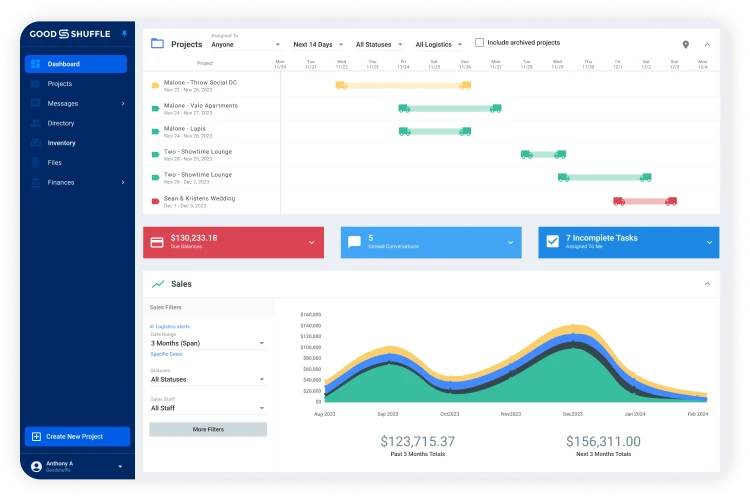
- Sales team creates proposals in a central system: Goodshuffle Pro
- Once booked, warehouse team immediately sees pull sheets and counts
- Delivery crew accesses event-specific instructions without asking anyone
- Install team can review previous event notes: “Last time we used this, here’s what the client flagged — make sure we fix that”
Why this matters: When a tornado hit during a tent setup and her team had to repair multiple installations overnight while prepping for the next day’s events, they didn’t panic. Everyone could see what needed immediate attention and coordinate without endless phone calls.
Your action step: Audit where event information currently lives. If the answer is “email, texts, group chats, someone’s memory, and a spreadsheet,” you need a system that consolidates everything into one place your entire team can access.
Step 2: Master the Vision Interview
The Problem: Jumping straight to “what do you need” leads to transactional relationships and smaller orders.
The Solution: Start every client relationship with what Yvonne calls a “vision interview.”
The framework:
- Understand their why first: What’s the vibe? What feeling are they creating? What do they want guests to remember?
- Get specific on aesthetics: Colors, style, atmosphere — before you mention a single rental item
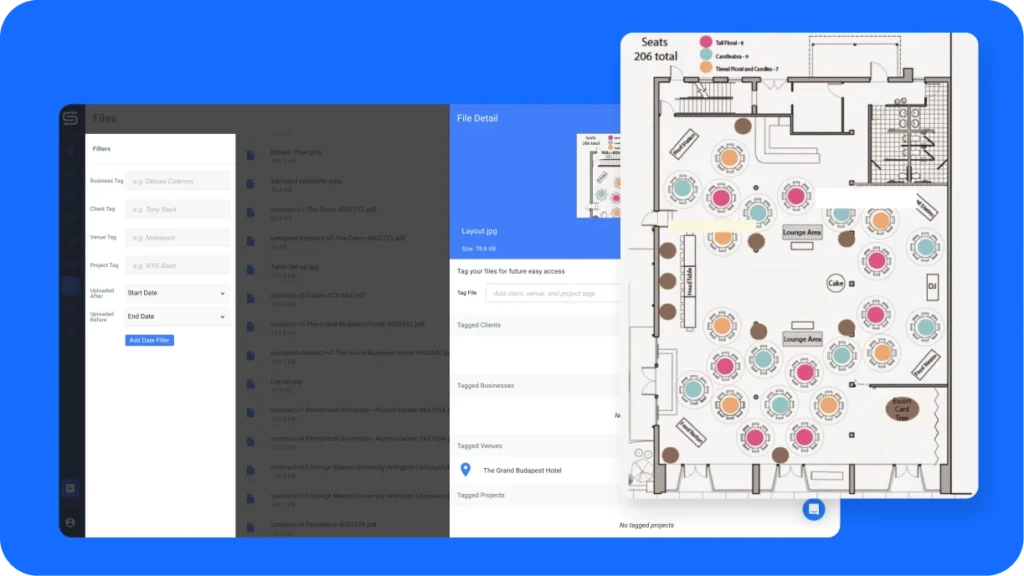
- Show them possibilities: Once you understand their vision, create proposals with visual representations so they can say “yes, that’s exactly what I meant”
- Make changes feel live: When you update the proposal while they’re looking at it, they see their vision coming together in real time
Why this works: “They love seeing the proposals update — it looks and feels like magic,” says Yvonne. “The ease of reviewing the proposal, signing it, and paying for it all in one shot.”
Your action step: Create a pre-proposal questionnaire that focuses on vision and experience first, logistics second. Questions like “What do you want guests to feel when they walk in?” not “How many chairs do you need?”
Step 3: Set Up Smart Upsell Triggers
The Problem: You’re leaving money on the table because you’re not catching upsell opportunities at the right moments.
The Solution: Listen for specific cues that signal what clients need (even if they haven’t realized it yet).
Yvonne’s upsell playbook:
Timing cues:
- Event goes past 6pm → Suggest lighting (“A chandelier would really look nice at that time of day because it would glisten at night”)
- Outdoor event → Ask about weather backup plans, suggest clear-top tents
- Evening event in summer → Recommend fans or cooling solutions
Logical additions:
- Tables → “Do you need linens to cover those tables?”
- Linens → Suggest chargers, centerpieces
- Basic rental → Point to pre-built packages at a discount
The key insight: “I’m listening out for those little cues that I know are at the back of their mind, but they haven’t quite voiced it out yet.”
Your action step: Create a simple matrix: For each main item you rent, list 3-5 complementary items clients typically need. Train your sales team to ask about these based on event details (time of day, location, season, event type).
Step 4: Control Change Orders with Hard Deadlines
The Problem: Last-minute changes wreak havoc on warehouse prep, delivery schedules, and team morale. Multiply that by 10 events and you’re in chaos.
The Solution: Set hard deadlines and explain why they exist.
Yvonne’s change order framework:
1. Set the deadline clearly: “By 12pm on [specific date], you won’t be able to make any more changes.”
2. Give them the “why”: “The process to have these items ready takes time. We have to prep items in the counts you want, quality control check everything, and make sure we have the right team. If it changes from 100 to 200 counts, we need to add another person to the crew.”
3. Accept that some will break the rule anyway: “You’ll still have that one or two clients that will come very last minute to make a change. But it won’t tilt the scale as much because it’s just one or two, as opposed to 10-12 events doing that.”
Why this works: When clients understand the ripple effect of their changes, they respect your boundaries. And when you’ve protected yourself from the majority of late changes, handling one or two becomes manageable instead of catastrophic.
Your action step: Add change order deadlines to your contracts and booking confirmations. Include a brief explanation of what happens behind the scenes so clients understand it’s not arbitrary — it’s operational reality.

Step 5: Use Data to Buy Smarter, Not Harder
The Problem: Clients request royal blue linens. You buy 50 of them. They sit in your warehouse for two years while ivory linens stay booked every weekend.
The Solution: Track return on investment for every inventory item before making purchasing decisions.
Yvonne’s inventory decision framework:
Track these metrics:
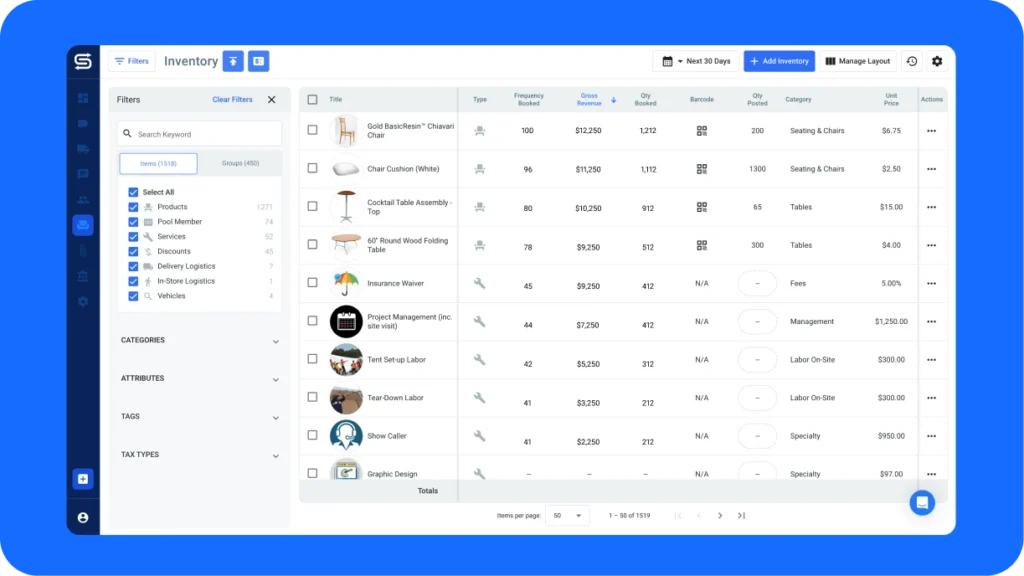
- Frequency of use per item
- Lifetime gross revenue per item
- Seasonal patterns (heaters in winter, fans in summer)
- Rental rate vs. storage/maintenance cost
Make smart choices:
- High-frequency items: Buy more inventory to meet demand
- Low-frequency specialty items: Sub-rent from partner vendors instead of buying
- Seasonal items: Time purchases around peak season, not off-season
Real example: “If I see a royal blue linen isn’t doing as well as an ivory linen, and a client asks for royal blue linens in a large quantity, I won’t buy that. I would subcontract that, as opposed to a white linen that has a high lifetime gross revenue.”
Your action step: Run a report on your top 20 most-rented items and your bottom 20. Look at your bottom performers — are any of them taking up valuable warehouse space? Could you sub-rent them instead?
Step 6: Build Your "Friendors" Network
The Problem: You’re sold out on an item, but the client is a longtime customer you don’t want to turn away.
The Solution: Develop relationships with partner vendors (what Yvonne calls “friendors” — vendors who are friends).
How to manage sub-rentals effectively:
1. Track it properly: When you’re at capacity on an item, note exactly how many pieces you’re sub-renting and from whom. “I put it in the notes: ‘Sub-renting 20 chairs from XYZ Rental Company.’ That way it shows this has been accounted for.”
2. Use it as a data point: If you’re consistently sub-renting the same item, that’s a signal you might need to buy more inventory — or at least have a standing agreement with your partner vendor.
3. Maintain relationships: These partnerships are gold. They let you say yes to clients without overextending your inventory investment.
Your action step: Make a list of 3-5 rental companies in your area who carry complementary or overlapping inventory. Reach out to establish mutual sub-rental relationships before you desperately need them.

Step 7: Structure Your Payment Terms to Protect Your Business
The Problem: You’re delivering $15,000 worth of equipment with only a small deposit collected, crossing your fingers the client pays the rest.
The Solution: Set clear payment terms that ensure you’re protected while the client stays committed.
Yvonne’s payment structure:
- 50% deposit when the contract is signed
- 50% balance due 7 days before the event
- Accepted payment methods: Credit card, ACH, business checks
Why this works: “That way I know the client is invested, and we’re also invested in making sure that event is done properly.”
Your action step: Review your current payment terms. If you’re collecting less than 50% upfront or waiting until after the event for final payment, you’re taking on unnecessary risk. Update your terms and apply them to all new bookings.
Step 8: Scale Adjacent, Not Everywhere at Once
The Problem: You’re a linen company and you suddenly decide to buy a tent inventory, a lighting rig, and furniture — all at once.
The Solution: Expand into adjacent categories that complement your existing expertise, one at a time.
Yvonne’s scaling advice: “Structure before you scale. Make sure what you have already set in place is foolproof. You have good SOPs already set in place. If you’re doing linens, make sure all your processes for linen proposals and fulfillment are done properly before you add laterally.”
Smart scaling path for a linen company:
- Master linens (current state)
- Add tabletop items (chargers, centerpieces)
- Expand to china, glassware, flatware
- Consider furniture (similar handling/transport)
- Eventually add tents or larger structures
Wrong scaling path: Linens → Jump straight to tents (completely different logistics, setup requirements, and expertise)
Why this matters: Adjacent expansion lets you leverage existing workflows, warehouse processes, and team knowledge. Random expansion means starting from scratch in multiple areas at once.
Your action step: Write down your current core offering. List 5 adjacent categories that would require minimal new infrastructure or expertise. Pick one to add this year.

The Real-World Test: When Everything Goes Wrong
Here’s the measure of whether your systems work: What happens when chaos hits?
When a tornado struck mid-setup with only 5 minutes warning, Yvonne’s team had to run for safety, then work overnight to repair damaged tents while prepping for the next day’s events.
They pulled it off because:
- Everyone could see what events were coming up and what was damaged
- The team knew their roles without being told
- Communication channels were clear
- SOPs existed for crisis scenarios
“Everybody just said, look, let’s band together. This doesn’t happen every day. Our team banded together to make sure everything was fixed and the clients got what they wanted.”
That’s not luck. That’s structure meeting a strong team culture.
Your Full-Service Readiness Checklist
Before you scale into full-service offerings, make sure you have:
- One central system where every team sees event details in real time
- A vision interview process that captures client goals before proposing solutions
- Upsell triggers built into your sales process
- Hard deadlines for change orders (and the language to explain why)
- Data on which inventory items perform best (and worst)
- Relationships with 3-5 partner vendors for sub-rentals
- Payment terms that protect your business (50% deposit minimum)
- SOPs documented for your current core offering before adding more
- A clear plan for which adjacent category you’ll add first (not five at once)
Full-service event businesses don’t succeed because they rent everything. They succeed because they’ve built systems that let them coordinate everything without chaos.
Get those right, and you’re not just surviving tornado warnings and last-minute changes — you’re building a business clients trust with their most important moments.
FAQs
Full-service pricing should account for coordination time, design consultation, installation labor, and the convenience of one-stop shopping. Many full-service businesses use package pricing at a discount (e.g., tent + tables + chairs + linens bundled) to increase order value while providing perceived savings. The key is tracking your true costs including labor for setup and breakdown.
A 50% deposit at contract signing and 50% balance due 7 days before the event protects your business while ensuring client commitment. Avoid collecting final payment after the event — you’ve already delivered thousands of dollars in equipment. Accept credit cards, ACH, digital wallets, and business checks.
No. Track return on investment for each item — frequency of use, lifetime gross revenue, and seasonal patterns. Buy more high-performing items that rent consistently. For specialty or low-frequency items (like royal blue linens that rarely get requested), build relationships with partner vendors and sub-rent instead of tying up capital and warehouse space.
Set hard deadlines in your contracts (e.g., “no changes after 12pm, 7 days before your event”) and explain why: warehouse prep takes time, you need accurate counts for quality control, and crew scheduling depends on final quantities. When clients understand the operational impact, most respect the deadline. You’ll still get one or two late changes, but that’s manageable — ten late changes is chaos.
Structure before scale. Make sure your current core offering has solid processes — documented SOPs, reliable systems, and consistent quality. Then expand adjacent to what you already do well. If you’re a linen company, add tabletop items (chargers, centerpieces) before jumping to tents or lighting, which require completely different expertise and logistics.
Create one central system, like Goodshuffle Pro, where sales, warehouse, delivery, and install teams all access the same real-time information. When sales books an event, the warehouse should immediately see pull sheets and counts. Delivery crews should access event-specific instructions without asking anyone. This eliminates “I didn’t know we booked that” moments and reduces those late-night coordination calls.

Share On