
Table of Contents
⚠️ Important Legal Disclaimer: This article provides general guidance for educational and informational purposes only. This article does not constitute legal advice, and AI‑generated content is not a substitute for professional legal advice. Laws governing contracts, liability, insurance, consumer protection, and event‑rental operations vary widely by state and may change over time. AI tools cannot evaluate your specific business model, risk profile, or compliance obligations. Every rental business and location has unique legal requirements that only a lawyer can properly address. Use of any sample language or suggestions from this article is at your own risk. Always seek legal advice from a qualified attorney in your jurisdiction regarding your terms and conditions and rental agreements.
You’re figuring out your rental inventory, pricing, and your first few bookings. Then you hit that moment every new rental business owner dreads: writing your terms and conditions. Suddenly you’re staring at a blank page wondering if you need 47 different clauses about weather cancellations or if “pay on time or else” covers everything.
The good news is you don’t have to start from scratch. And your terms and conditions don’t need to read like a law textbook to protect your business. They’re essentially your business boundaries written down, letting customers know what to expect and protecting you when things don’t go according to plan.
Here are the areas you need to cover in any event rental terms and conditions:
Key Takeaways:
-
Understand the 10 essential sections every rental agreement needs to protect your business.
And set clear expectations with clients — from payment terms to guest conduct liability.
-
Know the four critical clauses address scenarios where the signer isn't the only party involved.
Agency representation, joint liability, third-party payer authorization, and guest conduct protect you when event planners, parents, or companies are involved.
-
Define payment terms with specific percentages, dates, and scenarios — not vague language like "pay on time."
Include deposit amounts, final payment deadlines, and a sliding scale cancellation policy.
-
Distinguish between normal wear and damage with inventory-specific examples.
Minor scuffs might be expected wear for furniture while stains and broken components are chargeable damage — clarity prevents disputes.
-
Always have a qualified attorney review your terms before using them.
Whether you draft terms yourself, use software templates, or generate drafts with AI tools, only an attorney can ensure they’re legally enforceable in your jurisdiction.
Why Your Rental Business Needs Terms and Conditions
Your rental terms are legal protection, but they’re also a communication tool that sets expectations from day one. When a customer knows exactly when payment is due, what happens if they damage something, or how weather cancellations work, you avoid those awkward conversations later.
Think about it this way: every time you have to explain a policy after someone’s already booked, you’re in damage control mode. But when your terms clearly outline your policies upfront, customers can make informed decisions and you can confidently stand behind your rules.
Beyond customer relations, clear terms protect your cash flow and equipment investment. Small rental businesses can’t absorb the cost of damaged items or late payments the way big companies can. Your terms ensure customers understand their responsibilities and give you recourse if issues arise.

The 10 Essential Sections Every Rental Agreement Should Cover
Every rental agreement needs to address ten core areas, regardless of whether you’re renting linens, tents, or vintage furniture. The first six cover your standard operational policies, while the additional four protect you in scenarios where multiple parties are involved — like when event planners sign on behalf of clients, or when someone other than the signer is paying.
- Payment and deposits should spell out exactly when money changes hands. Include your deposit percentage (typically 25-50%), when final payment is due, and any fees for late payments or returned checks. Be specific about your cancellation policy and which payments are refundable under different circumstances. Note that Goodshuffle Pro includes standard payment and cancellation language in contracts that you can customize or hide based on your attorney’s recommendations.
- Equipment responsibility covers who’s liable for damage, loss, or theft during the rental period. Define the difference between normal wear and tear versus damage that the customer pays for. Many rental businesses struggle with customers who assume damaged items are “just part of the rental cost,” so clarity here prevents disputes.
- Delivery and pickup terms should outline access requirements, setup responsibilities, and what happens if your team can’t access the venue as planned. Include details about stairs, elevators, parking, and who’s responsible for moving items to the final setup location.
- Event changes and additions become critical as you grow because clients always want to modify orders. Address how close to the event date you’ll accept changes, whether rush fees apply, and your policy for last-minute additions when availability is limited.
- Liability and insurance protects both parties by clarifying who’s responsible for accidents or injuries involving your equipment. This section definitely needs lawyer review, but you can start with basic language about customer responsibility for proper use.
- Force majeure and weather policies address circumstances beyond anyone’s control. Weather has always been a factor for outdoor events and setup logistics, especially if you live in a hurricane- or tornado-prone area.
Additional Protective Clauses
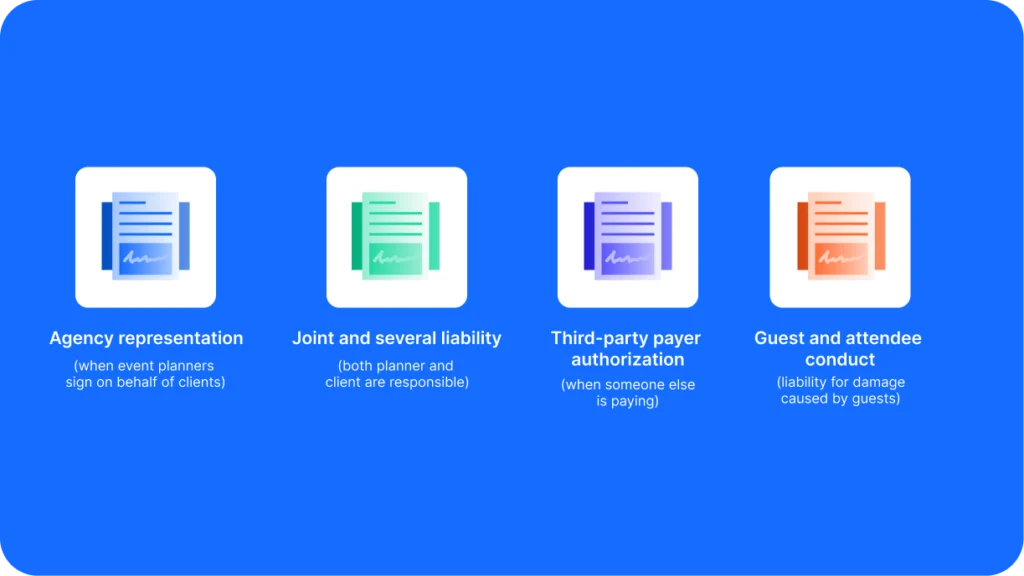
These four sections protect you when the person signing your contract isn’t the only party involved in the event or payment. They’re especially critical as you grow and work with more event planners, corporate clients, or situations where parents or companies pay for someone else’s event.
- Agency representation (when event planners sign on behalf of clients) clarifies who’s actually responsible when an event planner, coordinator, or designer books on behalf of their client. This section establishes that the person signing has legal authority to bind their client to the agreement. Without this language, you might struggle to collect payment if the planner claims “I was just booking on behalf of someone else” after damage occurs or payment issues arise. Your terms should specify that the agent warrants they have full authority to enter into the contract on behalf of their principal (the actual client/host).
- Joint and several liability (both planner and client are responsible) protects you when multiple parties are involved — like an event planner booking for a client, or a corporate event where both the company and the individual signer should be held responsible. With joint and several liability language, you can pursue either or both parties for the full amount owed, rather than having each party claim “the other person should pay their half.” This is particularly important for damage claims, where planners might argue that their client’s guests caused the damage, not them.
- Third-party payer authorization (when someone else is paying) addresses scenarios where the person paying for the event isn’t the person signing your contract. A parent paying for their child’s wedding, or a company paying for an employee’s event, needs to acknowledge they’ve reviewed your terms and accept financial responsibility — including for damage, loss, cleaning fees, and additional charges that may arise. Without this clause, third-party payers can claim “I never agreed to those damage charges; I was just paying the invoice.” This section should state that providing payment constitutes acceptance of all contract terms.
- Guest and attendee conduct (liability for damage caused by guests) establishes that your contract signer is responsible for damage caused by anyone at their event — guests, vendors, venue staff, or other attendees. This protects you when a guest spills red wine on your linens, a vendor’s equipment damages your staging, or attendees misuse your furniture, and the contract signer claims “I didn’t do it, so I shouldn’t pay for it.” This section should clearly state that the signing party accepts full responsibility for the conduct and actions of all persons present at the event.
Payment and Cancellation Terms That Work
Payment terms make or break small rental businesses, so this section deserves extra attention. Your goal is protecting your cash flow while being reasonable enough that customers don’t balk at booking.
Most successful rental businesses require a deposit to secure the booking (usually 25-50% of the total), with the balance due a set number of days before the event. The sweet spot for final payment timing depends on your business model — wedding rentals often collect final payment 7-14 days before, while corporate events might pay closer to the event date.
For cancellation policies, consider a sliding scale based on how far in advance customers cancel. You might refund deposits fully if cancelled 30+ days out, keep 50% for cancellations 14-29 days prior, and keep the full deposit for last-minute cancellations.
Don’t forget to address what happens when customers want to reduce quantities rather than cancel entirely. A client who drops from 100 chairs to 50 chairs has essentially cancelled half their order, which affects your planning and potentially your pricing if you offered quantity discounts.
Protect Your Equipment: Damage, Loss, and Liability
Equipment protection goes beyond just charging for broken items. It’s also about setting clear expectations for how your items should be treated. Define what constitutes damage versus normal wear and tear with specific examples relevant to your inventory.
For furniture rentals, normal wear might include minor scuffs or slight fabric impressions, while damage covers stains, tears, or broken components. Tent rentals need to distinguish between expected dirt and actual damage like holes or broken poles. The more specific you are, the fewer arguments you’ll have during post-event inspections.
Your terms should also address what happens when items go missing entirely. Include language about replacement costs and reasonable timelines for reporting missing pieces.
You can never be too safe, which is why Goodshuffle Pro also includes built-in insurance options. When clients check out, they can purchase event host insurance to protect themselves. When your clients buy event insurance, you automatically get access to inland marine coverage at no extra charge — giving you additional protection for your equipment during transport and events.

Common Scenarios Your Terms Should Address
Real-world rental challenges rarely fit into neat categories, so your terms need to address the messy situations that actually happen. Weather affects outdoor events obviously, but also consider indoor venues with flooding, power outages during setup, or venue access issues that prevent timely delivery.
Another frequent issue: client changes that affect other customers. When someone wants to add 20 more chairs two days before their event, but those chairs are committed to another booking that same weekend, your terms should outline how you handle conflicts, associated rush fees, and sourcing costs.
How to Create Your Terms & Conditions
There are several approaches to creating your rental terms and conditions, each with different trade-offs:
- Work directly with an attorney from the start. This is the most protective approach. Your lawyer drafts terms specifically for your business model, inventory type, and local requirements. Higher upfront cost, but you get enforceable terms from day one. Best for businesses with unique liability concerns or complex operations.
- Reference industry association resources. Trade associations for event rental businesses often provide sample contracts and guidance on industry-standard terms. These samples help you understand what sections to include, but they’re generic by necessity — you’ll need to customize them for your specific business and have them reviewed by an attorney in your jurisdiction.
- Generate initial drafts with AI tools. Some business owners use ChatGPT, Claude, or similar tools to create first drafts of their terms. AI can help you think through different scenarios and generate structured language quickly. However, AI cannot evaluate your specific risk profile, doesn’t know your local laws, and cannot determine if terms are enforceable. If you use this approach, treat the output as a rough draft that requires substantial customization and legal review.
Whatever approach you choose, attorney review is non-negotiable. Laws governing contracts, liability, insurance, and consumer protection vary by state and change over time. Only a qualified attorney can ensure your terms protect your business while remaining legally enforceable in your jurisdiction. Think of legal review as insurance for your contract — the cost is minimal compared to the risk of unenforceable terms when you actually need them.
Once you have legally-reviewed terms in place, you can focus on what you actually love about this business: creating memorable events and growing your rental company. Your terms will live in Goodshuffle Pro, where clients can easily review and agree to them as part of their booking process.
⚠️ Important Legal Disclaimer: This article provides general guidance for educational and informational purposes only. This article does not constitute legal advice, and AI‑generated content is not a substitute for professional legal advice. Laws governing contracts, liability, insurance, consumer protection, and event‑rental operations vary widely by state and may change over time. AI tools cannot evaluate your specific business model, risk profile, or compliance obligations. Every rental business and location has unique legal requirements that only a lawyer can properly address. Use of any sample language or suggestions from this article is at your own risk. Always seek legal advice from a qualified attorney in your jurisdiction regarding your terms and conditions and rental agreements.
FAQs
Always have a qualified attorney review your terms before using them. While templates (from rental software, industry associations, or online resources) can give you a starting point, only a lawyer can ensure your contract is legally enforceable in your specific location and covers your unique business model. Laws governing liability, consumer protection, and rental operations vary widely by state and change over time. The cost of legal review is far less than the cost of an unenforceable contract when you need it most.
Payment terms and damage policies are where most disputes happen. Focus on crystal-clear language about deposit percentages, final payment deadlines, cancellation refund scales, and specific examples of what constitutes chargeable damage versus normal wear. These two sections protect your cash flow and equipment investment more than any others. The four additional protective clauses (agency representation, joint liability, third-party payer authorization, and guest conduct) become critical once you start working with event planners or corporate clients.
Very specific. Instead of “payment due before event,” state “Final payment due 14 days before event date.” Instead of “deposits may be non-refundable,” outline exactly what percentage is refunded based on cancellation timing: “Full refund if cancelled 30+ days prior, 50% refund for 14-29 days, deposit forfeited for cancellations within 14 days.” Vague language leads to disputes — specific percentages, dates, and scenarios prevent them.
The overall structure stays the same, but damage definitions need to be tailored to your inventory. Furniture rentals need different language about scratches and stains than tent rentals need about dirt and holes. AV equipment requires different handling instructions than linens. Your attorney can help you craft inventory-specific language that’s both protective and reasonable.
This is exactly why the four additional protective clauses matter. Your terms should include agency representation language (planner has authority to sign for client), joint and several liability (both planner and client are responsible), third-party payer authorization (whoever pays accepts all terms), and guest conduct liability (signer is responsible for all attendees). These clauses protect you when multiple parties are involved. Your attorney can draft specific language for your business.

Share On