



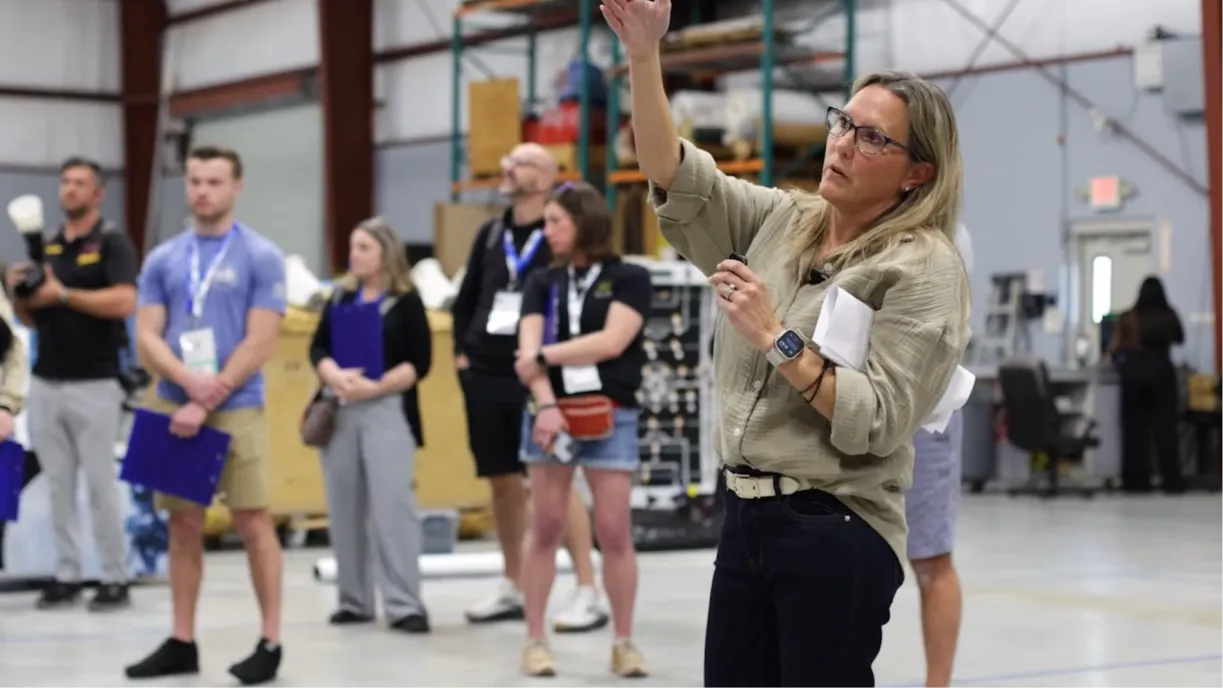
Luna Tolunay doesn’t want her customers to call and ask for her by name.
After more than two decades building Fun Planners from a 3,500-square-foot warehouse with two employees to a 40,000-square-foot operation running 1,200+ events a year, the systems she’s built mean nobody on her team needs her sign-off to make a great event happen.
She joined us for a Setting the Standard webinar to walk through how she did it — the SOPs, the handoffs, and the moves most owners skip.
Puntos clave:
-
The strain tells you when to start.
When the same thing breaks every week, the answer is documenting the process — not pushing harder.
-
You don't have to write SOPs from scratch.
Have your team text or voice-record what they do, then run it through AI to generate the document.
-
Take yourself out of every project.
A customer should never need to ask for the owner by name to know an event will go well.
-
Day-of customer calls happen before the truck leaves.
Asking specific questions in advance saves time on site and prevents same-day refunds.
-
The morning after the event is where repeat business lives.
Delivery and strike reports capture vendor intel, venue notes, and damage that compound over time.
When the Strain Becomes the Signal
Most rental businesses start the same way — one or two people, a truck, some inventory, and the founders working every angle of the business themselves. Fun Planners was no different. What changed wasn’t the workload. It was Luna’s willingness to stop and look at where things were breaking.
“You feel things start to slip through the cracks and you keep pushing forward. But the important thing is to know is when you feel that consistent strain that you do need to stop and you need to reevaluate where those cracks are, is it consistent in the same spot? And what you can do to fill those gaps up.”
— Luna Tolunay, Fun Planners
That repeat break — a reorder always missed, a delivery truck consistently underloaded, the same client calling about the same issue — is the part most owners power through instead of fixing. Luna’s framing is that running on adrenaline and running a business that scales are different things, and the line between them is whether your processes exist on paper.
(es-419) Español de América LatinaTake Yourself Out of It
The principle Luna comes back to is the one most rental owners resist: build a business where customers don’t need you specifically.
“I don’t want every one of my customers to call and say, I need to speak to Luna to get the results I need, or I need to make sure Luna’s at my event to know that it’s gonna go well. You need to set up the processes to make sure that everyone in your team and everyone in those positions know what they’re doing, and they can execute for you. They can execute as if you were there.”
— Luna Tolunay, Fun Planners
“As if you were there” is the bar. Not good enough. Not close. If your team can’t execute at the standard you’d execute at, the SOP isn’t finished yet.
(es-419) Español de América LatinaBuild SOPs From What Your Team Knows
Most owners imagine documenting their business as a giant project — and never start. Luna’s method skips the project entirely.
She has each person on her team text or talk-to-text what they actually do day-to-day. It doesn’t have to be organized. It doesn’t have to be pretty. Just the unfiltered description of the work.
Then she dumps all of it into an AI tool to generate the actual SOP.
“Take all of those texts and all the information you get and dump it into something like Claude. I use it. I love it. And create an SOP for your company.”
— Luna Tolunay, Fun Planners
The trick: your warehouse lead probably can’t sit down and write a clean SOP for himself, but he can describe his job. AI handles the structure. What you’re left with is a real document of how your team actually operates — not how you imagine they do. (If you’re starting from zero, this guide to writing SOPs walks through the building blocks.)
(es-419) Español de América LatinaThe Handoffs Live in the Software
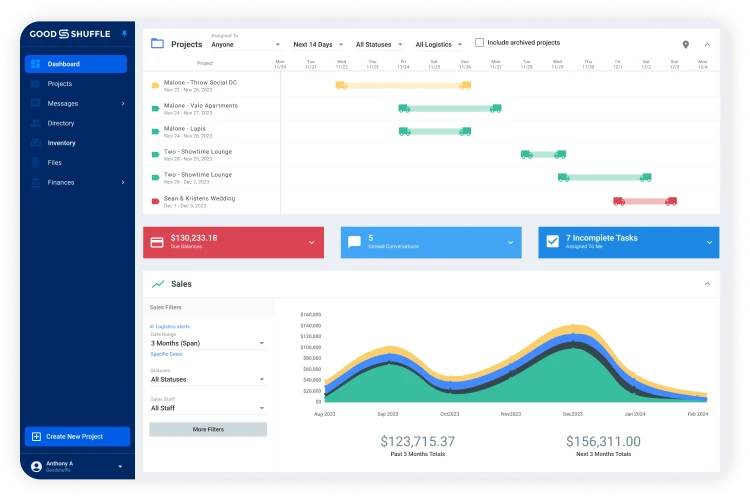
Fun Planners runs each step of an event through Goodshuffle Pro: sales and quoting, contract sign, team assignment, warehouse prep, dispatch and delivery routing, post-event report. Each step triggers the next person.
A few specific moves worth stealing:
Project naming. Fun Planners always names projects with the client and the end group, so corporate work is searchable both ways.
Day-of customer calls. Before the truck leaves the warehouse, the lead calls the customer with specific questions about access, weather backup plans, and load-in. Luna’s rule is to give them something concrete to answer.
“If you give them a question to answer, you’re gonna get responses.”
— Luna Tolunay, Fun Planners
By the time the crew arrives, the answers are already in. They’re not walking the venue trying to figure out where to pull in.
Photos at every setup. Crews photograph their finished work. The shots go into team messages on the project — proof of delivery for the file, and over time, real product photography for the Website Integration.
What Happens the Morning After
Most rental businesses focus on the event itself. Fun Planners’ real differentiator is the next morning.
“Every single morning, number one thing we do as a team, we get in, we look at those event reports, we review them, what equipment needs to be pooled, what equipment needs to be checked, whether is there additional labor fees, was an event extended.”
— Luna Tolunay, Fun Planners
Crews fill out a structured delivery report and a strike report — questions designed to capture vendor info, venue notes, repeat business cues, and damage. That data lives in team messages, tagged to the project and venue. A year later, when a planner wants to know if a doc plate is needed at a specific hotel, the answer’s there.
Damaged or scuffed inventory goes to what Luna calls “the hospital” — a corner of the warehouse for quick repairs. If something can’t be turned around in time, it gets a set-aside in Goodshuffle Pro so it doesn’t get rented out short.
The morning review doubles as a team check-in: wins, fixes, what could’ve gone better. All of it before the day’s work begins.
Culture Is Part of the SOP
The system isn’t just where the gear goes. It’s how the team shows up.
“I’m proud to say I have people who’ve worked with us over 15 years on our team and you want them to want to come to work. You want them to be happy about where they are.”
— Luna Tolunay, Fun Planners
Fun Planners documents uniform standards. They document tone with clients. The crew calls customers with confidence because they’ve been trained to. Luna runs a weekly team email with shout-outs and lessons from the prior week, plus a quarterly four-hour in-person session that combines training with team building.
The result of all of this is something quieter than scale: 90% of new business comes from word of mouth. The system runs because the people running it want it to.
“I feel like if the train is on its tracks and the machine is running properly, it does come together on its own without people getting stressed out about a specific dollar figure.”
— Luna Tolunay, Fun Planners
The full session walks through Luna’s day-of process in detail, plus audience Q&A on quote expiration, last-minute orders, and team specialization. The recording is on Goodshuffle Pro’s webinar hub. For a primer on which SOPs to write down first, see the top 5 SOPs every event pro needs.
Descubre Goodshuffle Pro
Reserve una demostración para ver nuestro software para la gestión de eventos en acción.
Preguntas frecuentes
It doesn’t matter. Luna’s method works for a team of two or twenty. Start by having each person describe what they do day-to-day, then organize from there.
Skip the formal documentation project. Have your team text or voice-record what they do, dump everything into an AI tool, and let it produce the first draft. You’ll edit from there, but the structural lift is gone.
Fun Planners uses Goodshuffle Pro as the system every handoff lives in — sales, contracts, team assignments, fulfillment, dispatch, post-event reports. The point is that one platform connects each step so nobody has to chase a colleague to figure out what’s next.
Give them the questions to ask, the photos to take, and the authority to make decisions in the moment. Fun Planners trains their event leads on what to ask, what to document, and how to escalate — so customers rarely need to talk to anyone above them.
A consistent client experience requires consistent team behavior. Fun Planners documents uniform standards, tone, training cadence, and team recognition the same way they document warehouse pull processes.
Compartir en











 English
  Español de México
  Français du Canada